 3 min read
 Yoga for Children: Building Strength, Calm, and Lifelong Habits
In a world where screens, packed schedules, and academic pressures surround children, yoga offers a simple, evidence-based way to support their physical, emotional, and cognitive development. Tailored to be playful and accessible, yoga for children blends movement, breath, and mindful attention to help them develop body awareness, emotional regulation, concentration, and social skills, skills that transfer to better learning, behavior, and wellbeing. This article explores why yoga benefits children.

Key Benefits
- Physical development - Yoga improves balance, flexibility, coordination, and core strength. Poses such as Tree, Downward Dog, and Warrior build postural control and gross motor skills needed in play and sports.
- Improved attention and learning - Breath-focused activities and short sequences train concentration and executive function. School-based programs consistently show better classroom behaviour and focus after regular practice.
- Emotional regulation and stress reduction - Simple breathing (e.g., “balloon breath”) and relaxation lower stress markers and give children quick strategies to calm down during overwhelm.
- Better body awareness and self-esteem - Moving with attention helps children notice how their body feels, build confidence from mastering tasks, and develop a respectful relationship with their body.
- Social and behavioral benefits - Partner poses, group games, and guided discussions promote cooperation, empathy, and turn-taking.
- Practical Guidance - How to start and keep it simple
Session Length and Frequency
- Toddlers (2-4 years) - 5-10 minutes, mostly play and imitation, 3-5 times/week.
- Early childhood (5-7 years) -10-15 minutes, 3-5 times/week.
- Middle childhood (8-11 years) - 15-25 minutes, 3-4 times/week.
- Adolescents (12+) - 20-40 minutes, 2-5 times/week depending on interest.
Structure for a short 10-20 minute session
- Warm-up (2-4 minutes): Fun movement-marching, gentle twists, sun-salutation-lite.
- Active poses (5-8 minutes): Standing and balance poses (Tree, Warrior II, Chair, Airplane). Turn into games (statue hold) or story prompts.
- Core/ground work (2-4 minutes): Cat-Cow, Cobra, Bridge, Boat for spinal mobility and strength.
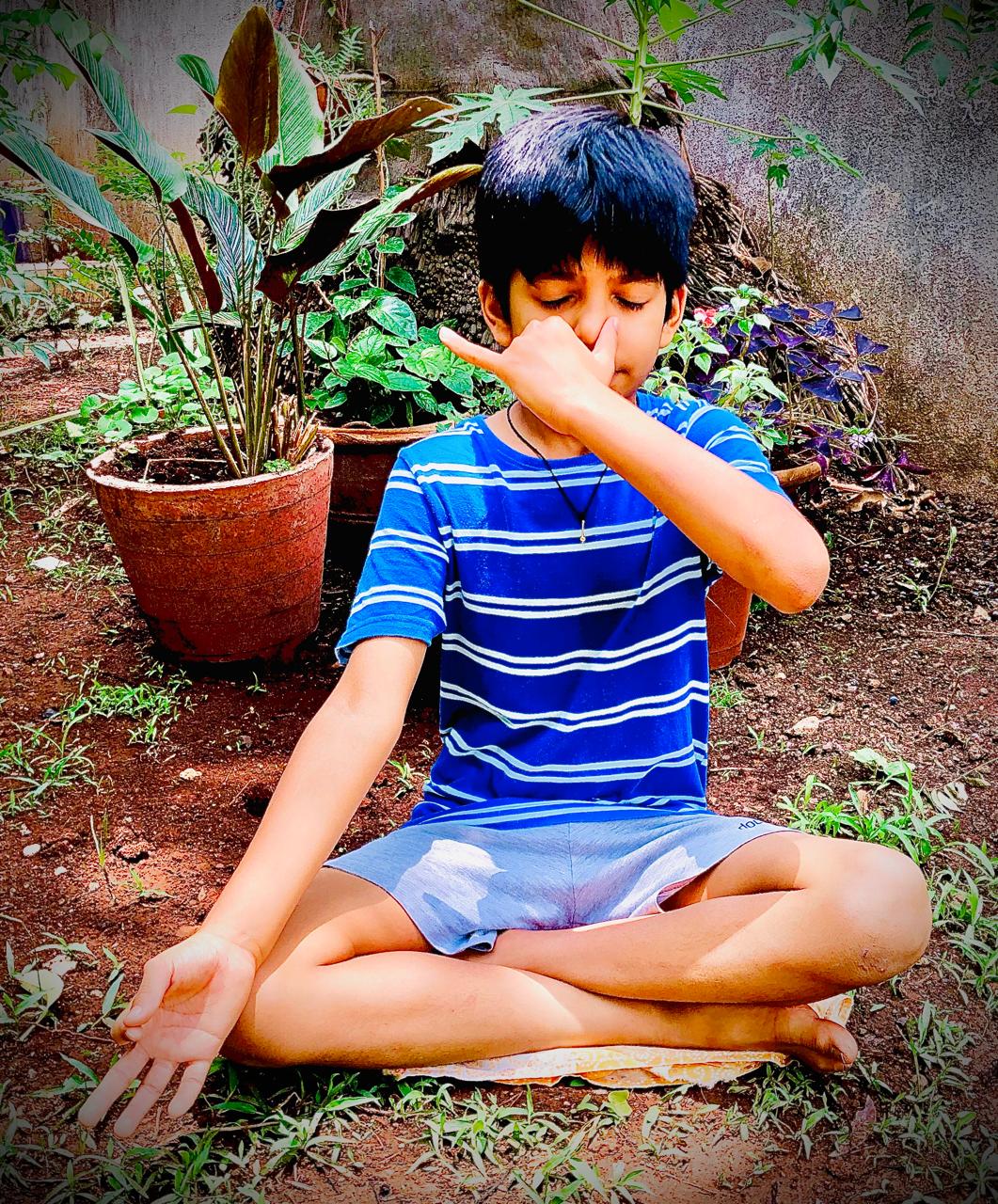
- Breath practice (1-3 minutes): Balloon breath, counting breaths, or bee breath.
- Relaxation (2-4 minutes): Lying-down visualization, progressive muscle relax, or a short guided story.
- Debrief (optional, 1 minute): Ask one thing they liked or one feeling they noticed.
Simple, Child-Friendly Practices to Use Anytime
- Balloon breath: Hands on belly, inhale to fill the belly like a balloon, exhale to slowly deflate. Use before tests or naps.
- Bee breath (Bhramari-style): Inhale, then hum softly on exhale like a buzzing bee. Good for quick calming when upset.
- Tree pose challenge: Stand on one leg and balance for a count. Use as a focus game before class.
- Five senses check-in: Name one thing you see, hear, feel, smell, and taste (or remember one taste). Quick grounding for anxious moments.
- Gentle wake-up flow: Two rounds of easy sun-salutation-lite to energize before sports or study.
Home Tips
- Keep it playful: Use stories, animal imagery, and props (scarves, stuffed animals) to keep children engaged.
- Short and consistent beats long and rare: Daily 5-10 minutes builds habit faster than occasional hour-long sessions.
- Model and join in: Children follow adults-practice alongside them to boost participation.
- Use visual cues: Picture cards or simple pose sequences help independent practice.
- Make it inclusive: Offer modifications-use a wall for balance, knees down for poses, or shorter holds for hypersensitive children.
- Integrate into routine moments: Breathing before exams, calming poses before naps, stretching between long sitting periods.
Quick 5-minute calming sequence (example)
- 30 sec: Seated deep breaths (balloon breath)
- 60 sec: Cat-Cow on hands and knees
- 60 sec: Child’s Pose with gentle rocking
- 60 sec: Bee breath (hands on ears optional, hum softly)
- 30 sec: Lying relaxation with one-minute body scan (feet to head)
Safety and Sensitivity
- Non-competitive emphasis: Celebrate effort and curiosity, not perfect alignment.
- Respect limits: Never force flexibility. Offer gentle options and props (blocks, blankets).
- Medical considerations: Adapt practices for asthma, ADHD, or musculoskeletal issues; consult healthcare providers when needed.
- Cultural sensitivity: Present yoga as wellbeing tools; avoid religious framing in schools unless context calls for it.
Yoga for children is most effective when it’s short, consistent, playful, and respectful of each child’s limits. Its practical tools movement, breath, and focused attention help children manage stress, improve focus, and build stronger bodies and minds. Start small, make it fun, and let children’s curiosity guide the practice.
Rashmi Gaurav Somani ( MS RD )
Clinical Nutritionist & Obesity Mgt Consultant
Nutricure