 4 min read
 How to Play With Your Child: Why Guided Play Is the Secret to Early Learning Success
In the first few years of life, a child’s brain develops faster than at any other stage. According to the Harvard Center on the Developing Child, early experiences and responsive interactions with caregivers shape the brain’s architecture and directly influence learning, behavior, and emotional well-being later in life. This means that the quality of interaction during playtime matters far more than teaching the alphabet or numbers too early.

Parents today want to do the right things for their children, but when it comes to play, many feel unsure.
What should play look like?
Is it just fun, or is it actually helping my child learn?
How much guidance is too much?
The truth is simple but powerful: children don’t learn best through instructions, they learn best through play. And when play is guided thoughtfully, it becomes one of the strongest tools for early development.
Why Play Is More Important Than Early Academics
In the first few years of life, a child’s brain develops faster than at any other stage. According to the Harvard Center on the Developing Child, early experiences and responsive interactions with caregivers shape the brain’s architecture and directly influence learning, behavior, and emotional well-being later in life.
This means that the quality of interaction during playtime matters far more than teaching the alphabet or numbers too early.
Play builds the foundation for:
- thinking skills
- emotional regulation
- confidence
- communication
- curiosity
And when parents actively participate in play, these benefits multiply.
What Is Guided Play?
Guided play sits between free play and structured learning. Children remain in control of the activity, but parents gently guide the experience using prompts, questions, actions, and shared attention.
Research published by the American Academy of Pediatrics highlights that play-based learning supports brain development, strengthens parent-child relationships, and builds social-emotional skills that last a lifetime.
In simple words, guided play helps children learn without feeling like they are being taught.
Why Many Parents Struggle With Playtime Today
Modern parenting comes with challenges:
- screens everywhere
- limited time
- information overload
- pressure to “teach” early
Many parents want to engage but don’t know how to play meaningfully - especially with children under three. This often leads to either passive play or complete reliance on screens.
A structured How to Play Book Set system removes this confusion and gives parents clarity.
Read, Play, and Grow with The How To Play Series
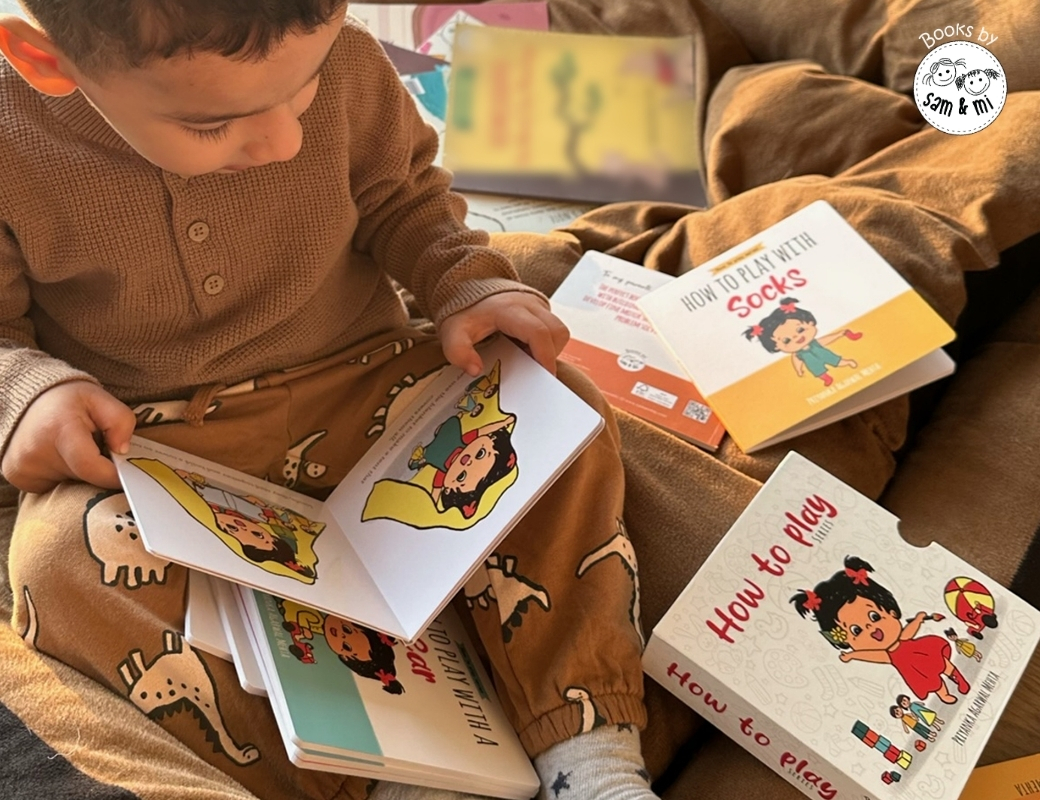
This is where the How to Play book set by Sam and Mi becomes a powerful tool for families.
Created for children aged 0-3 years, this set of 8 thoughtfully illustrated board books is designed to turn everyday play into meaningful learning experiences. Instead of focusing only on 1-2-3 or A-B-C, the books provide gentle prompts and visual clues that guide parents on how to play with purpose.
Each book encourages learning through play while helping children achieve key developmental milestones naturally and joyfully.
What Your Child Learns Through the How to Play Series
The How to Play series supports essential early-childhood skills, including:
- Cognitive thinking and problem-solving
- Independent play
- Motor skills and coordination
- Sensory processing
- Spatial awareness
- Emotional regulation
- Social-emotional learning
- Imagination and creativity
- Self-confidence
Because the activities are simple and repeatable, children learn at their own pace while parents feel confident guiding the experience.
Parents often ask how to play with their children in ways that feel natural and meaningful. Addressing this, child development expert Dr. Chaula (Occupational Therapist, Reach Therapy Centre) shares her recommendation:
“The How to Play book series by Priyanka Agarwal Mehta is a simple and effective guide for parents on how to play with their child using everyday things like paint, balls, blocks, socks, and even play with nothing at all. The child-friendly illustrations encourage independent exploration while also helping parents build social skills, interaction, turn-taking, and patience. I highly recommend this series for meaningful play.”
~ Dr. Chaula, Occupational Therapist, Reach Therapy Centre
Why Guided Play Builds Stronger Emotional Bonds
Children don’t remember toys as much as they remember moments. When a parent sits on the floor, follows the child’s lead, and plays with intention, the child feels seen and supported. This emotional connection builds trust and trust is the foundation of learning.
Guided play nurtures imagination, emotional safety, and curiosity skills that make future learning easier and more joyful.
From “What Should I Do?” to “This Feels Natural”
One of the biggest benefits parents report with guided play tools is confidence. Instead of guessing or scrolling endlessly for ideas, parents have clear guidance they can follow immediately.
Playtime becomes:
- less stressful
- more engaging
- more meaningful
And children respond with longer focus, better emotional balance, and stronger independence.
Why the How to Play Series Works for Early Development
An estimated 15% of children in the United States have at least one developmental delay, yet less than one-fifth of those children receive early intervention services before three years of age. 1/6 children don't meet their developmental milestone goals.
The first three years are not about academic performance. They are about building the skills that make learning possible later. The How to Play Series supports this critical stage by helping parents turn everyday moments into developmental opportunities without pressure, screens, or complicated setups.
The complete How to Play board book set is available on Amazon, making it easy for parents to bring guided play into their daily routine.
👉 Buy Now on Amazon
Summary
Play is not extra. Play is essential. When parents understand how to play with intention, children grow emotionally, socially, and cognitively without feeling rushed or overwhelmed. The How to Play Series by Sam and Mi helps families build these foundations during the most important years of development.
Because when play is done right, learning follows naturally.
- By Sam and Mi
Sam and Mi
At Sam and Mi, we write children’s books for the age group of 0-8 years. Our books focus on themes of empathy, problem solving and communication. When introduced to children at an early age, we believe these skills can contribute to leading a happy and successful life. Our books are not only warm, sensitive and fun but also based on research and trials with children. The stories are built through playful text and supported by beautiful illustrations to attract children to the wonderful world of books. Every product we offer is a true collaboration between a child and a mother. We hope you enjoy your journey with us and encourage you to share your child’s experiences with our products!