 2 min read
 Pregnancy Weight Gain: How Much is Normal Week by Week in India?
Let us clear this up with actual data, practical guidance, and an honest look at what is appropriate weight gain for Indian women during pregnancy.

Weight during pregnancy is one of the most discussed and most misunderstood topics in Indian families. Your mother-in-law wants you to eat for two. Your doctor says do not gain too much. Your own mind is somewhere in the middle, confused.
Let us clear this up with actual data, practical guidance, and an honest look at what is appropriate weight gain for Indian women during pregnancy.
Why does weight gain matter during pregnancy?
Too little weight gain is associated with low birth weight, preterm birth, and poor fetal development. Too much weight gain increases risks of gestational diabetes, high blood pressure, C-section, and difficulty losing weight postpartum.
The goal is steady, adequate weight gain, not "eating for two" (a myth) and not dieting.
Source: ICMR – Dietary Guidelines and Weight Gain in Pregnancy 2020 | WHO Antenatal Care Guidelines
How much weight should you gain during pregnancy?
Recommendations are based on your pre-pregnancy BMI (Body Mass Index):
- Underweight (BMI below 18.5): Recommended total gain of 12.5-18 kg
- Normal weight (BMI 18.5-24.9): Recommended total gain of 11.5-16 kg
- Overweight (BMI 25-29.9): Recommended total gain of 7-11.5 kg
- Obese (BMI 30 or above): Recommended total gain of 5-9 kg
Note: These are WHO and ACOG guidelines. Indian women have traditionally been advised slightly lower targets by some Indian specialists because Indian women tend to have a higher body fat percentage at lower BMIs speak to your own doctor for personalised guidance.
Source: WHO – Appropriate Weight Gain in Pregnancy 2016 | FOGSI
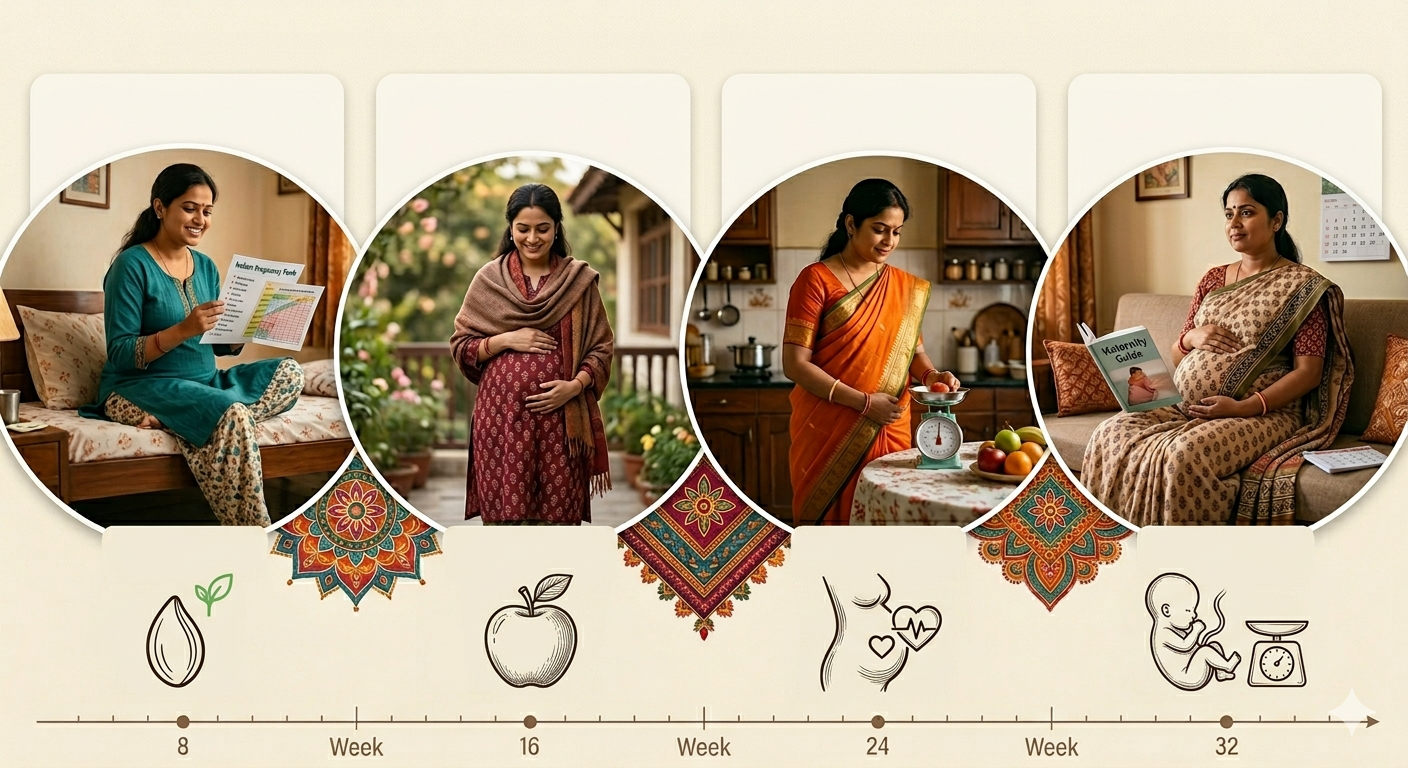
Week-by-week weight gain pattern
Weight gain in pregnancy is not linear it follows a specific pattern:
- First trimester (weeks 1-12): 0.5-2 kg total. Weight gain is minimal. Some women actually lose weight due to morning sickness.
- Second trimester (weeks 13-27): Approximately 0.4-0.5 kg per week. This is when the baby grows rapidly and most of the weight is gained.
- Third trimester (weeks 28-40): Approximately 0.3-0.4 kg per week. Weight gain continues but may slow slightly in the final weeks.
Where does the weight actually go?
Many women wonder why they have gained, say, 12 kg when the baby weighs only 3 kg. Here is the breakdown:
- Baby: approximately 3-3.5 kg
- Placenta: approximately 0.7 kg
- Amniotic fluid: approximately 1 kg
- Uterus growth: approximately 1 kg
- Breast tissue growth: approximately 1 kg
- Increased blood volume: approximately 1.5 kg
- Body fluid retention: approximately 2 kg
- Body fat stores for breastfeeding: approximately 2-3 kg
So a total gain of 11-13 kg is almost entirely accounted for by the pregnancy itself not by overeating.
Source: ACOG – Weight Gain During Pregnancy 2022
Not gaining enough weight - when to be concerned
If you are consistently gaining less than expected, especially in the second trimester, speak to your doctor. Causes include:
- Persistent nausea or vomiting
- Insufficient food intake due to aversions
- Underlying medical conditions
Your doctor will monitor fetal growth through ultrasound measurements. Actual baby size is more informative than the number on the scale.
Indian cultural context around pregnancy weight
In many Indian families, there is significant pressure to eat large quantities during pregnancy; the idea that you must "eat for two" is deeply ingrained. In reality, you only need approximately 300 extra calories per day, roughly one extra roti with sabzi and dal, or a glass of milk with fruit.
Conversely, some urban Indian women are anxious about gaining weight and restricting food during pregnancy is equally harmful. Pregnancy is not the time for dieting.
Both extremes can harm the baby. Steady, nutritious eating is the middle path.

Parent With Purpose
Parent with Purpose is your trusted parenting resource, offering expert advice, practical tips, and real experiences from fellow parents. Our content is organized by your child’s age, from pregnancy to the teen years, ensuring guidance that’s relevant to your current stage. Learn through articles, videos, podcasts, and courses that fit your lifestyle. We also provide carefully curated book lists, meal plans, product recommendations, and India-focused resources to make parenting easier and more informed.