 6 min read
 The Pressure to Be a “Good Parent” — Who Defines It?
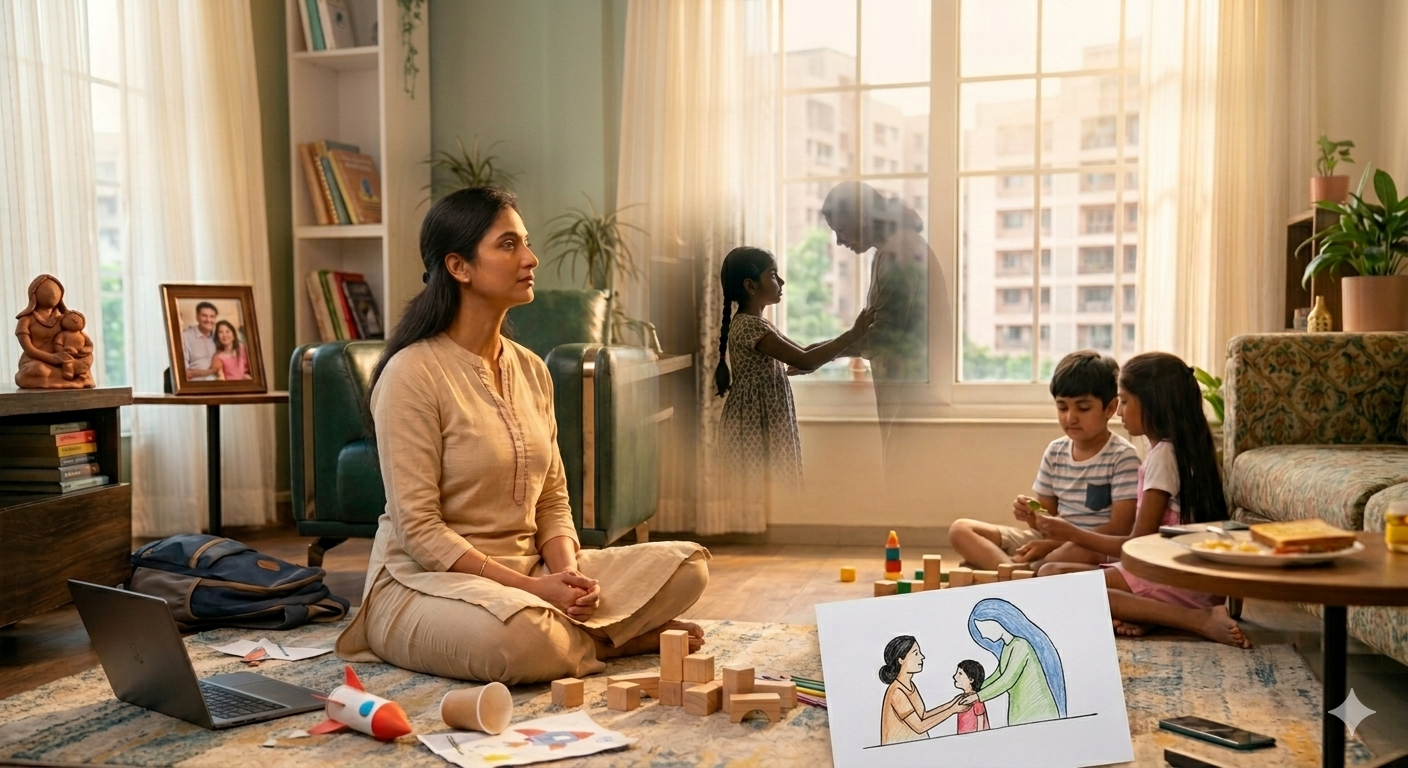
Many parents feel a quiet pressure to meet certain standards, often shaped by society, family, or social media. This idea of being “perfect” can create stress and self-doubt. Understanding where these expectations come from can help parents focus on what truly matters for their child and themselves.

There’s a question many parents carry quietly, often without saying it out loud: “Am I a good parent?”
It doesn’t always come in moments of crisis. Sometimes it appears in the middle of ordinary days—after a small mistake, a rushed response, or even after doing everything “right.” It lingers in the background, shaping how you see yourself.
And behind that question lies something even deeper:
“What does being a ‘good parent’ even mean… and who decided that?”
The Invisible Standard You’re Measured Against
No one hands you a rulebook when you become a parent. There’s no single definition, no universal checklist that guarantees you’re doing it correctly. And yet, somehow, there is always a standard.
You feel it in:
- The advice people casually give
- The comparisons that happen without intention
- The expectations that seem to exist everywhere
It’s not always spoken directly. But it’s present. A silent idea of what a “good parent” should look like, sound like, and act like. And without realizing it, you begin measuring yourself against it.
Where Does This Definition Come From?
If you pause and really think about it, the idea of a “good parent” is not something you created on your own. It is shaped by layers of influence.
Some of it comes from society—what is praised, what is judged, what is considered acceptable. Some of it comes from the people around you—their opinions, their experiences, their expectations. Some of it comes from what you observe—other parents, conversations, shared narratives.
And over time, all of this blends together into an internal standard. A voice inside your mind that quietly asks: “Am I meeting the mark?”
The Problem With a Single Definition
The idea of a “good parent” sounds simple. But the reality is anything but. Because parenting is not one-size-fits-all.
Every parent:
- Lives in a different environment
- Has different resources
- Has a different personality
- Faces different challenges
And yet, the expectation often feels uniform. As if there is one correct way to do things. This creates a gap. A gap between what is expected and what is real. And in that gap, pressure begins to grow.
When “Good” Starts to Feel Like “Perfect”
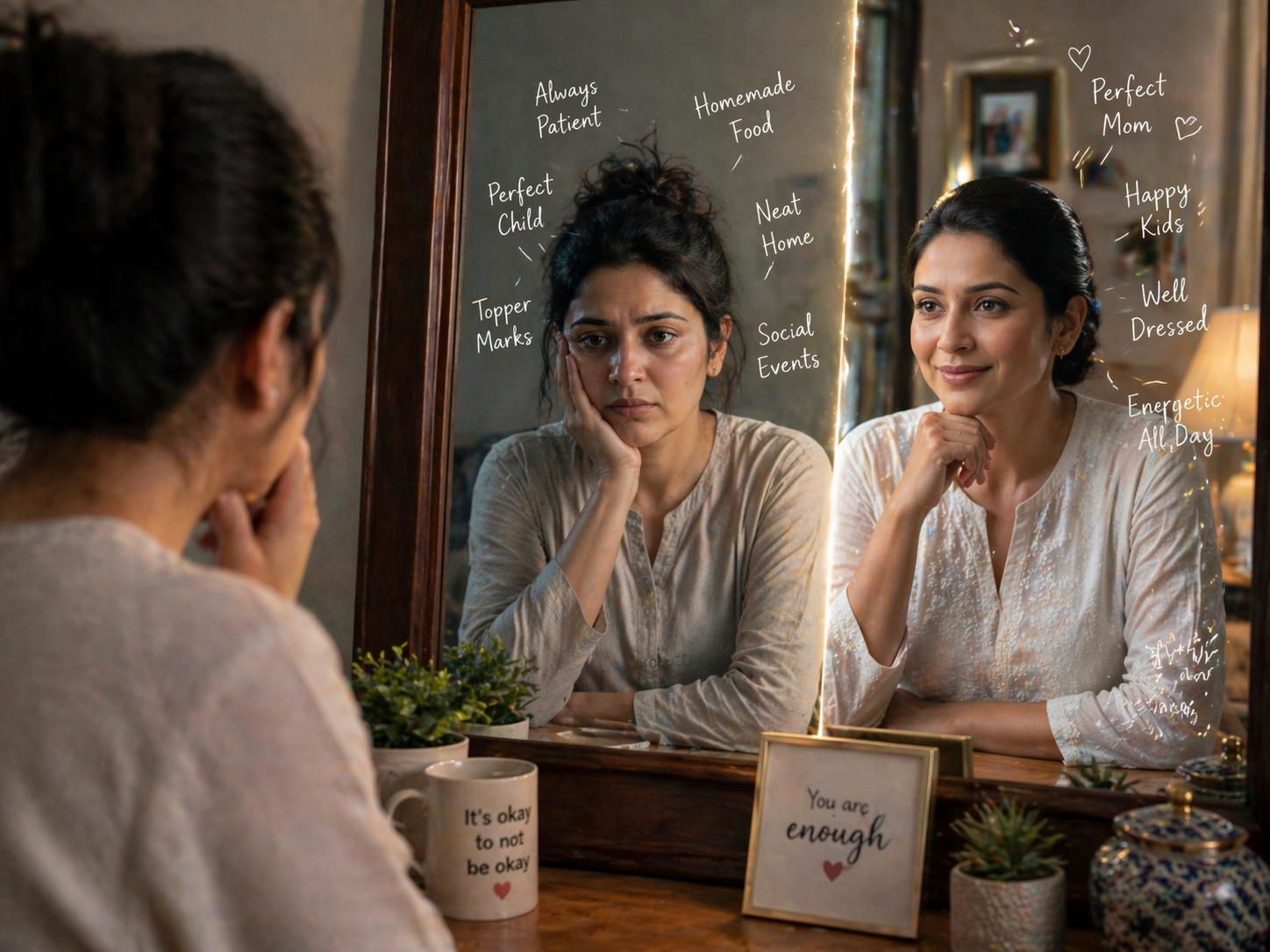
At some point, the idea of being a good parent quietly shifts. It stops meaning doing your best. And starts feeling like doing everything right.
You begin to feel like you should:
- Always respond calmly
- Always make the right decision
- Always balance everything perfectly
- Always know what your child needs
And when reality doesn’t match this ideal, it creates discomfort. Because the standard you’re trying to meet is not just high. It’s unrealistic.
The Constant Self-Evaluation
One of the effects of this pressure is how often you start evaluating yourself. Not occasionally—but consistently.
You might find yourself thinking:
- I shouldn’t have reacted like that
- I could have handled that better
- Maybe I’m not doing enough
This internal dialogue becomes a constant background process. Even in moments where nothing is going wrong. Even when things are going well. Because the question isn’t just about your actions. It’s about your identity.
When External Voices Become Internal Ones
At first, expectations come from outside. Advice, opinions, observations. But over time, something changes. These external voices become internalized.
You don’t need someone else to tell you what a good parent should be. You begin telling yourself. And sometimes, your own expectations become even stricter than anyone else’s. Because they are constant. And they are personal.
The Fear of Falling Short
Behind the pressure to be a good parent is often a deeper fear. Not just of making mistakes. But of being inadequate.
Because parenting is not just a role—it’s deeply connected to how you see yourself.
And when you feel like you’re not meeting the standard, it can feel like a reflection of who you are. Not just what you did. This is what makes the pressure heavy. It’s not about isolated moments. It’s about identity.
The Comparison You Didn’t Intend to Make
Even when you try not to compare, it can happen naturally.
You notice how others handle situations. You observe different approaches. You see what seems to work for someone else. And without consciously deciding to, you begin measuring yourself.
Not always in a competitive way. But in a questioning way.
“Should I be doing that too?”
This comparison isn’t always helpful. Because it doesn’t take into account your context, your personality, or your situation. It only shows you a fragment. But that fragment can still influence how you feel about yourself.
The Role of Visibility
In today’s world, parenting is more visible than ever. You don’t just see people around you. You see curated versions of parenting. Moments that look calm, balanced, and intentional. And even when you know that these are partial representations, they can still shape your perception. Because visibility creates an illusion of consistency. It makes it seem like others have figured it out more clearly than you have. Even when that may not be true.
When You Start Losing Your Own Voice
The more you absorb external definitions of what a good parent should be, the quieter your own voice can become.
You may start:
- Questioning your instincts
- Doubting your natural responses
- Overthinking simple decisions
Because instead of asking “What feels right for me?”, you begin asking:
“What is the correct way to do this?”
And in that shift, your personal understanding of parenting becomes secondary.
There Is No Single Authority
The idea that someone, somewhere, has defined what a “good parent” is… is misleading.
There is no single authority. No universal framework that applies to everyone. What works for one family may not work for another. What feels right for one parent may not align with someone else. And yet, the pressure often makes it feel like there is one correct path.
Redefining the Question
Instead of asking:
“Am I a good parent?”
It may be more helpful to ask:
“What does being a good parent mean to me?”
This shifts the focus. From external validation to internal clarity. From comparison to understanding. From pressure to intention.
Moving Away From Perfection
One of the biggest sources of pressure is the idea that you need to get it right all the time. But parenting is not about perfection. It is about consistency, awareness, and presence. There will be moments that don’t go as planned. There will be times when you feel unsure. That doesn’t take away from who you are as a parent. Because being a good parent is not defined by the absence of mistakes. It is shaped by how you continue to show up.
Allowing Space for Individuality
Just as every child is different, every parent is different. Your personality, your values, your way of thinking—all of these influence how you parent. And that’s not something to correct. It’s something to recognize.
Because when you allow your individuality to exist within your role as a parent, your approach becomes more natural. More aligned. More sustainable.
The Quiet Strength of Defining It Yourself
When you begin to define what being a good parent means to you, something shifts. Not externally—but internally.
You feel:
- Less pulled by comparison
- Less pressured by unrealistic standards
- More grounded in your own decisions
Because your definition is not based on what others expect. It is based on what you understand.
The Ongoing Nature of This Question
The idea of being a good parent is not something you define once and move on from.
It evolves. As your child grows. As your experiences change. As you learn more about yourself. Your understanding will shift. And that’s not a problem. It’s part of the process.
A Thought to Sit With
The next time you find yourself asking, “Am I a good parent?”, pause for a moment. Not to answer it immediately. But to reflect on where that question is coming from.
Is it coming from your own understanding? Or from a standard you’ve absorbed without realizing it?
Because the truth is:
There is no single definition waiting for you to meet it. There is only the one you slowly create—through awareness, intention, and the way you choose to show up. And maybe being a “good parent” is not about reaching a fixed standard.
Maybe it’s about continuously understanding what that means—for you.

Parent With Purpose
Parent with Purpose is your trusted parenting resource, offering expert advice, practical tips, and real experiences from fellow parents. Our content is organized by your child’s age, from pregnancy to the teen years, ensuring guidance that’s relevant to your current stage. Learn through articles, videos, podcasts, and courses that fit your lifestyle. We also provide carefully curated book lists, meal plans, product recommendations, and India-focused resources to make parenting easier and more informed.