 6 min read
 The Identity Shift: From Individual to Parent
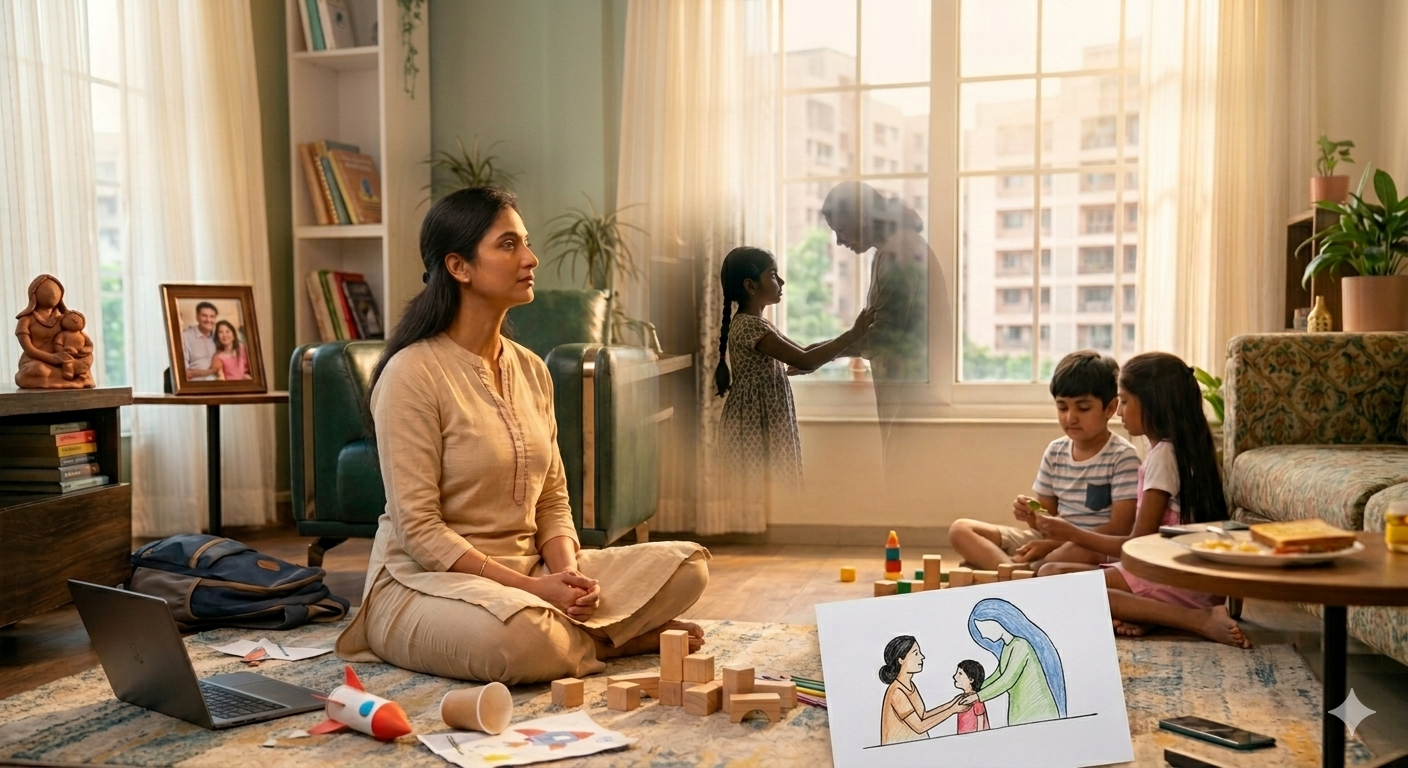
There’s a moment in every parent’s life that isn’t marked by celebration or ceremony. It doesn’t come with announcements or photos. It doesn’t have a fixed date. But it happens. Somewhere between holding your child for the first time and settling into everyday life, something quietly rearranges inside you.

You are still yourself. But you are no longer only yourself.
And that subtle, almost invisible transition is what we call the identity shift—the movement from being an individual to becoming a parent.
It Doesn’t Feel Like a Sudden Change
Most people expect parenthood to feel like a big, dramatic transformation. And in some ways, it is. But identity doesn’t change overnight. It reshapes itself slowly, through repeated experiences. Through interrupted sleep. Through decisions that now include someone else. Through moments where your instinct changes from “What do I want?” to “What does my child need?”
At first, it feels temporary. Like you’re adjusting. But over time, you realize—it’s not just your routine that has changed.
The way you see yourself has shifted.
From Center of Your Life to Shared Space
Before becoming a parent, your life—whether busy or simple—was centered around you. Your time, your priorities, your energy—they all revolved around your choices. Even when you cared deeply for others, there was still a clear sense of personal space within your identity. Then, parenthood arrives. And without asking for permission, it expands your world.
Suddenly:
- Your time is no longer fully your own
- Your decisions carry a different kind of weight
- Your attention is constantly pulled outward
It’s not that you disappear. But you are no longer the sole center of your own life. Your identity becomes shared.
The Quiet Rewriting of Priorities
The shift from individual to parent is not just about responsibility. It’s about how your internal compass begins to change direction. Things that once felt urgent may become less important. Things you never thought about suddenly matter deeply.
You may find yourself:
- Thinking ahead more than before
- Considering long-term consequences more seriously
- Measuring your actions not just by impact on yourself, but on your child
This isn’t forced. It happens naturally. Because your identity is adapting to include someone else’s well-being.
When Your Inner Dialogue Changes
One of the most powerful parts of this identity shift happens inside your mind. Your inner conversations begin to sound different. Earlier, your thoughts might have been centered around personal goals, plans, or experiences. Now, there’s a new layer. A voice that constantly evaluates, plans, and responds with your child in mind.
You may notice:
- A stronger sense of responsibility in your thinking
- A tendency to question your decisions more carefully
- A deeper emotional connection to outcomes
This isn’t pressure from outside. It’s a reflection of how deeply your identity has expanded.
The Expansion of Emotional Capacity
Parenthood doesn’t just add responsibilities—it stretches your emotional range. You begin to feel things differently. Not necessarily more intensely, but more widely.
There’s a new awareness:
- Of vulnerability
- Of care that goes beyond logic
- Of attachment that feels both grounding and overwhelming
Your identity starts to include emotions that weren’t as central before. And sometimes, that can feel unfamiliar. Because you’re learning not just how to do things differently—but how to feel differently.
The Subtle Loss of Simplicity
There was a certain simplicity in being an individual. Not in terms of life being easy—but in terms of clarity of self.
You knew what you liked. You understood your boundaries. Your decisions had a direct connection to your own preferences. After becoming a parent, that clarity can feel more layered.
Because now:
- Your needs exist alongside someone else’s
- Your time is divided in ways it wasn’t before
- Your sense of “self” includes roles you’re still learning
This doesn’t mean confusion. It means complexity. Your identity is no longer one-dimensional.
You Begin to See Yourself Through a New Lens
Another shift that often goes unnoticed is how you start to perceive yourself. Before, you might have seen yourself based on your abilities, personality, or achievements. Now, there’s a new perspective. You begin to evaluate yourself as a parent.
Questions arise:
- Am I doing this right?
- Am I showing up enough?
- Am I the kind of parent I want to be?
This lens can feel heavy at times. Because it’s not just about who you are—it’s about who you are for someone else.
The Balance Between Control and Adaptation
As an individual, you likely had a sense of control over your day-to-day life. Even when things didn’t go as planned, you could adjust based on your own decisions. Parenthood introduces a different dynamic. There are elements you cannot fully control.
Schedules shift. Plans change. Unexpected situations become part of daily life. Your identity begins to include adaptability. Not as a skill you choose—but as something you develop naturally.
When Independence Feels Different
Independence doesn’t disappear after becoming a parent. But it changes shape. Earlier, independence might have meant freedom of time, choice, and movement. Now, it becomes more internal.
It’s reflected in:
- How you think
- How you make decisions
- How you hold onto your sense of self within your role
This version of independence is quieter. But often, it’s deeper.
The Invisible Weight of Responsibility
Responsibility in parenthood isn’t always visible. It doesn’t always show in tasks or routines. Sometimes, it exists as a constant awareness in the background of your mind. A sense that you are accountable for more than just yourself. This can feel steady.
But at times, it can also feel heavy. Because your identity now carries a level of responsibility that doesn’t switch off. And learning to hold that weight—without letting it define your entire sense of self—is part of the shift.
You Are Still an Individual—But Not in the Same Way
One of the biggest misunderstandings about this transition is the idea that you stop being an individual. That’s not true. You don’t stop being yourself. But your individuality now exists within a broader context.
It includes:
- Your role as a parent
- Your responsibilities
- Your evolving priorities
You are still an individual. But you are no longer only that.
The Adjustment No One Prepares You For
People talk about physical changes. They talk about routines. They talk about responsibilities. But very few talk about this internal shift. The adjustment of identity. The feeling of being both familiar and unfamiliar to yourself at the same time. You may recognize yourself—but also feel different. Not in a negative way. Just in a way that takes time to understand.
Growth Without a Clear Map
This identity shift doesn’t come with instructions. There’s no fixed path to follow. You don’t get told exactly how to balance your individuality with your role as a parent. Instead, you figure it out gradually.
Through experiences. Through reflection. Through moments where you pause and ask yourself questions. And sometimes, through moments where you feel unsure.
Becoming Someone New Without Losing Yourself
The goal of this shift isn’t to hold onto your old identity unchanged. And it’s not to completely redefine yourself only as a parent. It’s to allow both to exist. To become someone new—without disconnecting from who you’ve been.
This takes awareness. Because without it, it’s easy to lean too far in one direction. Either holding onto your past identity too tightly, or letting your new role take over completely. The balance lies somewhere in between.
The Ongoing Nature of This Shift
This is not a one-time transformation. It continues. As your child grows, your role changes. And with it, your identity evolves again. What you experience in the early stages of parenting may feel different later.
And each phase brings its own version of this question:
“Who am I now?”
There Is No “Right Way” to Experience This
Some people feel this shift strongly. Others notice it more gradually. Some embrace it easily. Others take time to adjust. There is no correct way to go through this transition. Because identity is deeply personal. It’s shaped by your experiences, your perspective, and your awareness.
A Thought to Reflect On
If you find yourself feeling different, slightly unfamiliar, or in transition—it doesn’t mean something is wrong. It means something is changing. And change, especially at the level of identity, takes time to understand.
So instead of trying to define yourself immediately, allow yourself to observe. To notice. To reflect.
Because this shift—from individual to parent—is not about losing who you were. It’s about becoming someone who now carries more within themselves. And that version of you is still unfolding.

Parent With Purpose
Parent with Purpose is your trusted parenting resource, offering expert advice, practical tips, and real experiences from fellow parents. Our content is organized by your child’s age, from pregnancy to the teen years, ensuring guidance that’s relevant to your current stage. Learn through articles, videos, podcasts, and courses that fit your lifestyle. We also provide carefully curated book lists, meal plans, product recommendations, and India-focused resources to make parenting easier and more informed.