 3 min read
 The Anomaly Scan at 20 Weeks: What Gets Checked, What Results Mean and What to Expect in India
Here is everything you need to know so you walk in informed and walk out reassured.

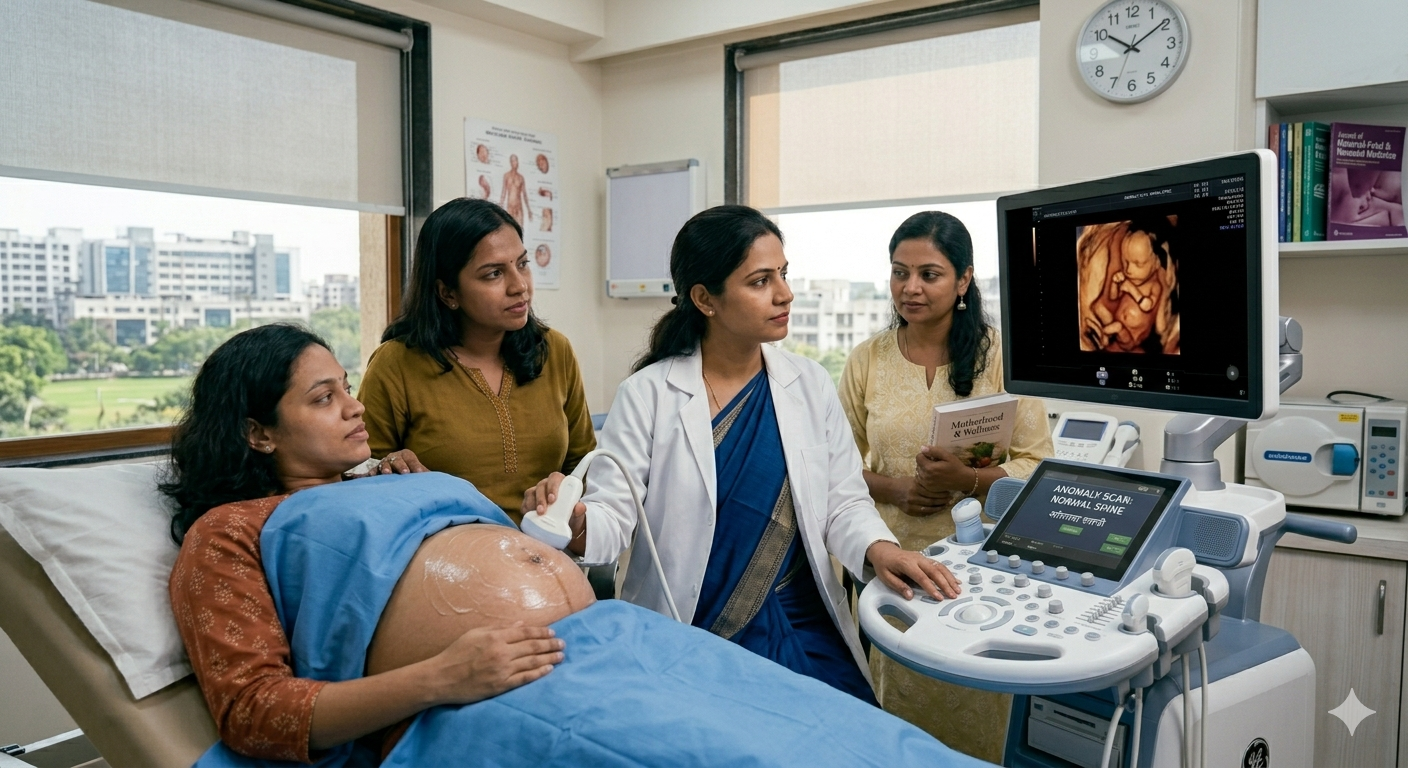
The 20-week anomaly scan is the most anticipated and most comprehensive ultrasound of your entire pregnancy. It is the scan where you get to see your baby in extraordinary detail for the first time and it is also the most clinically important scan before the third trimester.
Many parents approach it with a mix of excitement and anxiety. Here is everything you need to know so you walk in informed and walk out reassured.
What is the anomaly scan?
The anomaly scan also called the mid-pregnancy scan, morphology scan, or level II ultrasound is a detailed ultrasound performed between 18 and 22 weeks of pregnancy (most commonly at 20 weeks). The sonographer systematically examines every part of your baby's anatomy to check that everything is developing as it should.
This is not a simple size check. The scan takes 30–60 minutes and examines multiple structures in detail.
Source: NHS UK – 20-Week Screening Scan | FOGSI Anomaly Scan Guidelines
What does the anomaly scan check?
The sonographer will carefully examine all of the following:
Baby's brain and head
- Brain structure checking for abnormalities like hydrocephalus (excess fluid) or neural tube defects
- Measurement of the head circumference
- Facial features nose, lips, and palate (checking for cleft lip/palate if visible)
Heart and chest
- Four chambers of the heart checking structure, size, and rhythm
- Lungs position and development
- This scan checks for many but not all congenital heart defects
Abdomen and internal organs
- Stomach is it visible and in the right position?
- Kidneys both present and of normal size?
- Bowel checking for abnormalities
- Umbilical cord checking for the normal three blood vessels
Spine and limbs
- The entire spine is scanned for defects
- All four limbs are measured femur (thigh bone), humerus (upper arm bone)
- Hands and feet are counted
Placenta and amniotic fluid
- Placental position a low-lying placenta at 20 weeks may require a follow-up scan
- Amniotic fluid levels too much or too little can indicate issues
Overall measurements
- Head circumference (HC), Abdominal circumference (AC), Femur length (FL), and Biparietal diameter (BPD) these are used to estimate foetal weight and confirm gestational age
Source: Fetal Medicine Foundation UK – 20-Week Scan | FOGSI India
What do the results mean?
Most anomaly scans come back with a completely normal or "no anomaly detected" result. Here is how to interpret what you receive:
- "No anomaly detected" or "Normal study": All structures examined appear within normal range excellent news
- "Soft markers": Small findings that may be normal variations but slightly increase the statistical chance of chromosomal differences. Examples include echogenic focus in the heart or choroid plexus cysts. These are often completely harmless but may prompt a recommendation for NIPT or further monitoring.
- "Structural abnormality": A significant finding that requires further investigation or specialist referral your doctor will explain next steps clearly.
What if something is found?
First, understand that not every finding leads to a serious outcome. Some findings resolve spontaneously by the third trimester. Others may indicate a condition that requires planning but not panic.
If a potential abnormality is found, your doctor will:
- Refer you to a foetal medicine specialist or maternal-foetal medicine unit
- Recommend a detailed echocardiogram (ECHO) if a cardiac finding is noted
- Discuss further diagnostic testing NIPT, amniocentesis, or targeted ultrasound
Anomaly scan cost in India
- Government hospital (PMSMA) scheme: Free to ₹300
- Private diagnostic labs: ₹1,500-₹3,500
- Cloudnine, Motherhood, Apollo, Fortis: ₹3,000-₹6,000
- Level III scan with detailed foetal echocardiogram: ₹5,000-₹12,000
Source: Cloudnine Hospitals India – Types of Pregnancy Scans in India 2025
Tips for your 20-week scan appointment
- Bring your partner or a trusted family member for emotional support
- Drink water before the scan a moderately full bladder helps with image quality
- Ask for scan photos or a video most clinics in India provide printed scan images
- Write down questions to ask the sonographer before the appointment
- Do not panic if the sonographer is quiet and focused they are concentrating, not finding something alarming

Parent With Purpose
Parent with Purpose is your trusted parenting resource, offering expert advice, practical tips, and real experiences from fellow parents. Our content is organized by your child’s age, from pregnancy to the teen years, ensuring guidance that’s relevant to your current stage. Learn through articles, videos, podcasts, and courses that fit your lifestyle. We also provide carefully curated book lists, meal plans, product recommendations, and India-focused resources to make parenting easier and more informed.