 3 min read
 NT Scan at 11-13 Weeks: What It Is, What It Checks and What the Results Mean
The NT scan is one of the most talked-about tests in pregnancy and one of the most misunderstood. Many women come out of the appointment with a report full of numbers they do not understand, and they are left feeling anxious rather than reassured.

The NT scan is one of the most talked-about tests in pregnancy and one of the most misunderstood. Many women come out of the appointment with a report full of numbers they do not understand, and they are left feeling anxious rather than reassured.
This guide is written to change that. By the end, you will know exactly what the NT scan checks for, what the numbers mean, and why the result is not a diagnosis it is a risk estimate.
What is the NT scan?
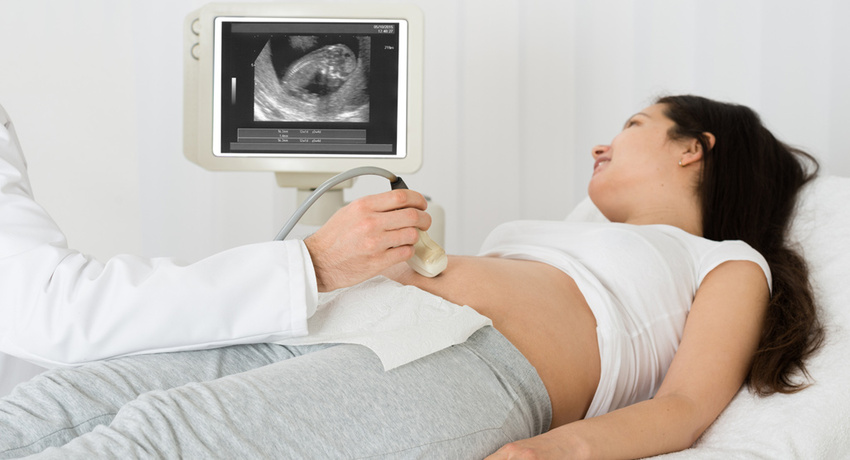
NT stands for Nuchal Translucency. The NT scan is an ultrasound scan performed between 11 weeks and 13 weeks 6 days of pregnancy. It measures a small fluid-filled space at the back of your baby's neck.
Why does this matter? Babies with certain chromosomal conditions most commonly Down syndrome (Trisomy 21), Edwards syndrome (Trisomy 18), and Patau syndrome (Trisomy 13) tend to have more fluid in this neck area than chromosomally normal babies. So by measuring this space, doctors can estimate the risk of these conditions.
Important word: estimate. The NT scan is a screening test, not a diagnostic test. It tells you the probability of a condition it does not confirm or rule it out.
Source: Fetal Medicine Foundation (FMF) UK – Nuchal Translucency Screening Guidelines
What happens during the NT scan?
-
It is a standard ultrasound the same kind you have had before
-
You will need a full bladder for the scan (drink 2–3 glasses of water 30-45 minutes before)
-
The sonographer measures the CRL (Crown-Rump Length) to confirm your baby's gestational age accurately
-
The NT measurement is taken the sonographer measures the clear fluid space at the back of the baby's neck
-
Additionally, the nasal bone is checked its absence is associated with higher chromosomal risk
-
The entire scan usually takes 20-45 minutes
Some doctors combine the NT scan with a blood test called the Double Marker Test (measures two hormones free beta-hCG and PAPP-A) to give a more accurate combined risk score. This combined screening improves accuracy from about 75% (NT alone) to approximately 90%.
Source: FOGSI – First Trimester Combined Screening Guidelines for Indian Pregnancies
NT scan normal range: what the numbers mean
This is where most parents get confused. Here is a simple breakdown:
-
NT measurement below 3.5mm: Generally considered normal. The lower the number, the lower the risk.
-
NT measurement between 2.0-2.5mm: Very reassuring well within normal range
-
NT measurement above 3.5mm: Associated with higher risk and usually leads to recommendation for further testing
But here is the crucial point: the NT measurement alone does not give you a result. The final risk score is calculated using a combination of your NT measurement, your blood test results (if done), your age, and your baby's gestational age. A woman aged 35 with an NT of 2.0mm may have a higher risk score than a 25-year-old with the same measurement simply because maternal age is a factor.
Your report will show a risk ratio, for example "1:500 for Down syndrome." This means 1 in 500 pregnancies with this profile would have Down syndrome. Anything below 1:250 is generally considered high risk and may lead to recommendation for diagnostic testing.
Source: Fetal Medicine Foundation – NT Screening Interpretation | FOGSI
What if my NT scan result shows high risk?
First: take a breath. A high-risk NT result does not mean your baby has a chromosomal condition. It means the probability is higher than average — and further testing is recommended to find out for certain.
Further options include:
-
NIPT (Non-Invasive Prenatal Testing): A blood test that analyses the baby's DNA in the mother's blood. It is highly accurate (99%+ for Down syndrome detection) and completely safe. Cost in India: approximately ₹12,000 - ₹25,000.
-
Amniocentesis: A sample of amniotic fluid is taken to analyse the baby's chromosomes. This is a diagnostic test 100% accurate. It carries a small risk (0.5–1%) of miscarriage. Usually done after 15 weeks.
-
Chorionic Villus Sampling (CVS): Similar to amniocentesis but done earlier (10-13 weeks). Also a diagnostic test.
Your doctor will guide you on which test is appropriate based on your specific situation and risk score.
Source: ACOG – First Trimester Prenatal Screening Guidelines 2022 | FOGSI
NT scan cost in India
The NT scan is widely available across India. Here are approximate costs:
-
Government hospitals and PMSMA centres: Free or ₹100-₹300
-
Private diagnostic labs (SRL, Thyrocare, Apollo, Healthians): ₹1,200-₹2,500
-
Cloudnine, Motherhood, Apollo Hospitals: ₹2,000-₹4,000
-
Combined NT scan + Double Marker blood test: ₹3,500-₹7,000 at private centres
Tip: Many government hospitals in Maharashtra, Karnataka, Tamil Nadu, and Delhi now offer the NT scan free of cost under the Pradhan Mantri Surakshit Matritva Abhiyan (PMSMA) scheme. Ask your ANM or government hospital doctor about eligibility.
Source: Government of India – PMSMA Scheme Details, Ministry of Health & Family Welfare
A reassuring note
The vast majority of NT scans come back with a low-risk result. Approximately 95-97% of pregnant women receive reassuring results from first-trimester screening. Even if your result is in the higher-risk category, remember the test identifies probability, not certainty. Many families with high-risk screening results go on to have chromosomally normal babies.
Whatever the result, your doctor is your best partner in deciding next steps. Do not interpret the numbers alone.

Parent With Purpose
Parent with Purpose is your trusted parenting resource, offering expert advice, practical tips, and real experiences from fellow parents. Our content is organized by your child’s age, from pregnancy to the teen years, ensuring guidance that’s relevant to your current stage. Learn through articles, videos, podcasts, and courses that fit your lifestyle. We also provide carefully curated book lists, meal plans, product recommendations, and India-focused resources to make parenting easier and more informed.