 2 min read
 Kick Counting in Pregnancy: How to Monitor Your Baby's Movements and When to Worry
Here is everything you need to know about doing it, interpreting it, and knowing when to act.

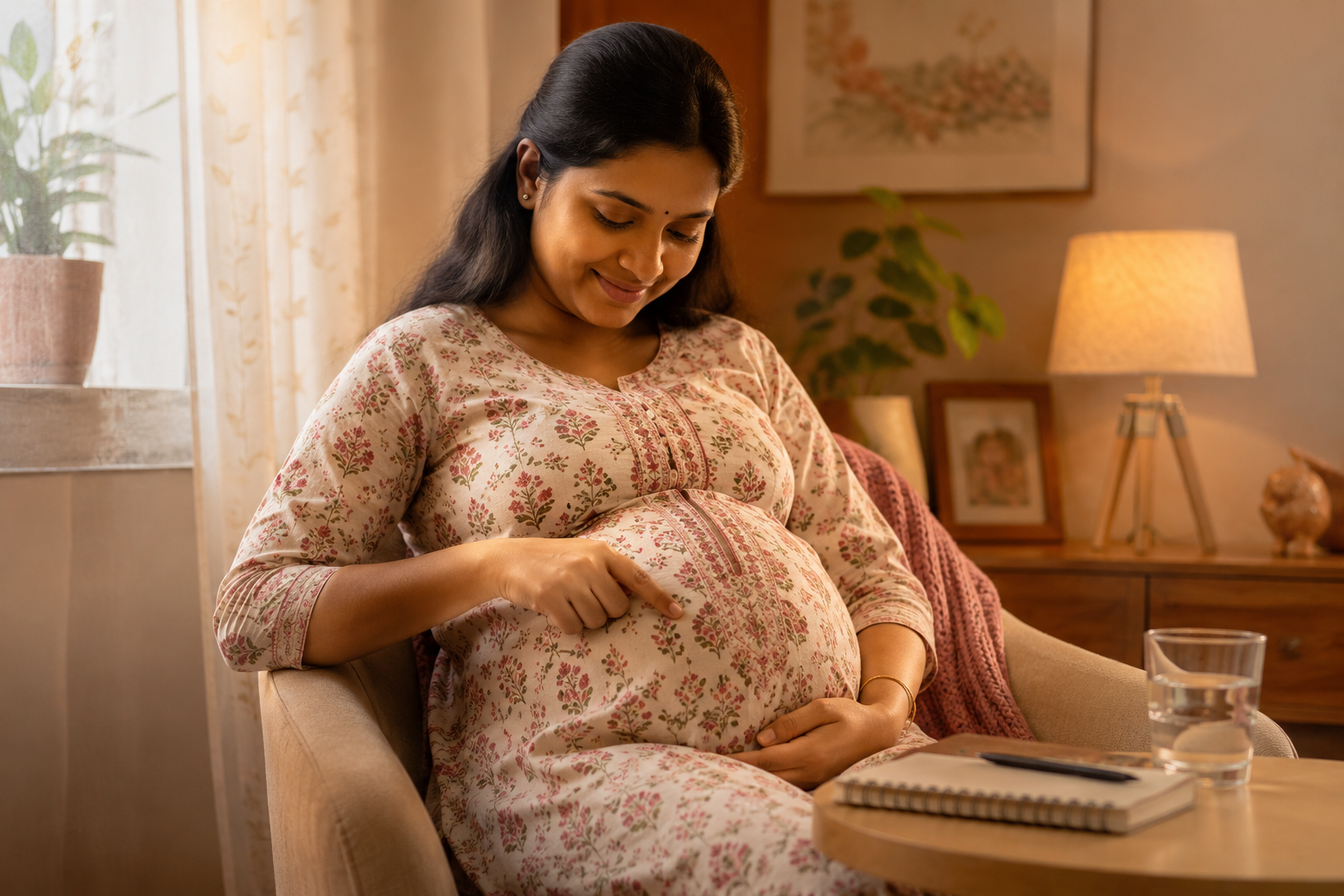
From around week 28 onwards, your baby's movements become more consistent and powerful. This is when many doctors start advising mothers to pay attention to their baby's movement patterns. Kick counting monitoring how often your baby moves is a simple but genuinely important practice.
Here is everything you need to know about doing it, interpreting it, and knowing when to act.
Why do baby movements matter so much in the third trimester?
Your baby's movements are a direct reflection of their wellbeing. A baby who is getting adequate oxygen and nutrition through the placenta will move regularly. Changes in movement patterns can sometimes indicate that the baby is under stress and needs medical evaluation.
Studies show that mothers who track fetal movements and act quickly on reduced movement have better outcomes including reduced stillbirth risk. A 2022 study in The Lancet found that women who were educated about kick counting and instructed to contact their care provider about reduced movements had a 33% reduction in late stillbirth risk.
Source: The Lancet – Fetal Movement Counting and Stillbirth Prevention 2022 | Tommy's Movement Guide UK
When should baby movement be felt consistently?
- By 24 weeks: Most mothers feel movement regularly, though there is no set daily count yet
- From 28 weeks: This is when kick counting becomes actively useful
- 28–36 weeks: Baby is active, movements are strong and often predictable
- After 36 weeks: Movement patterns may change as the baby has less room to move freely but should not disappear
How to do kick counting: the practical method
There is no single universally mandated method. Ask your doctor for their specific recommendation but here is the most widely used approach:
The "10 movements in 2 hours" method
- Choose a time when your baby is normally active usually after a meal
- Sit comfortably or lie on your left side
- Count every movement kicks, rolls, flutters, or jabs all count
- Note the time when you reach 10 movements
- Most babies reach 10 movements within 30-60 minutes
- If you have not felt 10 movements within 2 hours call your doctor
What counts as a "movement"?
- Kicks and jabs
- Rolls and turning movements
- Flutters and swishes
- Hiccups (the rhythmic, repetitive jumps you may feel) count these separately as they are a reflex, not voluntary movement
Baby not moving much – what to do first
Before you panic, try these approaches to stimulate your baby:
- Drink a cold glass of water or juice cold temperatures often prompt baby activity
- Eat something sweet a small piece of fruit or jaggery often triggers movement
- Lie down quietly on your left side and focus attention on your belly remove distractions
- Gently prod or move your belly
If after 30 minutes of focused monitoring you still feel no movement call your doctor or midwife. Do not wait until the next morning. Do not convince yourself everything is fine. Simply call.
Normal variation vs concerning change
It is important to understand that babies do have sleep cycles typically 20-40 minutes of sleep followed by an active period. A quiet baby for 30-40 minutes is often simply sleeping.
What is concerning is a sustained reduction from your baby's normal pattern. You know your baby better than any doctor you have been feeling their movements for weeks. Trust yourself. If something feels different, act on it.
Source: Tommy's Charity UK – Baby Movements in Pregnancy | NHS Fetal Movement Guidance

Parent With Purpose
Parent with Purpose is your trusted parenting resource, offering expert advice, practical tips, and real experiences from fellow parents. Our content is organized by your child’s age, from pregnancy to the teen years, ensuring guidance that’s relevant to your current stage. Learn through articles, videos, podcasts, and courses that fit your lifestyle. We also provide carefully curated book lists, meal plans, product recommendations, and India-focused resources to make parenting easier and more informed.