 3 min read
 Feeling Baby Move for the First Time: Everything About Baby Kicks at 18 Weeks
This week, we are talking about everything you need to know about feeling your baby move for the first time.

There is a moment in every pregnancy that changes everything. It is not the positive test, or even the first scan of the heartbeat. It is the first time you feel your baby move.
That first flutter faint, uncertain, almost unbelievable is called quickening. And it is one of the most profound experiences of pregnancy. This week, we are talking about everything you need to know about feeling your baby move for the first time.
Your baby at 18 weeks
Your baby is now approximately 142mm long roughly the size of a bell pepper or a sweet potato. An enormous amount is happening:
- The nervous system is maturing rapidly your baby's movements are becoming more coordinated
- Your baby can now hear not just muffled sounds but actual distinct sounds. Your voice, music, your heartbeat all audible to your baby now
- The kidneys are fully functioning and producing urine
- Vernix caseosa a white, waxy coating is beginning to form on your baby's skin as protection
- Your baby is sleeping and waking in regular cycles though not aligned with yours
Source: American Pregnancy Association – Week 18 Fetal Development | Cleveland Clinic
What does quickening feel like?
This is the question every first-time mother asks and the answer is genuinely hard to describe until you experience it. Here is how women most commonly describe it:
- "Like a butterfly landing gently in my lower belly"
- "Like a tiny fish flicking inside"
- "Like a gentle muscle twitch but in a place I don't have a muscle"
- "Popcorn popping, very softly"
- "A gentle bubbling or gurgling feeling"
The reason it is so subtle is that your baby is still small and the movements are padded by amniotic fluid. Many women initially wonder if they imagined it, or confuse it with gas or bowel movements. This uncertainty is completely normal.
When do you first feel the baby move?
The most commonly asked question and the answer varies significantly:
- First-time mothers: Most feel first movements between 18-22 weeks
- Women who have been pregnant before: May feel movement as early as 15-16 weeks (the muscles and nerves in the abdominal wall are more "tuned in" from the previous pregnancy)
- Women with an anterior placenta (placenta at the front of the uterus): May not feel movement until 20-22 weeks, as the placenta cushions the kicks
Your doctor can tell you the position of your placenta at your 20-week scan if it is anterior, do not panic about delayed movement.
Source: Tommy's Pregnancy Charity UK – Baby Movements in Pregnancy | NHS
18 weeks pregnant but no movement - is that normal?
Yes, very likely normal. Here is why many women at 18 weeks have not yet felt movement:
- First pregnancies: 18 weeks is actually the early end of the normal range. Many first-time mothers do not feel movement until 20–22 weeks.
- Anterior placenta: Acts as a cushion between the baby and your abdominal wall
- Busy life: If you are active and moving a lot, you may miss the subtle early movements
Tip: To feel early movement, lie still on your back or left side in a quiet room perhaps after eating, when babies tend to be more active. Remove distractions. Give it 20–30 minutes.
Will I feel movement every day from now on?
Not necessarily at 18 weeks. At this stage, movements are still irregular. There is no set pattern, and no defined daily number of movements to expect yet.
From around 28 weeks, your doctor will likely advise you to begin kick counting monitoring movement in a more structured way. Until then, simply enjoy the flutters when they come. They will become stronger and more regular as the weeks pass.
Talking and singing to your baby from week 18
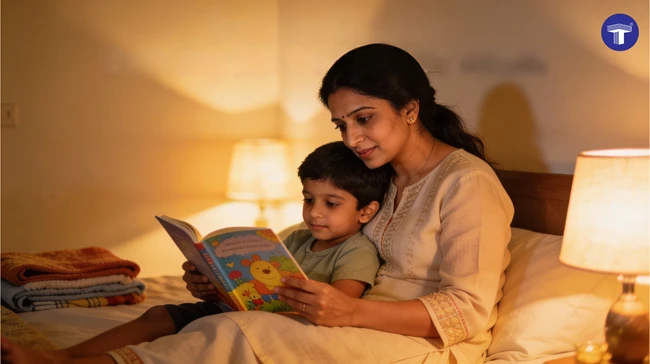
Your baby can now hear you. Consistently talking, reading aloud, playing music, or simply narrating your day means your baby will recognise your voice and your partner's voice -at birth. Research shows that newborns respond preferentially to voices they hear in the womb.
In many Indian families, playing bhajans, classical music, or simply reciting the Gayatri Mantra during pregnancy is a beautiful tradition and now there is scientific support for it too.
Source: UT Southwestern Medical Center – Sensory Development In Utero 2017

Parent With Purpose
Parent with Purpose is your trusted parenting resource, offering expert advice, practical tips, and real experiences from fellow parents. Our content is organized by your child’s age, from pregnancy to the teen years, ensuring guidance that’s relevant to your current stage. Learn through articles, videos, podcasts, and courses that fit your lifestyle. We also provide carefully curated book lists, meal plans, product recommendations, and India-focused resources to make parenting easier and more informed.