 5 min read
 8 Games Every Child Should Play for Brain Development and Family Bonding
In today’s fast-moving world, where screens have quietly taken over playtime, many parents find themselves wondering—are our children really learning while they play? The truth is, play is not just a way to pass time.

It is one of the most powerful ways a child’s brain grows, understands the world, and builds relationships.
But not all play is equal.
Some games go far beyond entertainment. They shape thinking, improve emotional strength, teach patience, and quietly prepare children for real-life situations. The right games can help children become better problem-solvers, better communicators, and more confident individuals.
If you are looking for meaningful play options that truly support your child’s development, these eight games stand out. Each one offers something unique, yet together they create a well-rounded learning experience for children of different ages. Let’s explore how.
1. Magnatiles: Building More Than Just Structures
Magnatiles may look like simple colorful tiles, but what children build with them goes far beyond physical structures.
When a child starts connecting tiles, they are not just playing—they are experimenting. They begin to understand balance, symmetry, and how shapes fit together. Without even realizing it, they are learning early concepts of geometry and spatial awareness. More importantly, Magnatiles encourage open-ended play. There are no strict rules, no right or wrong way to build. This freedom allows children to think independently and trust their own ideas.
You might notice your child building a house one day, a rocket the next, and something completely unexpected after that. This kind of creativity builds confidence. It tells the child, “Your ideas matter.” In a world where children are often told what to do, this kind of self-directed play is incredibly valuable.
2. Settlers of Catan: Learning Strategy Through Play
At first glance, Settlers of Catan might seem like a complex board game meant for older children or adults. But once children understand the basics, it becomes one of the most powerful learning tools. This game introduces children to planning, resource management, and decision-making. Every move requires thought. Should they build a road or save resources? Should they trade now or wait?
These decisions teach patience and long-term thinking—skills that are rarely developed through fast-paced digital games. Another beautiful aspect of Catan is negotiation. Children learn how to communicate, persuade, and sometimes accept rejection. They begin to understand that not every situation will go in their favor, and that’s okay.
These small experiences build emotional resilience and social intelligence, both of which are essential in real life.
3. Splendor: The Art of Quiet Thinking
Splendor is a calm yet deeply engaging game that teaches children how to plan ahead without overwhelming them. Unlike loud or fast games, Splendor encourages children to slow down and think. They begin to understand patterns, make strategic choices, and manage resources carefully.
The simplicity of the game makes it accessible, but the depth keeps it interesting. Children learn that success does not come from rushing—it comes from thoughtful decisions. Over time, you may notice your child becoming more patient, more focused, and more aware of their choices. In a world that constantly pushes speed, Splendor gently teaches the value of slowing down.
4. Pictureka: Training the Power of Observation
Children are naturally curious, but their ability to observe details can be strengthened with the right kind of play. Pictureka does exactly that.
This game challenges children to find specific objects in a busy visual scene. At first, it may seem simple, but it quickly becomes exciting and engaging. As children scan through the images, their brain learns to focus, filter distractions, and identify patterns. These skills are directly connected to reading, learning, and attention span.
Pictureka also brings energy into playtime. It is lively, interactive, and often filled with laughter. This balance of fun and focus makes it especially valuable. For children who struggle with attention or get easily distracted, games like Pictureka can gently improve concentration without pressure.
5. Monopoly: Understanding Money and Life Lessons
Monopoly is more than just a board game—it is a simplified version of real-world financial decisions. As children play, they learn about earning, spending, saving, and sometimes losing money. They begin to understand that choices have consequences.
Should they buy a property now or wait? Should they risk their money for a bigger reward?
These experiences introduce children to basic financial awareness, something that is rarely taught in schools. But Monopoly also teaches emotional lessons. There are moments of winning and losing, excitement and disappointment. Children learn how to handle both.
They understand that losing is not the end, and winning is not everything. These are lessons that stay with them for life.
6. Monopoly Deal: Quick Thinking in a Fast-Paced World
For families who enjoy the idea of Monopoly but prefer something quicker, Monopoly Deal offers a fresh experience. This card-based version is faster, more dynamic, and keeps children engaged without long waiting times.
Here, children learn to think on their feet. They must adapt quickly, make smart moves, and respond to changing situations. It improves decision-making speed while still maintaining the core lessons of money management and strategy.
In today’s world, where situations change rapidly, the ability to adapt is a powerful skill. Monopoly Deal introduces this in a fun and accessible way.
7. Sequence: Building Logical Thinking Step by Step
Sequence is a game that quietly strengthens logical thinking and planning. Children must place their chips strategically to form sequences, while also blocking their opponents. This requires them to think ahead and consider multiple possibilities. They learn to observe patterns, predict outcomes, and adjust their strategy as the game progresses.
What makes Sequence special is its balance. It is not too easy, yet not too complicated. It keeps children engaged while gently challenging their thinking. Over time, children develop better problem-solving skills and a stronger ability to plan ahead.
8. LEGO: Where Creativity Meets Problem Solving
LEGO has been a part of childhood for generations, and for good reason. It combines creativity with structure. Children can follow instructions to build something specific, or they can create something entirely their own. This balance helps develop both discipline and imagination.
When children build with LEGO, they also learn patience. Not every piece fits immediately. Sometimes they need to try again, adjust, and keep going. These small moments teach persistence. LEGO also encourages storytelling. A simple structure can turn into a whole world in a child’s mind. This kind of imaginative play supports emotional development and communication skills.
Why These Games Matter More Than We Realize
As parents, it is easy to focus on academic learning—reading, writing, numbers. But true development goes far beyond that.
Children need opportunities to:
- Think independently
- Solve problems
- Communicate with others
- Handle emotions
- Make decisions
The games listed above support all of these areas in a natural and enjoyable way. They do not feel like learning. They feel like play. And that is the beauty of it.
Creating Meaningful Family Time
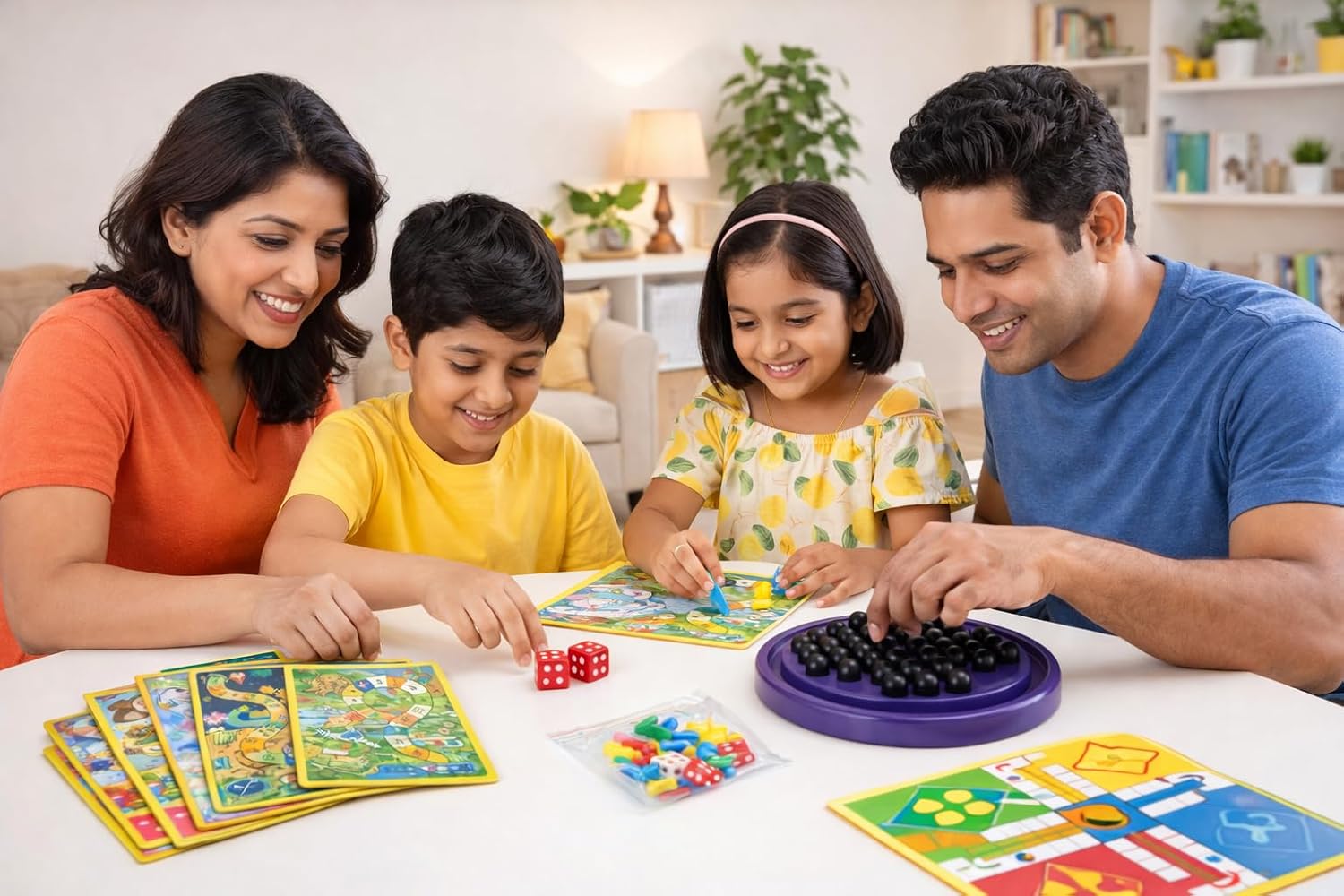
Another important benefit of these games is the opportunity they create for connection. When families sit together and play, something special happens. Conversations flow more easily. Laughter becomes natural. Children feel seen and valued.
These moments strengthen relationships in ways that structured activities often cannot. In busy routines, even a small game session can create lasting memories.
A Gentle Reminder for Parents
You do not need to introduce all these games at once. Start with one or two, based on your child’s age and interest. Observe how your child responds. Give them time to explore, understand, and enjoy.
The goal is not to make them perfect players. The goal is to support their growth. Even if they make mistakes, lose a game, or lose interest at times—it is all part of the process.
Final Thoughts
Childhood is not just about preparing for the future. It is about experiencing the present fully. The right kind of play can shape a child’s thinking, emotions, and confidence in ways that last a lifetime.
Games like Magnatiles, Settlers of Catan, Splendor, Pictureka, Monopoly, Monopoly Deal, Sequence, and LEGO are not just activities—they are tools for growth. They help children explore, learn, and connect.
And sometimes, the simplest moments—sitting around a table, playing a game, sharing a laugh—become the most meaningful ones. Because in the end, it is not just about what children learn. It is about how they feel while learning. And when learning feels like joy, it stays with them forever.

Parent With Purpose
Parent with Purpose is your trusted parenting resource, offering expert advice, practical tips, and real experiences from fellow parents. Our content is organized by your child’s age, from pregnancy to the teen years, ensuring guidance that’s relevant to your current stage. Learn through articles, videos, podcasts, and courses that fit your lifestyle. We also provide carefully curated book lists, meal plans, product recommendations, and India-focused resources to make parenting easier and more informed.