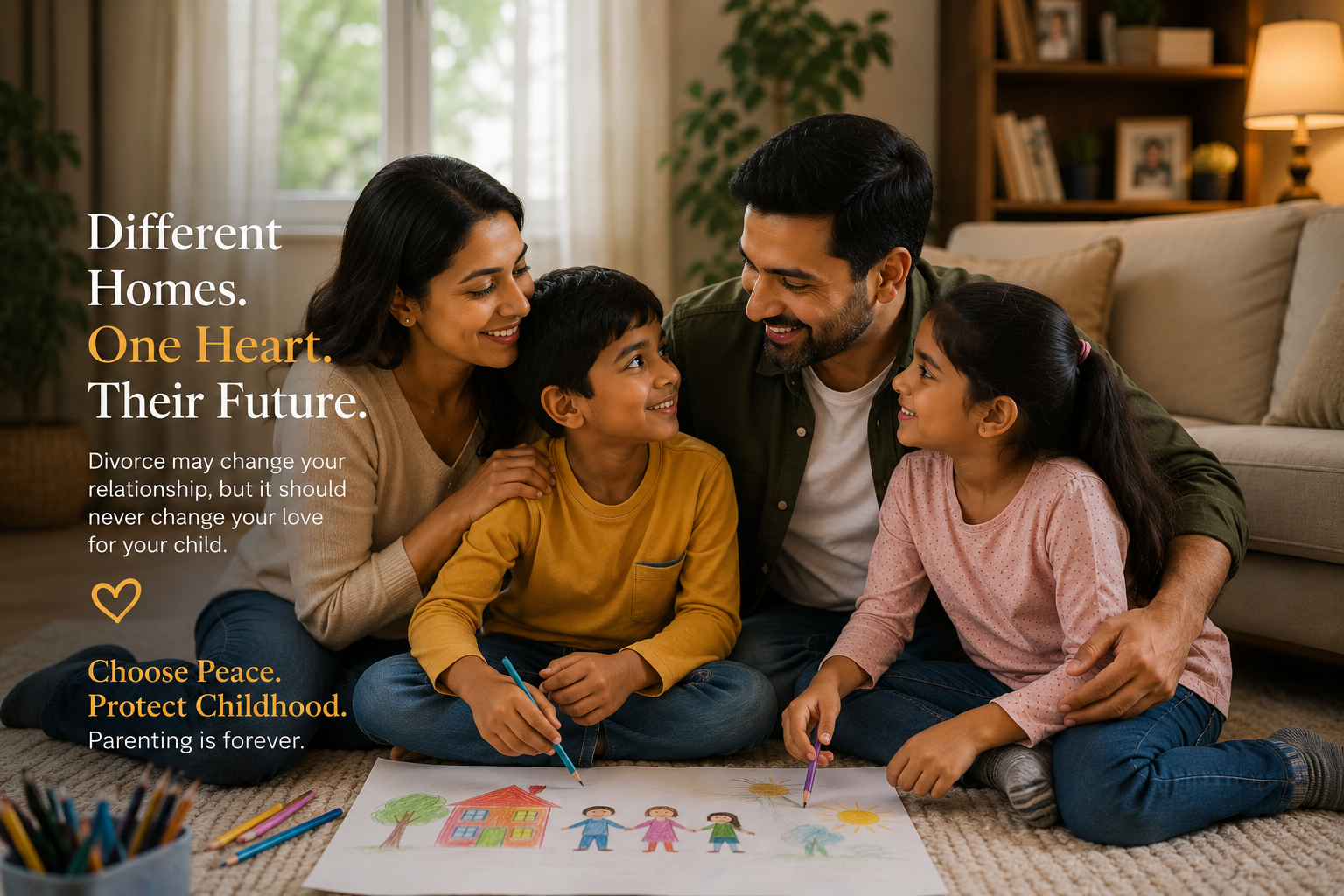
 5 min read
 When Marriage Ends, Parenting Doesn't -The Hidden Impact of Divorce on Children and How Parents Can Protect Them Through the Storm
Divorce may end a marriage, but it does not end the responsibility of parenting. This piece explores the emotional, psychological, and social effects of divorce on children, while offering practical guidance for parents to provide stability, reassurance, and healthy co-parenting. It highlights how love, communication, and cooperation can help children navigate the challenges of family change and emerge with resilience.



When Marriage Ends, Parenting Doesn't
-The Hidden Impact of Divorce on Children and How Parents Can Protect Them Through the Storm
By Adv. Reena Ankush Mandhani
No couple begins their journey together imagining that one day they will be discussing custody schedules, school vacations, or parenting plans through lawyers. Marriage begins with hope, while separation often begins with pain. Whether a couple chooses mutual divorce or finds themselves involved in proceedings before the Family Court, one truth remains unchanged: while a marriage can end, parenthood never does.
As a Certified POCSO Trainer, Advocate, Mediator, and Pre- & Post-Marital Consultant, I have sat across from many couples who have decided they cannot continue as husband and wife. Some first seek marriage counselling to repair their relationship. Others consult a divorce lawyer or an experienced family lawyer to understand their legal rights and responsibilities before approaching the Family Court. Yet, in almost every session, there is one person who isn't sitting in the room but whose life is about to change the most their child.
Children rarely understand divorce the way adults do. They don't think in terms of legal proceedings, mutual divorce, or irreconcilable differences. Their thoughts are much simpler.
"Will Papa still come home?""Did I do something wrong?"
"If I love both my parents, am I betraying one of them?"
These are questions children often never ask aloud. Instead, they carry them quietly in their behaviour, their grades, their sleep, or in the sudden silence that replaces their laughter.
As parents, we are often so busy ending a marriage that we forget our child is grieving the family they believed would last forever. A basic understanding of child psychology reminds us that children process separation very differently from adults. Their emotions often appear through behaviour rather than words, making emotional support even more important.
A Story That Changed My Perspective
A ten-year-old girl once came to my office holding two school drawings.
One drawing had her mother. The other had her father.
She refused to draw them on the same page.
When I gently asked why, she looked at me and said,
"If I draw them together, they'll fight."
Her parents had never asked her to choose between them. Yet every argument she had witnessed had quietly taught her that loving one parent somehow meant hurting the other.That moment stayed with me , because children don't just hear our words ,they absorb our emotions, they read our silence,they carry our conflicts long after we have forgotten them.Years of working with families and studying child psychology have taught me that children rarely express pain directly. Instead, they communicate through changes in behaviour, emotions, and relationships.
Divorce Doesn't Break Children. Conflict Does.
One of the biggest myths surrounding divorce is that separation itself damages children.In reality, what hurts children the most is living in constant conflict, fear, hostility, and emotional uncertainty. A home where parents scream at each other every day is often far more emotionally unsafe than two peaceful homes where parents treat each other with dignity and respect.
Whether parents separate through mutual divorce or after contested litigation, the emotional environment matters far more than the legal process itself.Children don't need parents who are married.They need parents who are emotionally mature enough to continue parenting together.
The Invisible Burden Children Carry
When parents separate, children often become emotional caretakers without anyone noticing. They worry about the parent who now lives alone. They hide their happiness because they don't want the other parent to feel left out. They stop talking about weekends spent with one parent because they fear upsetting the other, some become unusually responsible , others become withdrawn, some act out in school, others quietly convince themselves,
"If I had behaved better, maybe Mum and Dad would still be together."
No child should ever have to carry that burden. Understanding child psychology allows parents to recognize these hidden emotional struggles before they become long-term emotional wounds.
Four Mistakes Loving Parents Often Make
These mistakes are rarely made because parents don't love their children. They happen because parents themselves are hurting.
1. Making Children the Messenger
"Tell your father to transfer the money."
"Ask your mother why she didn't answer my call."
Children should never become the bridge between two adults.
2. Speaking Badly About the Other Parent
When one parent constantly criticizes the other, children often experience it as criticism of a part of themselves.Remember, your child comes from both of you.
3. Asking Children to Take Sides
Even seemingly innocent questions like,"You enjoy staying with Dad more, don't you?"
"Who do you want to spend Diwali with?"can create enormous emotional pressure.
Children should never feel they have to choose between the two people they love the most.
4. Forgetting That Children Are Always Listening
Children may appear busy playing , but they notice every sigh , Every slammed door, Every sarcastic comment, Every tense phone call. Their emotional radar is far stronger than we imagine.
What Children Need More Than Anything
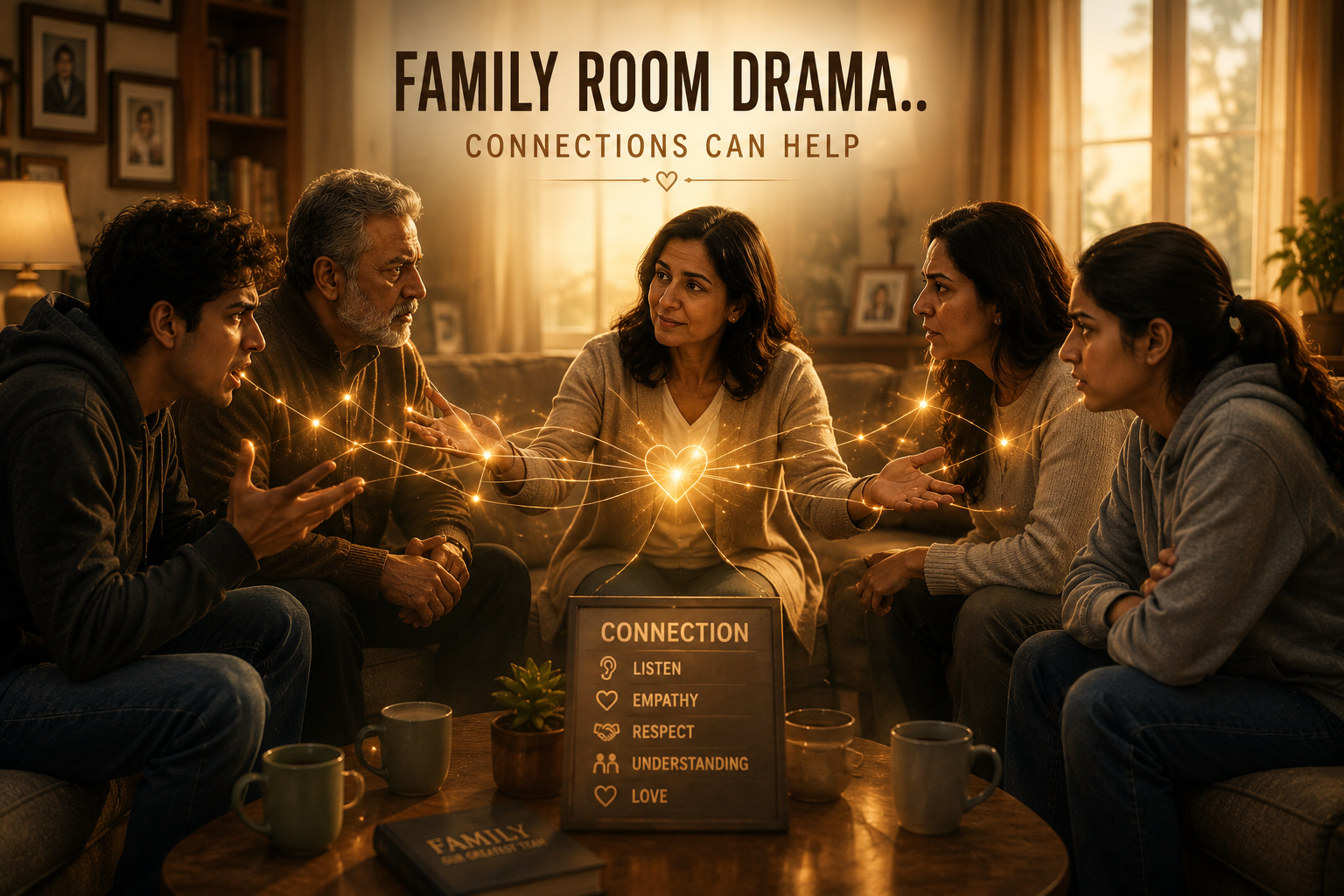
Children don't expect life to remain exactly the same.What they need is reassurance.They need routine, they need honesty that is appropriate for their age . Most importantly, they need to hear these words again and again: "This is not your fault." , "Both of us will always love you." , "You never have to choose between us." .These simple sentences become emotional anchors during a time when everything else feels uncertain.
Parenting Beyond the Courtroom
As an Advocate, I often remind parents of something important.The law can decide custody.It cannot create emotional security.A Family Court can determine where a child spends weekends. A family lawyer can explain legal rights. A skilled divorce lawyer can guide parents through the legal process with clarity and compassion.But neither the Family Court, the family lawyer, nor the divorce lawyer can decide whether a child feels loved, heard, respected, or emotionally safe.Healthy co-parenting is not built inside a courtroom. It is built through everyday choices. Choosing respect over revenge. Communication over conflict. Healing over winning. Because the greatest victory is not winning a legal battle—it is ensuring your child never feels caught in one.
My Reflection
Over the years, I have worked with families before marriage, during marriage, and sometimes after marriage has ended. Some relationships are strengthened through marriage counselling. Others conclude through mutual divorce with dignity and mutual respect. The families whose children adapt best are not necessarily those with the easiest divorces. They are the ones where parents continue to put their child's emotional well-being ahead of their own hurt. Children are incredibly resilient. But resilience grows where there is love, stability, respect, emotional safety, and an understanding of child psychology. If your marriage has ended, let your parenting become stronger. Years from now, your child may not remember who won the legal battle. They will remember who protected their heart while everything else around them was changing.
This Week
- Ask yourself honestly: Is my child carrying emotions that belong to me?
- Speak respectfully about your co-parent, especially when your child is listening.
- Reassure your child that the separation was an adult decision—not their responsibility.
- Spend uninterrupted quality time with your child without discussing legal matters or conflict.
- If emotions are running high, seek marriage counseling , family mediation, or professional support. Healing parents raise healing children.
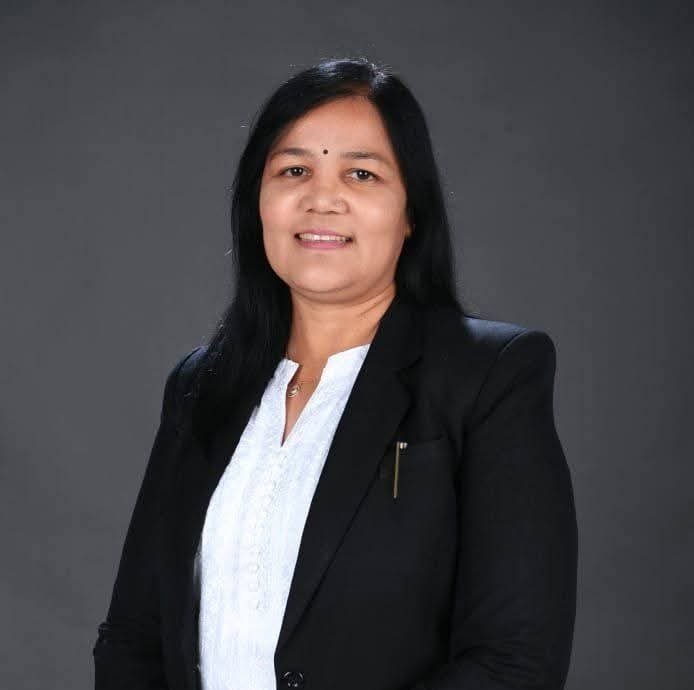
Reena Ankush Mandhani
Adv. Reena Ankush Mandhani is an Assistant Professor at the School of Legal Studies and Research, MGM University, Chhatrapati Sambhajinagar, with over 26 years of experience in legal education, research, advocacy, and academic leadership. She holds B.Com., LL.B., LL.M. (Criminal Law) qualifications, has qualified UGC-NET and SET (Law), and is currently pursuing her Ph.D. in Law at SRTM University, Nanded, on "Water Laws in India: Emerging Issues and Concerns in a Rights-Based Perspective." A practicing advocate since 2000, Adv. Mandhani appears before the High Court, District and Sessions Courts, with a focus on family law, women's rights, child protection, and legal awareness. She is also a Certified POSH Consultant, Certified POCSO Trainer, and Pre- & Post-Marital Consultant, combining legal expertise with a compassionate approach to counselling and dispute resolution. Throughout her academic career, she has served at MGM University, Manikchand Pahade Law College, Dr. Babasaheb Ambedkar Marathwada University, and Dayanand Law College, Latur. As IQAC Coordinator at MGM University, she has led several academic initiatives, including faculty development programmes, conferences, legal aid activities, moot courts, and the Saturday Law Forum, promoting research, innovation, and student engagement. An active researcher and academician, she has guided more than 26 LL.M. dissertations, authored research papers and book chapters, delivered over 100 guest lectures, and regularly serves as a resource person on topics such as Criminal Law, Human Rights, Gender Justice, POSH, POCSO, Environmental Law, and Artificial Intelligence in Legal Research. Beyond academia, Adv. Reena Mandhani is deeply committed to community service. She is Mentor with Udayan Shalini Fellowship (NGO) , supporting the education and empowerment of underprivileged girls. She also serves on several Internal Complaints Committees (ICC), Women's Grievance Cells, and institutional grievance redressal bodies, reflecting her dedication to creating safe, inclusive, and legally aware educational and professional environments. Her career reflects a unique blend of scholarship, advocacy, leadership, and social commitment, making her a respected legal academic, practitioner, mentor, and trainer dedicated to advancing justice, legal education, and community empowerment.