 6 min read
 Mindful Parenting: How to Stay Present in the Chaos of Daily Life
This blog breaks down exactly what mindful parenting means in real life, why presence matters more than perfection, and how to stay grounded even in the beautiful, relentless chaos of raising children.

The Gap Between the Parent You Want to Be and the Parent You Are
Most parents have a version of themselves in their head calm, patient, fully present. Kneeling down, making eye contact, responding thoughtfully. A parent who doesn't snap, doesn't scroll mid-conversation, doesn't lose it over spilled milk.
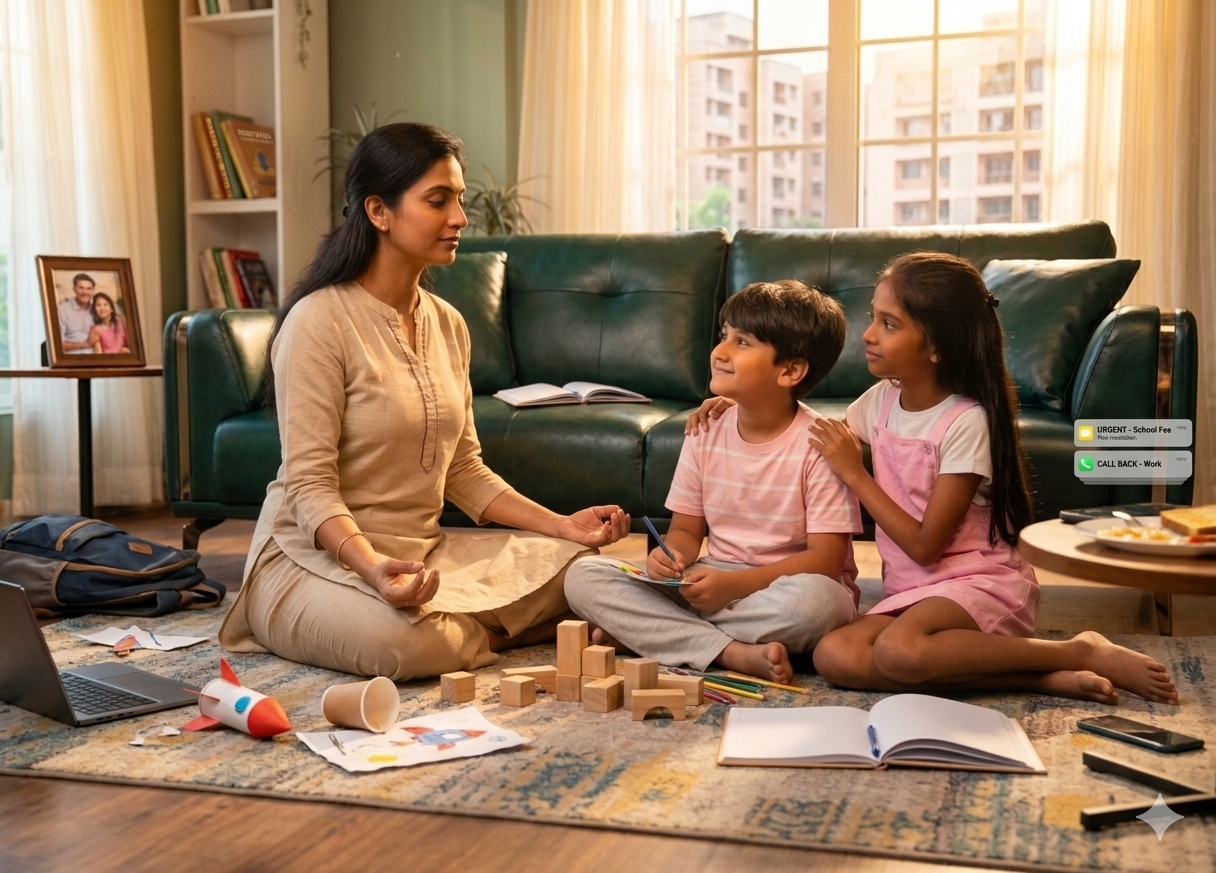
And then there's the actual Tuesday morning permission slips, packed lunches, a toddler who refuses shoes, a teenager slamming doors, and a phone buzzing with emails.
The gap between the parent you want to be and the parent you are in that moment isn't a character flaw. It's a nervous system problem and mindful parenting is the most evidence-based solution we have for it.
This blog breaks down exactly what mindful parenting means in real life, why presence matters more than perfection, and how to stay grounded even in the beautiful, relentless chaos of raising children.
What Is Mindful Parenting Really?
Mindful parenting is not about being a zen, unflappable parent who never raises their voice. It's not about perfect responses or Pinterest-worthy connection moments.
Mindful parenting is about bringing intentional awareness to your experience as a parent noticing what's happening inside you and around you, without being completely hijacked by it.
It has three core components:
1. Present-moment awareness Being here, in this interaction, with this child, right now rather than mentally running through tomorrow's to-do list or replaying yesterday's argument.
2. Non-reactive responding Creating a small but powerful pause between stimulus (your child's behavior) and response (your reaction). That pause is where conscious parenting lives.
3. Non-judgmental observation Noticing your own emotions, thoughts, and patterns as a parent without layering on shame or self-criticism. Awareness without judgment.
This is not a spiritual practice reserved for people who meditate for an hour each morning. It's a moment-to-moment orientation that can be practiced in the middle of school pickup, homework battles, and bedtime chaos.
Why Presence Is the Most Powerful Parenting Tool You Have
Research from Dr. Daniel Siegel one of the world's leading experts on mindfulness and brain development consistently shows that a parent's own emotional state is the single strongest predictor of a child's emotional regulation.
In other words: your nervous system regulates your child's nervous system. When you're dysregulated stressed, distracted, reactive your child's nervous system mirrors that state. When you're calm and present, their nervous system can settle.
This is the science behind the phrase "you can't pour from an empty cup." Mindful parenting isn't a luxury or a self-care indulgence. It's the neurobiological foundation of everything else you're trying to do as a parent.
5 Honest Reasons Parents Struggle to Stay Present
Before strategies, let's acknowledge why presence is genuinely hard because it's not for lack of love or effort.
1. Chronic parental stress Financial pressure, work demands, relationship strain, and the relentless logistics of family life keep the nervous system in a low-grade fight-or-flight state. You can't be present when your brain is scanning for threats.
2. Digital distraction The average adult checks their phone 96 times per day. Every phone glance during family time sends a micro-message: "This screen is more important than you." And children notice.
3. Unresolved personal stress and trauma Your child's behavior constantly activates your own emotional history. Their anger triggers your anger. Their anxiety mirrors your anxiety. Without awareness, you're reacting to your past more than their present.
4. The mental load of parenting Even physically present parents are often mentally absent running through meal planning, school schedules, and invisible labor while their child talks to them.
5. Exhaustion Chronic parental fatigue is real. It's hard to be patient, curious, and emotionally available when you're running on 5 hours of sleep and three cups of coffee.
Acknowledging these barriers honestly without shame is the first step toward changing them.
8 Practical Mindful Parenting Techniques for Everyday Life
1. The One-Breath Pause
Before responding to any emotionally charged moment a tantrum, a backtalk, a mess, a refusal take one conscious breath. Inhale slowly. Exhale fully.
This sounds almost embarrassingly simple. It works because it creates a neurological interrupt a tiny gap between stimulus and response where you can choose your reaction rather than simply executing a habitual one.
One breath. That's the whole technique. Use it a hundred times a day.
2. The "What Does My Child Need Right Now?" Reset
When you feel irritation, frustration, or overwhelm rising, shift your internal question from "How do I stop this behavior?" to "What does my child need right now?"
This single reframe moves you from reactive problem-manager to present, attuned parent. It accesses curiosity instead of control which is the foundation of mindful, connected parenting.
3. Phone-Free Anchor Times
Choose 2–3 daily anchors moments when your phone is put away completely. Common choices:
- The first 20 minutes after your child gets home from school
- Dinner (even if it's chaotic)
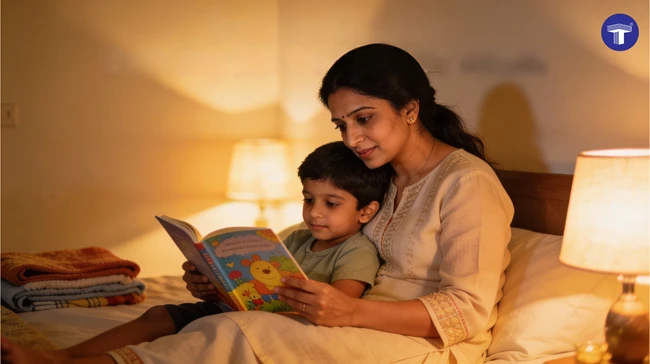
- Bedtime routine
These don't need to be long. They need to be consistent and phone-free. The quality of presence in those 20 focused minutes matters more than 3 hours of distracted togetherness.
4. Name Your Own Emotional State Out Loud
"I'm feeling really overwhelmed right now. I need two minutes."
This does three things simultaneously: it models emotional self-awareness for your child, it creates a legitimate pause before you react, and it teaches children that emotions are normal, nameable, and manageable.
You are never more powerful as a mindful parent than when you say: "I'm getting frustrated. Let me take a breath before I respond."
5. The "Noticing" Practice During Routine Tasks
Mindfulness doesn't require time set aside. It requires quality of attention. During ordinary parenting tasks bathtime, driving to school, folding laundry together practice noticing:
- The specific way your child laughs
- What they're currently obsessed with
- How they hold their spoon, or how their face looks when they're thinking
This isn't poetic it's neurological. Deliberate noticing activates the brain's attachment system and deepens the parent-child bond more reliably than any special activity.
6. Mindful Morning Starts
The first 10 minutes of your day set your nervous system's baseline for everything that follows. Before reaching for your phone, try:
- 5 deep breaths
- One minute of intentional stillness
- A brief internal intention: "Today, I want to bring patience (or curiosity, or warmth) to my parenting."
This isn't about perfection. It's about starting from a regulated state rather than already behind.
7. The Repair Practice Mindfulness After Ruptures
Mindful parenting is not about never losing your temper. It's about what you do afterward.
When you snap, yell, or react in a way you regret come back. Not immediately (regulate first), but soon. Kneel down, make eye contact, and say:
"Earlier when I raised my voice that wasn't okay. I was stressed and I handled it badly. I'm sorry."
This repair is an act of mindfulness. It demonstrates self-awareness, accountability, and the belief that relationships can survive imperfection. It's one of the most important lessons your child will ever learn.
8. End-of-Day Mindful Reflection
Before sleep, spend two minutes asking yourself:
- "When was I most present with my child today?"
- "When did I lose presence and what was driving that?"
- "What's one thing I want to do differently tomorrow?"
This brief daily reflection builds the self-awareness muscle that makes mindful parenting sustainable not as a series of isolated techniques, but as an evolving relationship with your own inner life.
Mindful Parenting When You're Running on Empty
Real life note: some days, presence is a luxury your nervous system genuinely cannot afford. On those days, the minimum viable mindful parenting practice is this:
Lower your expectations of yourself. Raise your self-compassion.
You are a human being parenting other human beings not a robot executing a protocol. The parent who can say "I didn't show up the way I wanted to today, and I'll try again tomorrow" is already practicing mindfulness. Self-criticism is not.
The Ripple Effect of Mindful Parenting
When you begin practicing presence imperfectly, inconsistently, but genuinely something shifts in your home. Children sense when they have your actual attention. They feel it in your body language, your eye contact, your tone. And they respond.
Not perfectly. Not immediately. But over time, children who are parented with presence become:
- More emotionally regulated and resilient
- More cooperative and communicative
- More secure in the relationship with their parent
- More naturally mindful themselves
Your presence is not passive. It is active, generative, and deeply healing for your child and for you.
Final Thoughts: Progress, Not Presence Perfection
You will never be a 100% present parent. That's not the goal. The goal is more moments of real presence than you had before. More pauses. More noticing. More repair.
Each mindful moment you offer your child becomes part of their emotional foundation the bedrock of security they'll build their whole life on.
You don't have to be perfect. You just have to keep coming back.

Parent With Purpose
Parent with Purpose is your trusted parenting resource, offering expert advice, practical tips, and real experiences from fellow parents. Our content is organized by your child’s age, from pregnancy to the teen years, ensuring guidance that’s relevant to your current stage. Learn through articles, videos, podcasts, and courses that fit your lifestyle. We also provide carefully curated book lists, meal plans, product recommendations, and India-focused resources to make parenting easier and more informed.