 4 min read
 What Are Healthy Milestones in the First 2 Years?
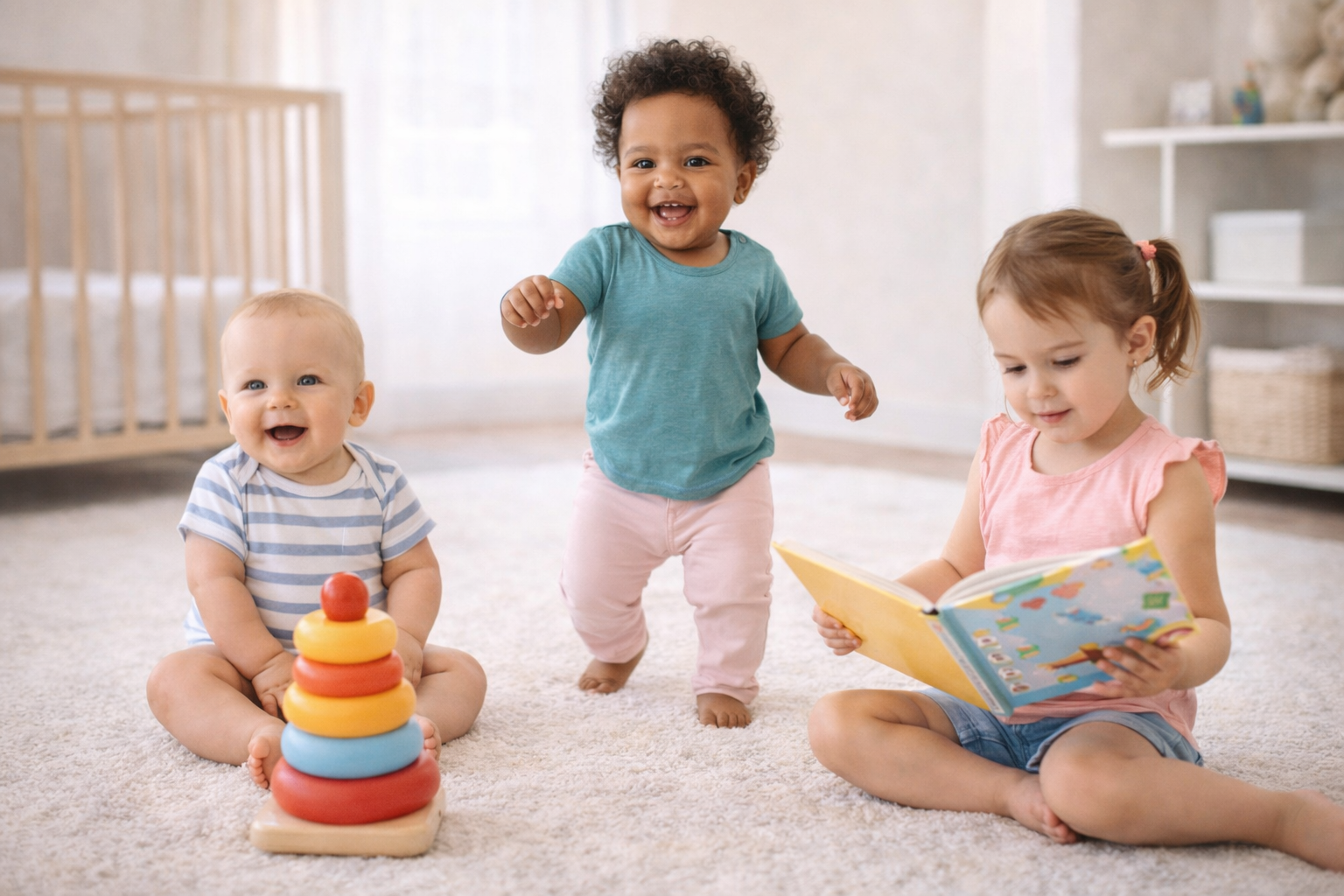
Every child grows at their own pace, but there are common signs that show healthy progress. These include changes in movement, communication, and behavior over time. Knowing what to expect can help parents feel more aware and confident while watching their child learn and develop day by day.

The first two years of a baby’s life are full of changes. Almost every week, something new seems to happen. A small movement, a new sound, a different reaction—and suddenly, you feel like your baby is growing faster than you expected.
At the same time, this phase brings a lot of questions.
“Is my baby developing normally?”
“Should they be doing this by now?”
“Why is another baby of the same age doing more?”
If you’ve ever compared or worried about milestones, you’re not alone. Most parents do. But before going into what milestones look like, it’s important to understand one thing—milestones are guides, not deadlines. They show a general pattern of development, but every baby follows their own pace.
Understanding What “Healthy Milestones” Really Mean
Healthy milestones are not just about when your baby does something. They are about how your baby is progressing over time.
In the first two years, development mainly happens in four areas:
- Physical movement (like rolling, sitting, walking)
- Communication (sounds, words, responses)
- Social interaction (smiling, bonding, reacting)
- Cognitive skills (recognizing, exploring, understanding)
A healthy baby may not follow a perfect timeline, but there is usually steady progress in these areas.
What matters more than speed is consistency.
The First Year: Rapid but Uneven Growth
The first year is when most visible changes happen. Your baby goes from being completely dependent to becoming more active and aware.In the early months (0–3 months), development is subtle but important.
Babies begin to:
- Recognize faces
- Make eye contact
- Respond to sounds
- Move arms and legs more actively
Around 3–6 months, you may notice:
- Better head control
- Smiling and reacting to familiar people
- Trying to roll over
- Making more sounds
By 6–9 months:
- Sitting with support or without
- Reaching and grabbing objects
- Responding to their name
- Showing curiosity about surroundings
And by the end of the first year (9–12 months), many babies:
- Start crawling or moving around
- Try to stand or pull themselves up
- Babble simple sounds like “ma” or “ba”
- Recognize familiar people and routines
But here’s something many parents don’t realize—not all babies follow the same path. Some babies may skip crawling and move straight to standing or walking. Some may be more focused on observing rather than moving early. And that is still within the range of normal.
The Second Year: Slower but More Meaningful Changes
The second year may feel less dramatic compared to the first, but it is just as important. This is when your baby starts becoming more independent.
Between 12–18 months, many babies:
- Begin walking or improving balance
- Start saying a few meaningful words
- Understand simple instructions
- Show preferences (likes and dislikes)
Between 18–24 months:
- Walking becomes more stable
- Vocabulary starts increasing
- They may combine two simple words
- They begin imitating actions
- Show stronger emotions and reactions
This is also the stage where personality starts becoming visible. Some children become more active and expressive, while others are quieter and more observant.
What Parents Commonly Worry About
When you look at milestones, it’s easy to start worrying—especially because of comparison.
Some of the most common concerns parents have include:
- “My baby is not crawling yet—is that a problem?”
- “Why is my baby not speaking like others?”
- “My baby seems less active—should I worry?”
- “Other babies are walking, but mine is not yet”
These questions often come from seeing other children or reading things online. But here’s the important part—development is not a competition. Some babies focus more on physical skills first, while others develop communication or social skills earlier. As long as there is gradual progress, there is usually no need to worry.
Signs of Healthy Development
Instead of focusing only on specific milestones, it helps to look at overall patterns.
A baby is generally developing well if:
- They are becoming more active over time
- They respond to people and surroundings
- They show curiosity
- They try to explore or interact
- They gradually learn new things
Even small progress matters.
For example:
- Trying to reach something
- Turning towards a sound
- Attempting to stand
- Responding with a smile
These are all signs that development is happening.
When Should You Pay Attention?
While variation is normal, there are certain situations where it’s okay to pause and observe more closely.
For example:
- Very little movement or activity over time
- No response to sounds or people
- No attempt to communicate (even through sounds or gestures)
- Lack of interest in surroundings
This doesn’t always mean something is wrong, but it may be helpful to speak to a doctor if you feel something is not progressing. The key is not to panic, but to stay aware.
One Important Thing Parents Often Miss
Most parents focus only on visible milestones like walking or talking. But development is also happening in less obvious ways.
For example:
- A baby watching carefully is learning
- A baby listening is developing understanding
- A baby observing people is building social awareness
So even when it feels like “nothing is happening,” a lot is happening internally. This is something many parents overlook.
How You Can Support Your Baby
You don’t need a strict routine or special methods to support development.
Simple things help the most:
- Let your baby move freely
- Talk and interact regularly
- Allow them to explore safely
- Give them time instead of rushing
Avoid:
- Constant comparison
- Forcing milestones
- Over-intervening in every movement
Your presence and patience matter more than any activity plan.
A Gentle Reminder for Parents
It’s easy to feel pressure in these early years.
You may feel like you should be doing more, teaching more, or making sure your baby is “on track.” But development doesn’t work like a checklist. Your baby is not behind if they are not matching someone else. They are not late if they are taking their own time.
Every child grows in their own rhythm.
Final Thoughts
Healthy milestones in the first two years are not about perfect timing. They are about steady progress, natural development, and growing awareness.
Instead of focusing on exact ages or comparisons, look at your baby’s journey as a whole.
Are they learning something new over time?
Are they becoming more aware and active?
Are they responding to the world around them?
If yes, then your baby is growing just as they should.Because in the end, development is not about being faster—it’s about moving forward, one small step at a time.

Parent With Purpose
Parent with Purpose is your trusted parenting resource, offering expert advice, practical tips, and real experiences from fellow parents. Our content is organized by your child’s age, from pregnancy to the teen years, ensuring guidance that’s relevant to your current stage. Learn through articles, videos, podcasts, and courses that fit your lifestyle. We also provide carefully curated book lists, meal plans, product recommendations, and India-focused resources to make parenting easier and more informed.