 5 min read
 Screen Time and Sleep: The Hidden Disruption
Many children struggle to rest properly when devices are used often. Bright light and constant stimulation can delay natural sleep cycles, making it harder to fall asleep or stay asleep. Over time, this can affect mood, energy levels, and overall well-being, even if the signs are not noticed immediately.

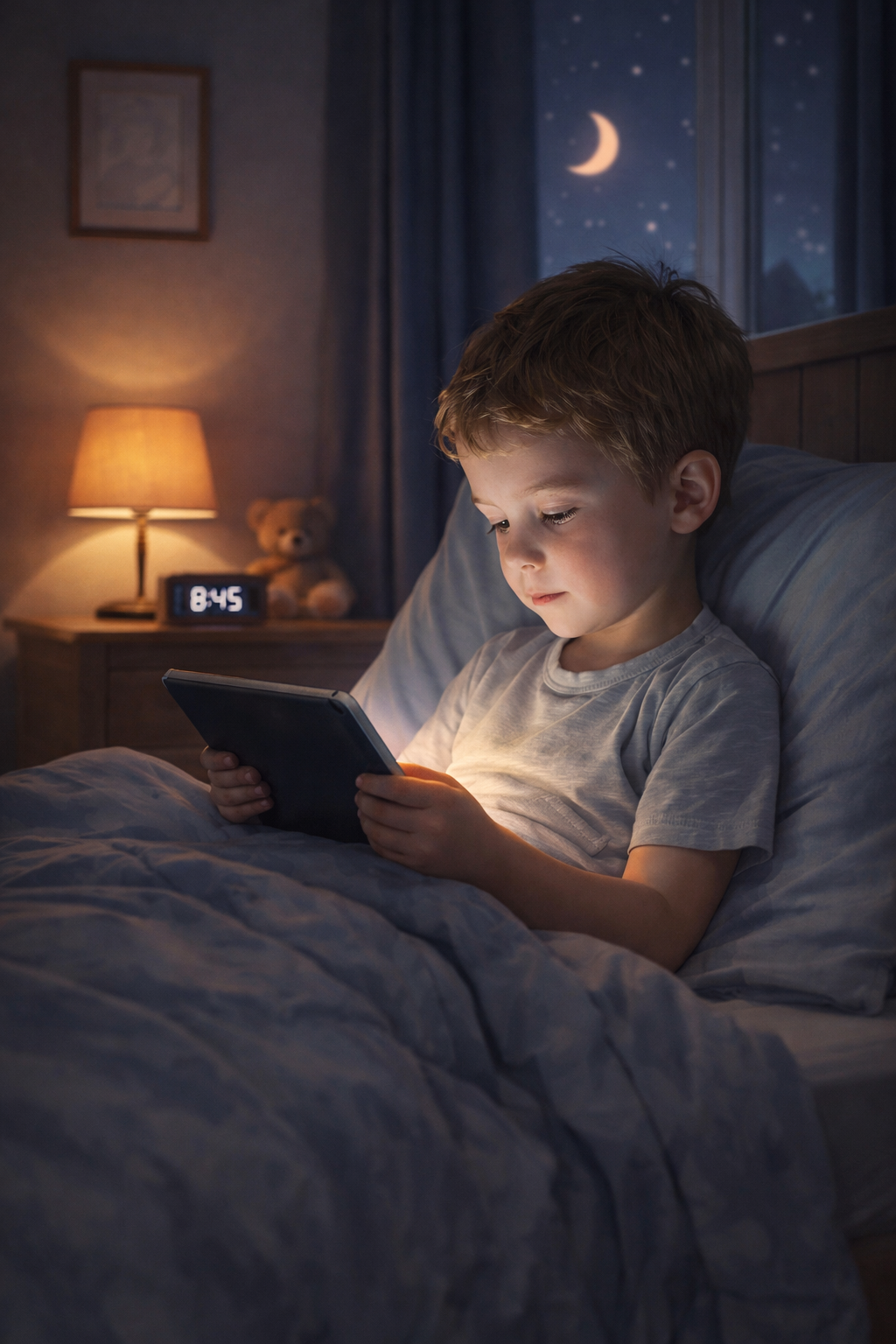
There’s a moment in many homes that feels very familiar. The lights are dim, the day is winding down, and a child is still holding onto a screen — watching one last video, finishing one more episode, or scrolling just a little longer. It feels harmless. Sometimes, it even feels helpful. The child is quiet, settled, and not resisting bedtime. But later, sleep doesn’t come easily. There’s tossing, turning, asking for water, getting out of bed, or simply lying awake longer than expected. And the next day, there’s irritability, low energy, or difficulty concentrating. What often goes unnoticed is that these two moments — screen time and sleep difficulty — are not separate. They are closely connected.
Sleep Is Not Just Rest — It Is Brain Work
Sleep, especially in children, is not simply about rest or relaxation.
It is a period when the brain is actively working behind the scenes:
- Processing what was learned during the day
- Strengthening memory pathways
- Regulating emotional balance
- Supporting physical growth
In a growing child, this process is even more important because development is happening at a rapid pace. Good sleep is not just about duration. It is about quality, rhythm, and how smoothly the brain transitions into it. And this is where screens begin to quietly interfere.
The Brain Needs a Gradual Slowdown
At the end of the day, the brain is meant to slow down gradually.
Natural evening routines help signal this transition:
- Lower light
- Reduced activity
- Calm interactions
- Predictable patterns
These cues tell the brain that it is time to shift from alertness to rest. Screens introduce the opposite experience. Even when a child appears calm while watching, the brain is still being stimulated. The visuals, sounds, and constant changes keep the mind engaged.
So instead of winding down, the brain remains active. When the screen is finally turned off, the body is ready for sleep, but the brain is not yet in that state. This mismatch makes falling asleep harder.
Light Exposure and Internal Timing
One of the less visible effects of screen use involves light. Screens emit a type of light that can influence the body’s internal clock — the system that regulates when we feel awake and when we feel sleepy. In the evening, the body naturally begins to prepare for sleep by adjusting certain internal signals. When a child is exposed to screen light during this time, it can interfere with this process. The brain may interpret the light as a signal to stay alert. As a result, the natural feeling of sleepiness can be delayed. This doesn’t always mean the child won’t sleep at all. But it can shift the timing, making sleep come later than it should.
Mental Stimulation That Lingers
Even after a screen is turned off, its effect does not stop immediately. The content a child watches can continue to occupy the mind. Fast-paced visuals, exciting scenes, or emotionally engaging content can keep thoughts active.
This can lead to:
- Difficulty relaxing
- Continued mental activity
- Delayed transition into deeper sleep
The brain needs time to settle, and when stimulation is high, that settling process takes longer. So even if a child is in bed, the brain may still be “awake” in a functional sense.
Disrupted Sleep Patterns Over Time
Occasional late nights are not unusual. But when screen exposure becomes a regular part of the bedtime routine, patterns begin to form.
Sleep may gradually become:
- Later in timing
- Less consistent
- More fragmented
Children may fall asleep at different times each night, wake up more often, or struggle to maintain a steady rhythm. Over time, this inconsistency affects how the body regulates sleep. The internal clock becomes less predictable, making it harder for the brain to recognize when it is time to sleep.
The Depth of Sleep Matters
Sleep is not just about falling asleep — it is also about staying in a restful state. Children need uninterrupted sleep cycles for proper development. When sleep is affected by screen exposure, it may not be as deep or restorative. Even if the total number of hours seems sufficient, the quality may be reduced.
This can show up as:
- Waking up feeling tired
- Reduced alertness during the day
- Increased irritability
The body may have rested, but the brain may not have completed all the processes it needed to.
Night-Time Awakenings and Restlessness
Some children who use screens close to bedtime may experience more frequent night awakenings. This does not always appear dramatic.
It may look like:
- Brief waking during the night
- Difficulty settling back to sleep
- Light, restless sleep
These interruptions may not always be remembered in the morning, but they affect the overall restfulness of sleep. The brain moves between sleep stages, and disruptions can prevent it from reaching deeper, more restorative phases.
Morning Impact: What Shows Up the Next Day
The effects of disrupted sleep are often more visible the next day.
A child who has not slept well may:
- Struggle to wake up
- Feel low on energy
- Have difficulty focusing
- Become more emotionally sensitive
These changes are not always immediately linked back to sleep. They may be seen as mood changes or behavior shifts. But sleep quality plays a central role in how children function during the day.
A Cycle That Reinforces Itself
One of the more subtle challenges is how this pattern can become a cycle. A child who sleeps late may wake up feeling tired. During the day, they may seek low-effort activities, such as screen use. By evening, screens are used again, delaying sleep once more. This creates a repeating loop:
- Screen use → delayed sleep → tiredness → more screen use
Over time, this cycle can become a regular pattern.
The Quiet Replacement of Bedtime Routines
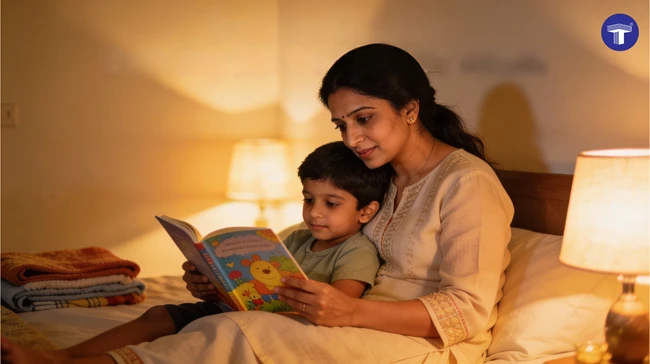
Bedtime routines have traditionally included calming activities. Stories, conversations, quiet play — these help the brain slow down naturally. When screens become part of the evening routine, they may gradually replace these calming experiences. This changes how the brain associates bedtime. Instead of linking sleep with calm and predictability, it may begin to associate it with stimulation followed by an abrupt stop. This makes the transition less smooth.
The Difference Between Tired and Ready for Sleep
There is a difference between feeling tired and being ready to sleep. A child may feel physically tired after a long day. But if the brain is still active due to screen stimulation, sleep may still be delayed. This creates confusion for both the child and the parent. The child appears tired but cannot fall asleep easily. Understanding this difference helps explain why simply being “tired” is not always enough.
Subtle Changes, Long-Term Effects
The impact of screens on sleep is often gradual.
It may begin with:
- Slightly delayed sleep
- Occasional difficulty settling
Over time, these small changes can develop into consistent patterns. Because sleep is a daily process, even small disruptions can accumulate. And since sleep supports many areas of development, its disruption can have broader effects.
What Often Goes Unnoticed
One of the challenges with sleep disruption is that it is not always obvious. There may not be a clear, immediate problem.
Instead, it shows up in indirect ways:
- Changes in mood
- Reduced attention
- Lower energy levels
These signs are sometimes attributed to other causes, while the role of sleep remains unnoticed.
Bringing It All Together
When we look at the connection between screens and sleep, it becomes clear that the impact is not caused by a single factor.
It is a combination of:
- Ongoing mental stimulation
- Light exposure affecting internal timing
- Changes in routine and rhythm
Each of these may seem small on its own. But together, they influence how easily and how well a child sleeps.
Closing Thought
Sleep is one of the most important foundations of a child’s development. It supports how they think, feel, grow, and function every single day. Screens, while a part of modern life, can quietly interfere with this process — not in obvious ways, but through small, repeated disruptions.
Understanding this connection is not about removing screens completely. It is about recognizing how timing, patterns, and daily habits shape something as essential as sleep. Because sometimes, what affects a child the most is not what we see during the day —
but what quietly changes during the night.

Parent With Purpose
Parent with Purpose is your trusted parenting resource, offering expert advice, practical tips, and real experiences from fellow parents. Our content is organized by your child’s age, from pregnancy to the teen years, ensuring guidance that’s relevant to your current stage. Learn through articles, videos, podcasts, and courses that fit your lifestyle. We also provide carefully curated book lists, meal plans, product recommendations, and India-focused resources to make parenting easier and more informed.