 5 min read
 Peer Influence, Screens and Changing Behaviour
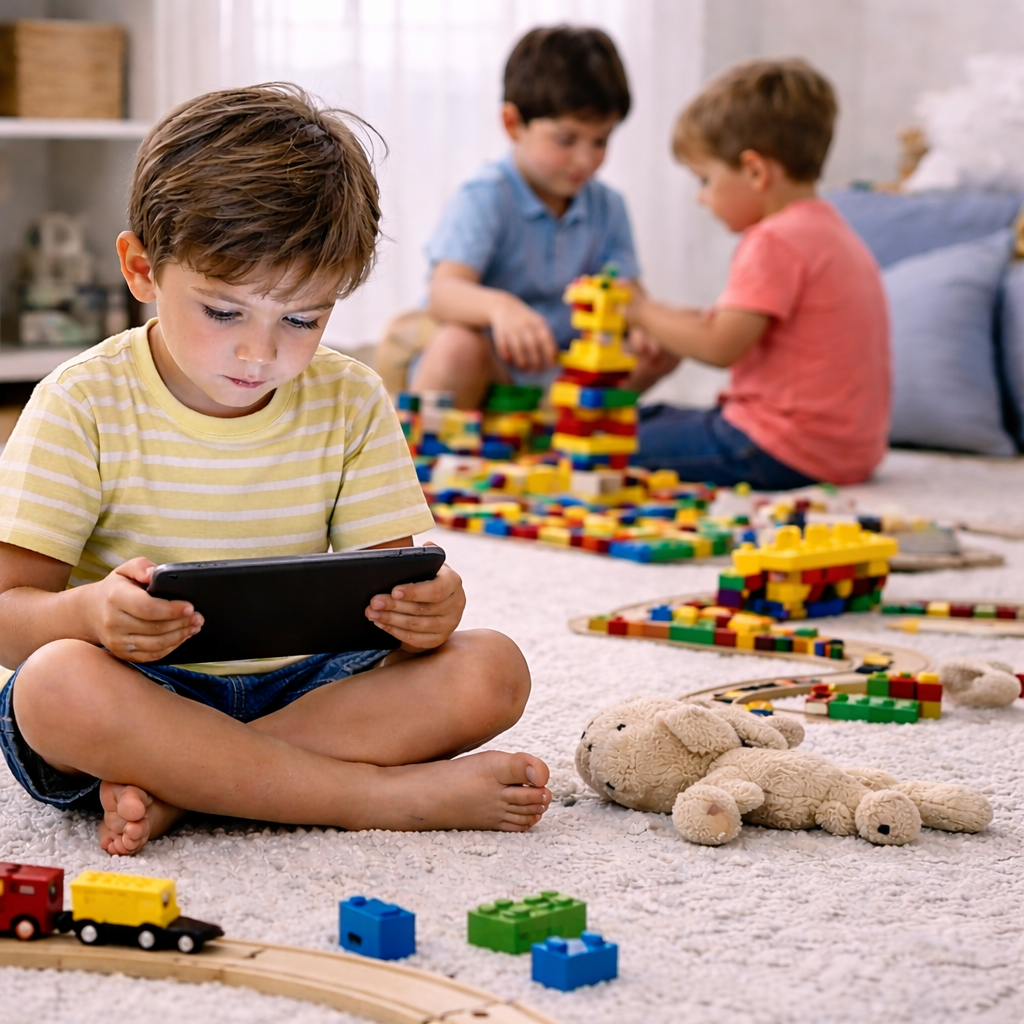
As children grow, friends and digital content begin to shape how they think and act. They may copy what they see or follow what others do. This can slowly change habits, language, and choices, making it important to notice how these influences affect their everyday behaviour.

Somewhere between childhood and teenage years, a quiet shift begins. Your child, who once looked to you for everything, slowly starts looking outward.
Friends begin to matter more. Opinions from peers carry weight. Fitting in starts becoming important—even if they don’t say it out loud. And right in the middle of this transition, screens step in—not just as devices, but as gateways to social worlds.
At ages 9 to 12, screens are no longer just about cartoons or games. They become a space for comparison, connection, influence, and identity. And when peer influence meets screen exposure, behaviour doesn’t just change—it starts to reshape.
Why Ages 9–12 Are So Sensitive
Pre-teen years are a bridge between dependency and independence.
Children at this stage begin to:
- Seek approval outside the family
- Compare themselves with others
- Develop a sense of identity
- Become more aware of social dynamics
- Feel the need to belong
This is a powerful phase. And because they are still emotionally developing, they are highly impressionable. Peer influence is not new—it has always existed. What’s different today is that screens amplify it.
Screens: The New Social Playground
In earlier times, peer influence was limited to school or nearby friends. Now, screens have expanded that circle infinitely.
Through videos, games, and online content, children are exposed to:
- Trends
- Behaviours
- Lifestyles
- Language
- Reactions
And most importantly—what is considered “cool” or “acceptable” Even without direct interaction, children observe and absorb. They don’t just watch—they internalize.
The Subtle Shift in Behaviour
When peer influence combines with screen exposure, behavioural changes don’t happen suddenly. They appear in small, gradual ways.
You may notice:
- Changes in the way your child speaks
- New attitudes or opinions that seem unfamiliar
- Increased sensitivity to what others think
- A stronger desire to follow trends
- Resistance to things they previously enjoyed
These are not random changes—they are reflections of what they are observing and trying to align with.
“I Want to Be Like Them”: The Comparison Loop
At this age, children begin comparing themselves more actively. Screens make this comparison constant.
They see:
- How others look
- What others have
- How others behave
- What gets attention
And slowly, a loop forms:
Observe → Compare → Feel → Adjust behaviour
This can lead to:
- Changing preferences
- Mimicking attitudes
- Feeling “less than” or “not enough”
- Seeking validation through similar behaviour
The child is not just watching—they are trying to fit into a perceived standard.
Behaviour as a Way to Belong
For pre-teens, behaviour is often shaped by one simple need: belonging.
If a certain type of behaviour seems accepted or admired—whether online or among peers—they may adopt it.
This can include:
- Speaking in a certain tone or slang
- Showing interest in specific content
- Reacting in exaggerated ways
- Adopting confidence or attitude they’ve seen
It’s not always intentional. It’s often a subconscious attempt to feel included.
The Rise of Digital Identity
At this stage, children begin forming a sense of “who they are.” Screens play a big role in this.
They start asking themselves:
- What do I like?
- How do I present myself?
- What will others think of me?
And instead of discovering answers internally, they often look outward. They observe others and build their identity based on what they see.
This can lead to:
- Copying personalities
- Changing behaviour depending on context
- Seeking approval through actions
Identity becomes something shaped externally, rather than developed internally.
Emotional Reactions Become Stronger
With increased exposure and comparison, emotional responses also change.
You may notice:
- Increased sensitivity to criticism
- Quick reactions to small issues
- Mood swings linked to social interactions
- Frustration when not included or acknowledged
Screens can intensify these emotions by constantly showing what others are doing, achieving, or experiencing. This creates a sense of pressure—often without the child fully understanding why they feel that way.
Risk-Taking and Experimentation
Pre-teens are naturally curious and willing to experiment. When influenced by peers and screens, this experimentation can take new forms.
They may:
- Try behaviours they’ve seen online
- Imitate risky or bold actions
- Push boundaries to gain attention
- Follow trends without understanding consequences
This is not necessarily rebellion—it’s exploration. But without guidance, it can lead to choices driven more by influence than understanding.
Communication Gaps Begin to Form
As peer influence grows, communication with parents can change.
Children may:
- Share less about their thoughts
- Avoid conversations about screen content
- Become defensive when questioned
- Prefer discussing things with friends instead
This creates a gap. And the more this gap grows, the more influence shifts away from parents and towards peers and digital content.
The Double Influence: Peers + Screens
What makes this stage unique is the combination of two powerful forces: Peer influence and screen exposure.
Together, they:
- Reinforce behaviours
- Normalize certain attitudes
- Accelerate trends
- Reduce space for independent thinking
For example, a child may see something online and then hear friends talking about it. This double exposure strengthens its impact. It doesn’t feel optional—it feels necessary to follow.
Signs Parents Should Notice Early
Not all behavioural changes are concerning—but some patterns are worth observing.
Watch for:
- Sudden personality shifts
- Increased need for approval
- Frequent comparison with others
- Strong reactions to peer opinions
- Behaviour that feels “copied” rather than natural
These signs don’t mean something is wrong—they simply indicate influence at work.
What Actually Helps at This Stage
At ages 9–12, control is less effective than connection.
Instead of strict rules, what works better is:
- Open conversations without judgment
- Asking about what they watch and why they like it
- Helping them reflect rather than just instructing
- Encouraging independent thinking
- Building confidence in their own identity
Children at this stage don’t just need boundaries—they need guidance.
Strengthening Inner Confidence
The strongest protection against negative influence is not restriction—it’s confidence. When a child feels secure in who they are, they are less likely to follow blindly.
You can support this by:
- Appreciating effort, not just results
- Encouraging individuality
- Allowing them to express opinions
- Supporting their interests, even if they differ from peers
Confidence creates a filter. It helps children decide what to accept and what to ignore.
A Realistic Perspective for Parents
Let’s be honest—peer influence and screens are not going away. They are part of the world children are growing up in. Trying to completely control or eliminate them is not practical.
What matters is helping children navigate them. Because eventually, they will face these influences independently. And what they need most is not restriction—but understanding.
Final Thoughts: Who Is Shaping Your Child?
At ages 9–12, children are like mirrors. They reflect what they see, hear, and experience. The question is not whether they will be influenced. The question is—by whom. Peers will influence them. Screens will influence them. But parents still have a powerful role. Not by controlling every input, but by shaping how children interpret those inputs.
Because in the end, behaviour is not just about exposure—it’s about understanding. And when children are guided to think, reflect, and choose, they don’t just follow influence. They learn to handle it.

Parent With Purpose
Parent with Purpose is your trusted parenting resource, offering expert advice, practical tips, and real experiences from fellow parents. Our content is organized by your child’s age, from pregnancy to the teen years, ensuring guidance that’s relevant to your current stage. Learn through articles, videos, podcasts, and courses that fit your lifestyle. We also provide carefully curated book lists, meal plans, product recommendations, and India-focused resources to make parenting easier and more informed.