 4 min read
 Best Play Activities for Babies (0–6 Months): Simple Ways to Support Growth
In the first few months, babies learn through touch, sound, and gentle interaction. Small moments like talking, singing, and showing simple objects can support early learning. These easy activities help build awareness, comfort, and connection, making daily time together both meaningful and helpful for overall development.

When we think of “play,” we often imagine toys, games, and active engagement. But for a baby between 0 to 6 months, play looks very different.It is quiet, simple, and often repetitive. It does not need expensive toys or complicated setups. In fact, most of the time, your baby learns best through small everyday interactions.
And yet, many parents wonder—
“Am I playing enough with my baby?”
“What activities should I be doing?”
“Is my baby learning anything at this stage?”
If you’ve had these thoughts, you’re not alone. The first six months can feel confusing because development is happening, but it’s not always obvious. The good news is—your baby does not need more stimulation. They need the right kind of simple, consistent interaction.
Let’s understand what kind of play actually helps in these early months.
Understanding Play in the First 6 Months
Before we get into activities, it’s important to understand what play means at this stage.Your baby is not “playing” in the usual sense.
They are:
- Observing
- Listening
- Feeling
- Moving their body slowly
Even looking at your face or following a sound is part of their learning.
So play in this stage is about:
- Building connection
- Encouraging small movements
- Supporting sensory development
It’s not about doing more. It’s about doing simple things consistently.
0–2 Months: Gentle Interaction and Awareness
In the first two months, your baby is still adjusting to the world. Their vision is limited, movements are slow, and most of their time is spent sleeping. At this stage, play should be calm and comforting.
What helps:
- Talking to your baby in a soft voice
- Holding them close and making eye contact
- Letting them look at your face
- Gentle movements like rocking
Your face is the most interesting “toy” for your baby right now. They slowly start recognizing expressions and voices.
Simple activities:
- Smile and talk during feeding time
- Move your face slowly side to side and let them follow
- Use soft sounds or lullabies
These small interactions help build emotional connection and early awareness.
2–4 Months: Beginning of Movement and Curiosity
Around this stage, babies become more alert. They start noticing things around them and may try to move their arms and legs more actively. This is a good time to introduce slightly more engaging play.
What helps:
- Encouraging head movement
- Letting them follow objects with their eyes
- Giving them safe objects to look at
Simple activities:
- Hold a toy or object and move it slowly for them to follow
- Let them lie on their back and move their hands and legs freely
- Talk and respond to their sounds
You may notice your baby starting to react more—this is a sign that their awareness is growing.
3–6 Months: Active Exploration Begins
This is the stage where babies start becoming more physically active. They may try to roll, reach for objects, and show more interest in their surroundings. Play becomes more interactive here.
What helps:
- Encouraging reaching and grabbing
- Supporting tummy time
- Allowing more floor movement
Simple activities:
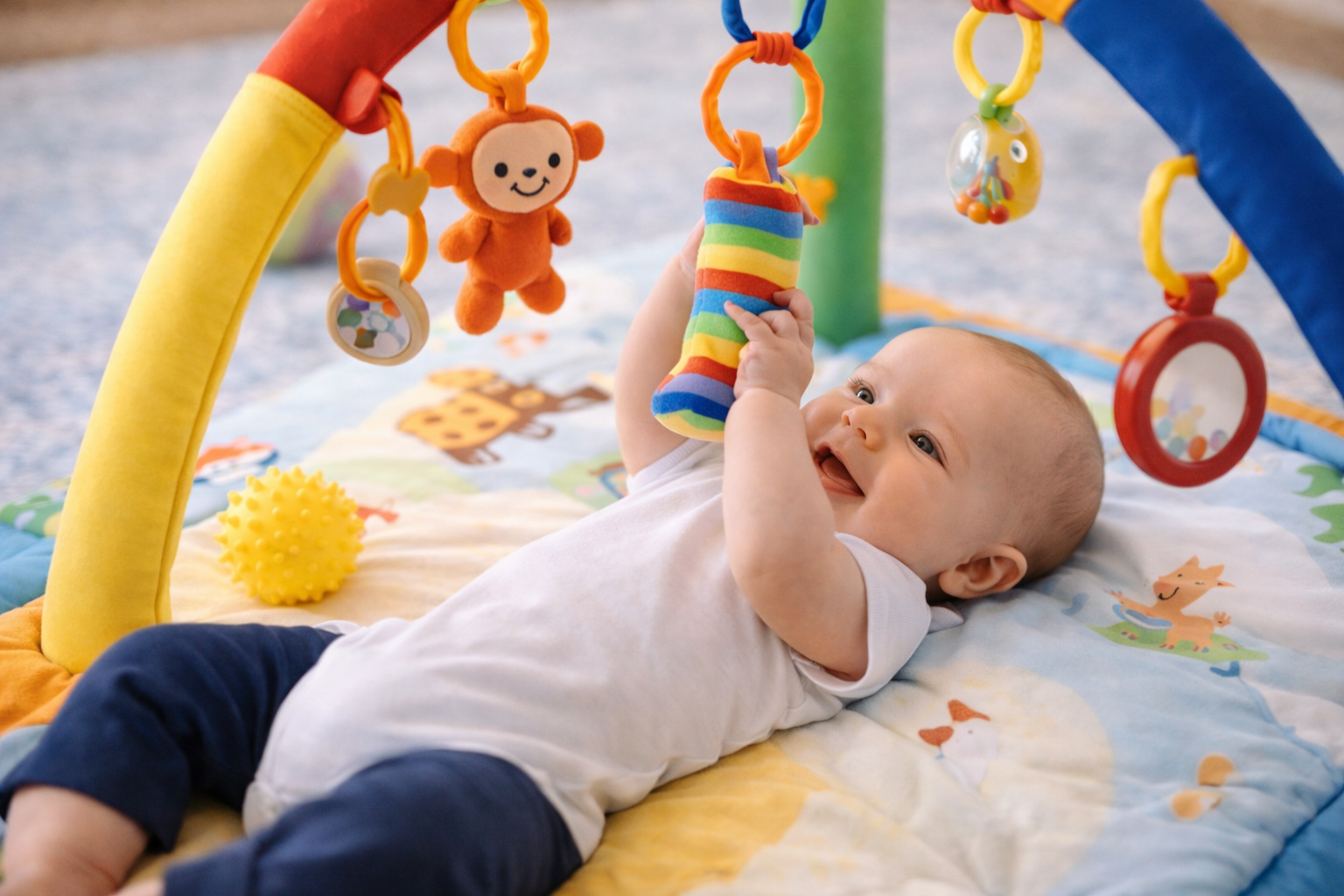
- Place toys slightly out of reach so they try to move
- Let them hold soft objects
- Encourage them to turn and roll
At this stage, your baby is learning through trial and error. Every small movement builds strength and coordination.
The Importance of Tummy Time
Tummy time is one of the most important activities in the first 6 months. It may not feel like “play,” but it is essential for development.
It helps:
- Strengthen neck and shoulder muscles
- Improve head control
- Prepare for rolling and crawling
If your baby doesn’t enjoy tummy time, start slowly:
- A few minutes at a time
- Multiple times a day
- Stay close and interact
Over time, it becomes easier for them.
Talking and Responding Is Also Play
One of the simplest and most powerful forms of play is communication. Your baby may not understand words yet, but they are learning sounds, tones, and expressions.
You can:
- Talk to your baby throughout the day
- Respond when they make sounds
- Repeat simple words
- Use facial expressions
This helps in both emotional bonding and early language development.
Do You Need Toys?
This is a common question. The truth is—you don’t need many toys.
Simple things work best:
- Your voice
- Your face
- Everyday objects
- Soft, safe items
If you do use toys, keep them:
- Simple
- Safe
- Not too overwhelming
Too many toys or too much stimulation can actually make babies restless.
What Matters More Than Activities
It’s easy to think that you need to keep your baby engaged all the time.
But what matters more is:
- Consistency
- Calm interaction
- Giving your baby time to explore
Babies don’t need constant entertainment. They need space to observe and move at their own pace.
Common Mistakes to Avoid
Without realizing it, some habits can limit your baby’s natural development.
- Overstimulating with too many toys
- Not giving enough floor time
- Keeping babies in one position for too long
- Rushing development
It’s important to remember that babies learn best when they are not pressured.
What If I’m Not Doing Enough?
This thought comes up often. You may feel like you’re not doing enough activities or not following a routine. But here’s something important to remember.
If you are:
- Spending time with your baby
- Talking and interacting
- Allowing them to move freely
You are already doing enough. You don’t need a perfect plan. You don’t need to do something new every day.
A Simple Way to Look at It
Instead of asking, “What activities should I do?”
Try asking, “Am I giving my baby time, space, and attention?”
That is what really matters. Play in the first 6 months is not about doing more. It’s about being present.
Final Thoughts
The first six months are not about teaching your baby—they are about supporting their natural development. Simple activities like talking, holding, allowing movement, and giving them space to explore are enough. You don’t need complicated toys or structured routines. Your baby learns from you, from small moments, and from everyday interaction.
So instead of worrying about doing everything right, focus on staying present. Because in these early months, even the smallest interactions make a big difference.

Parent With Purpose
Parent with Purpose is your trusted parenting resource, offering expert advice, practical tips, and real experiences from fellow parents. Our content is organized by your child’s age, from pregnancy to the teen years, ensuring guidance that’s relevant to your current stage. Learn through articles, videos, podcasts, and courses that fit your lifestyle. We also provide carefully curated book lists, meal plans, product recommendations, and India-focused resources to make parenting easier and more informed.