 5 min read
 AI Can Give Children Answers. Can It Teach Them to Think?
How many hours are they spending on their devices? Should they watch YouTube? Are they gaming too much? Is social media affecting their mental health?




There was a time when the biggest parenting debate revolved around screen time.
How many hours are they spending on their devices? Should they watch YouTube? Are they gaming too much? Is social media affecting their mental health?
These questions still matter. Screens continue to influence our children's sleep, attention, emotions and relationships. But over the past year, I have found myself asking a completely different question.
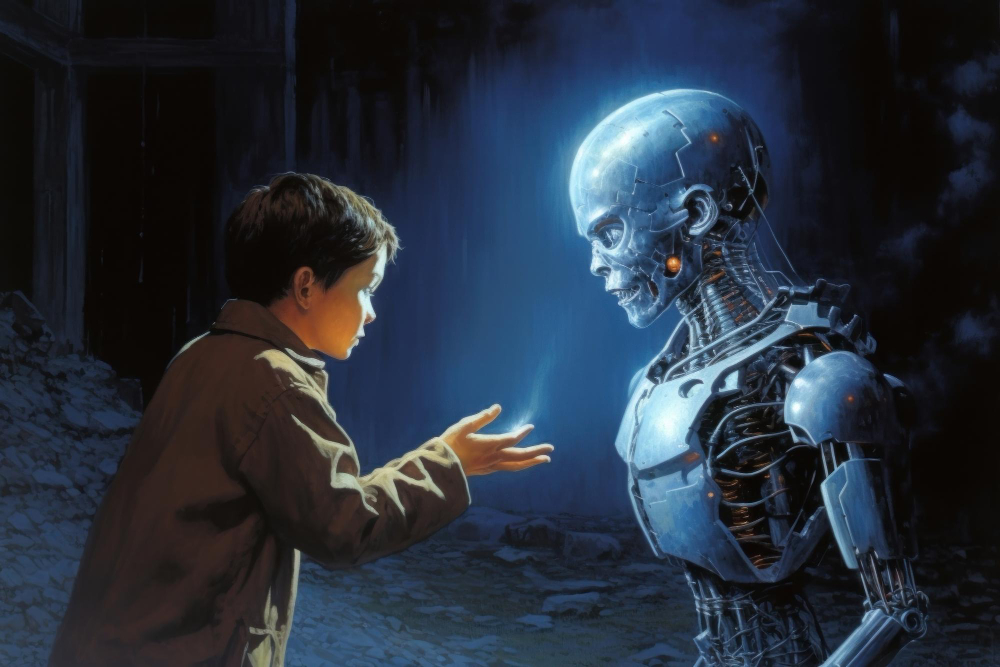
What if the biggest parenting challenge of the AI era isn't screen time at all? What if it is that our children are slowly outsourcing their thinking?
That thought has stayed with me.
Today, a child can type a single sentence into an AI tool and receive an essay, a speech, a project, a poem, a science explanation or even an apology message within seconds. It is remarkable technology. As adults, many of us use AI every day. I use it too. It helps me organise ideas, improve drafts and save time. AI is not the enemy, nor do I believe we should fear it.
But I do worry about something.
Not that AI will make our children less knowledgeable.
I worry that it may make them less willing to think.
As parents, we often celebrate efficiency. We like finding the quickest route, the fastest answer and the easiest solution. But childhood was never meant to be efficient.
Childhood is messy.
It is full of wrong answers, unfinished ideas, crossed-out words, forgotten spellings and frustrating maths problems. It is about staring at a blank page, wondering where to begin, writing something that doesn't sound quite right, deleting it, trying again and eventually smiling because "I figured it out."
That moment is priceless.
Not because the assignment is complete, but because something invisible has happened inside the child. They have discovered that they are capable. They have learned to tolerate frustration. They have realised that confusion is not failure—it is often the beginning of learning.
As parents, we spend so much time protecting our children from discomfort that we sometimes forget how much growth discomfort creates.
Think about the skills that have helped you most in life.
Was it memorising textbook answers?
Or was it learning how to solve problems when nobody had the answer for you?
The ability to think critically, adapt, communicate, question and create has probably taken you much further than simply knowing the correct response.
And yet, these are precisely the skills that risk becoming weaker if every difficult moment is immediately handed over to artificial intelligence.
The irony is that our children are entering a world where information will become cheaper than ever before. Answers will be available to everyone. In that world, the real advantage will not belong to the child who can generate the fastest essay.
It will belong to the child who asks better questions.
The child who notices what others miss.
The child who can challenge an answer instead of accepting it.
The child who has the confidence to say, "I don't agree," or, "I think there might be another way."
That kind of thinking cannot be downloaded.
It has to be developed.
This is why I believe the conversation around AI and parenting needs to shift. Instead of asking only, "How much AI is my child using?" perhaps we should also ask, "How is my child using it?"
Is AI helping them understand?
Or is it helping them avoid thinking?
There is a world of difference between the two.
Imagine your child has to write an essay. They spend twenty minutes thinking, jotting down ideas, struggling to organise their thoughts and finally writing a rough first draft. Then they use AI to improve the language, check grammar or suggest stronger examples.
That is wonderful use of technology.
Now imagine the opposite. They type the topic into AI, copy the response, make two small changes and submit it.
The homework may be finished.
The learning isn't.
One approach builds capability.
The other builds dependency.
As parents, we don't need complicated rules to deal with AI. We certainly don't need to ban it. Our children will grow up in a world where AI will be as common as search engines are today. Teaching them to avoid it would be like teaching them to avoid calculators twenty years ago.
Instead, we need to teach them how to use it wisely.
One simple family rule can make a remarkable difference: Try first. AI later.
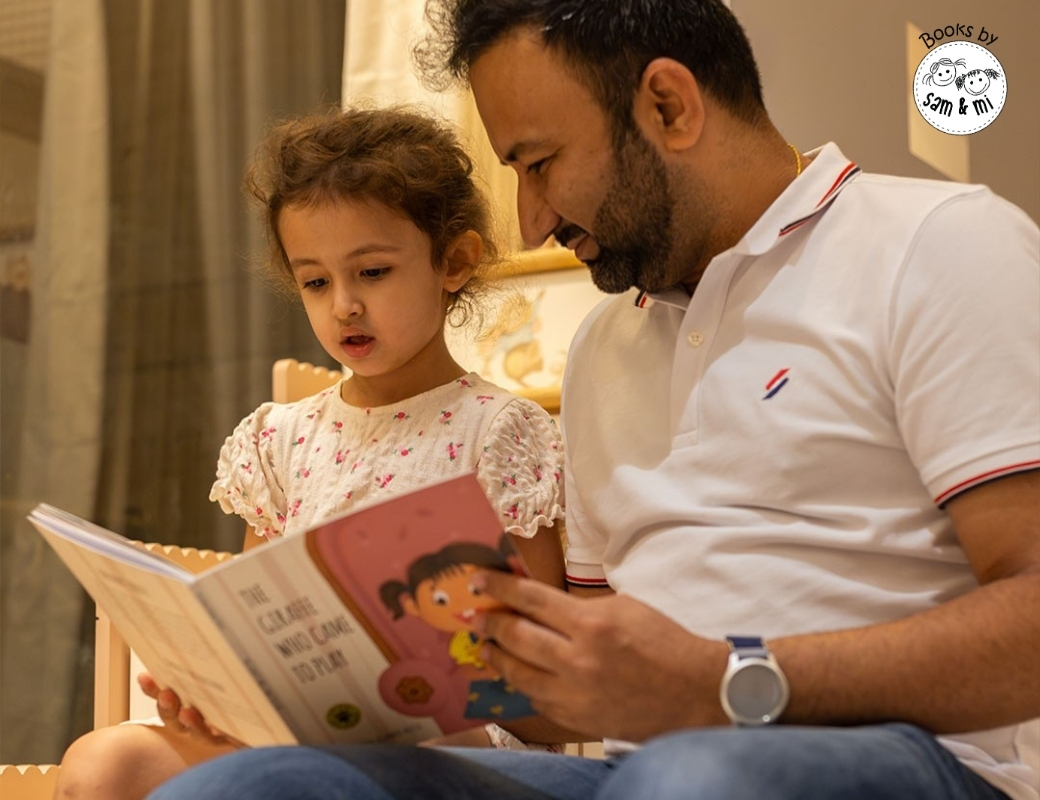
Encourage your child to attempt the first paragraph before asking AI to improve it. Let them solve the maths problem before checking another method. Ask them to think of three ideas before requesting ten more from a chatbot.
Most importantly, keep asking questions that AI cannot answer for them.
"What do you think?"
"Why do you agree with this?"
"Would you have solved it differently?"
"Does this sound like your own voice?"
Those conversations are doing far more than helping with homework.
They are building judgment.
Another habit I hope parents embrace is praising effort more than perfection. Children are incredibly observant. They notice what earns appreciation. If we admire only polished projects and high marks, they will naturally look for shortcuts. But when we celebrate persistence, curiosity and original ideas, we teach them that the process matters just as much as the result.
I also hope we allow our children to be bored once in a while.
Boredom has become something we rush to eliminate. The moment a child says, "I'm bored," we hand them a device, suggest a video or now perhaps even ask AI for activity ideas.
But boredom has always been the birthplace of imagination.
It is during those unstructured moments that children invent games, ask unusual questions, build imaginary worlds and discover interests they never knew they had. Creativity often begins where constant stimulation ends.
As parents, our role has never been to provide every answer.
It has always been to raise children who know how to find their own.
That mission hasn't changed simply because technology has.
If anything, it has become even more important.
Years from now, our children may not remember the essays AI helped them write or the homework it completed. But they will remember whether they believed in their own ability to think. They will remember whether their parents valued curiosity over perfection, questions over quick answers and wisdom over speed.
AI will continue to become smarter.
That is inevitable.
But our children must continue becoming wiser.
Because artificial intelligence can generate answers in seconds.
Only life, struggle, reflection and meaningful conversations can teach a child how to think.
And in the world they are inheriting, I have no doubt that the ability to think independently will remain their greatest superpower.
At Parent With Purpose, that is the future we hope to build—one where children don't simply learn to use powerful technology, but grow into thoughtful, confident and compassionate human beings who never lose the courage to think for themselves.
#tags: AI and parenting, children's thinking skills, Screen time vs AI dependency, Raising critical thinkers, AI in child development

Ruchira Darda
Ruchira Darda is a certified parenting coach (ACC), NLP Practitioner, author, and the founder of parentwithpurpose.in. She works with families across India through her initiatives WOW, MahaMarathon, and The Yellow Door.