 3 min read
 Teaching Kids to Think for Themselves in an AI-Answer-Everything World
AI can provide instant answers, but children still need the ability to question, evaluate, and think independently. This article explores practical ways parents can nurture curiosity and critical thinking in the AI age.

Here is the educational challenge of our time: a child who grows up with instant access to AI-generated answers to any question they can type may never develop the tolerance for uncertainty that genuine thinking requires.
Thinking - real thinking - is uncomfortable. It involves not knowing, sitting with partial understanding, generating hypotheses and testing them, being wrong and adjusting. These are cognitively demanding experiences that the brain will avoid if a faster, easier alternative is available.
AI is the faster, easier alternative. And it is available for every question, all the time. The question for parents in 2027 is not whether to use AI - it is how to raise children who can use it without losing the ability to think without it.
What Critical Thinking Actually Is
Critical thinking is not the same as knowing things. It is the capacity to evaluate information - to ask 'is this true?', 'how was this determined?', 'what are the assumptions behind this?', 'what are the counter-arguments?' - and to form a considered position based on evidence rather than first available answer.
A child who can retrieve AI-generated answers can appear knowledgeable without possessing any of these capacities. The appearance of knowing without the substance of thinking.
The most alarming finding from educational psychology in the AI era: students who use AI heavily show declining performance on novel problem-solving tasks - problems they haven't seen before, where there is no retrievable answer. This is precisely the category of problems that adult professional life consists of.
6 Ways to Raise a Critical Thinker in the AI Era
1. Celebrate the question over the answer
Ask your child 'what do you think?' before giving them an answer. When they give you an answer, ask 'why do you think that?' and 'what would change your mind?' These questions are uncomfortable - they require the child to think, not just retrieve. Tolerate the discomfort. It is where the cognitive growth lives.
2. Disagree out loud - thoughtfully
Let your children see you disagree with something - a news story, a social media post, a received opinion - and articulate why. 'I read this claim but I'm not sure I believe it because...' is a modelling of critical thinking that no lesson can replicate. It shows that received information is not automatically true and that thinking is active, not passive.
3. Make AI a partner in thinking, not a replacement for it
Teach children to use AI Socratically: 'What are the arguments against this position?' 'What evidence would I need to evaluate this claim?' 'What are three possible explanations for this?' These prompts use AI as a thinking partner rather than an answer machine. Estonia's education system is building this into curriculum - Indian parents can model it at home.
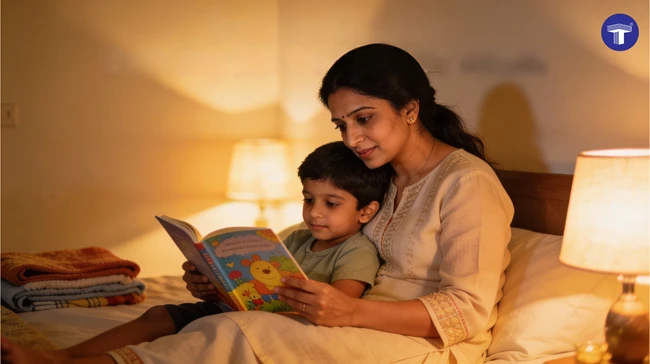
4. Read longer texts - together and separately
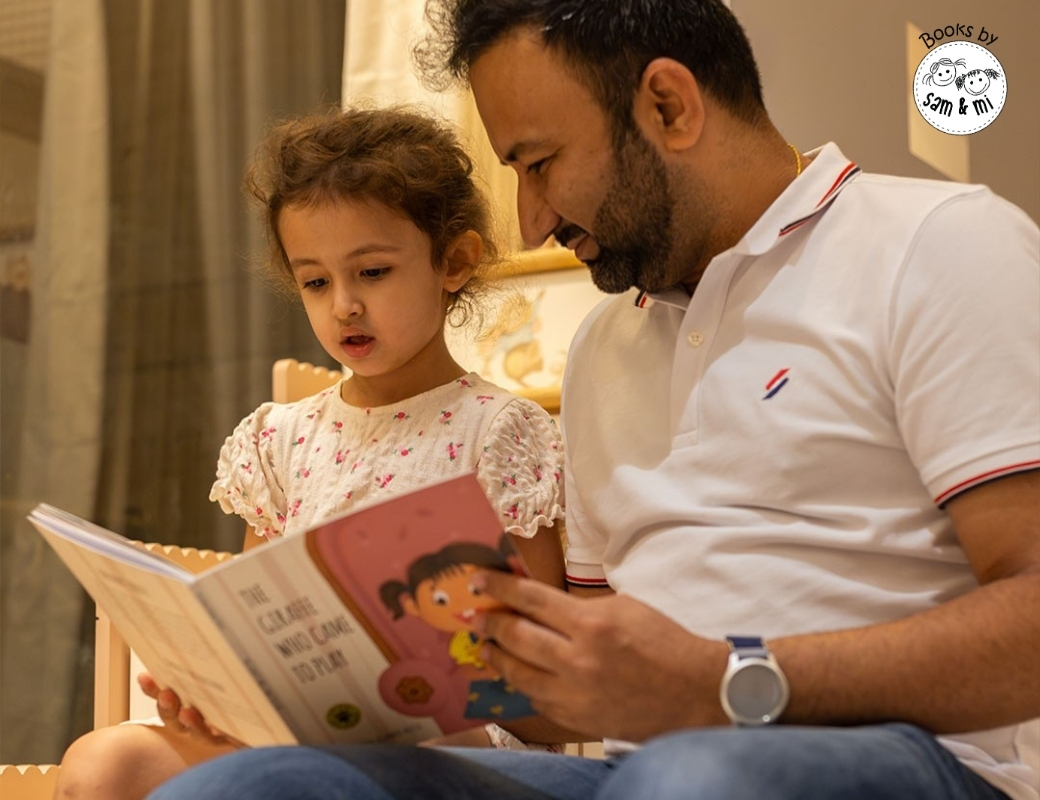
Books, long-form articles, complex arguments - the capacity to follow a sustained argument across 30 pages is a specific cognitive skill that AI interaction (which is conversational and short-form) actively works against. A child who reads one book a week is building a fundamentally different cognitive architecture from one who reads primarily AI-generated summaries and social media snippets.
5. Have opinions - and ask for theirs
'What do you think about this?' said with genuine curiosity rather than as a test is one of the most powerful things you can say to a child. Children who are regularly asked their opinion - on family decisions, on news events, on books - develop the habit of having opinions: of processing information and forming positions rather than passively receiving them.
6. Let them be wrong and figure it out
The parent who corrects immediately teaches children to wait for correction. The parent who asks 'are you sure?' and waits teaches children to self-check. The parent who says 'let's find out' teaches children to investigate. Each of these produces a different relationship between the child and the experience of being wrong - and that relationship is central to independent thinking.
|
The Skill That AI Cannot Give AI can retrieve. AI can synthesise. AI can generate plausible-sounding text on any topic. AI cannot evaluate its own outputs for truth. It cannot experience uncertainty and sit with it productively. It cannot develop wisdom through error and time. These are human capacities. They require specifically human development conditions: being wrong, being uncertain, being challenged, and being supported through those experiences by people who know and care about you. You are not raising your child for a world without AI. You are raising them to be the human that AI cannot be: curious, evaluative, uncertain, correctable, and genuinely thinking. |
The dinner table conversation where nobody agrees is more educational than any AI tutoring tool. Build an atmosphere where thinking out loud, disagreeing respectfully, and changing your mind are all welcome. That environment is the critical thinking curriculum.
What was a recent question your child asked that made you really think?

Parent With Purpose
Parent with Purpose is your trusted parenting resource, offering expert advice, practical tips, and real experiences from fellow parents. Our content is organized by your child’s age, from pregnancy to the teen years, ensuring guidance that’s relevant to your current stage. Learn through articles, videos, podcasts, and courses that fit your lifestyle. We also provide carefully curated book lists, meal plans, product recommendations, and India-focused resources to make parenting easier and more informed.