 3 min read
 Stretch Marks in Pregnancy: How to Prevent Them and What Actually Fades Them
This guide gives you honest, evidence-based information not false promises about what actually works, what does not, and what is safe during pregnancy.

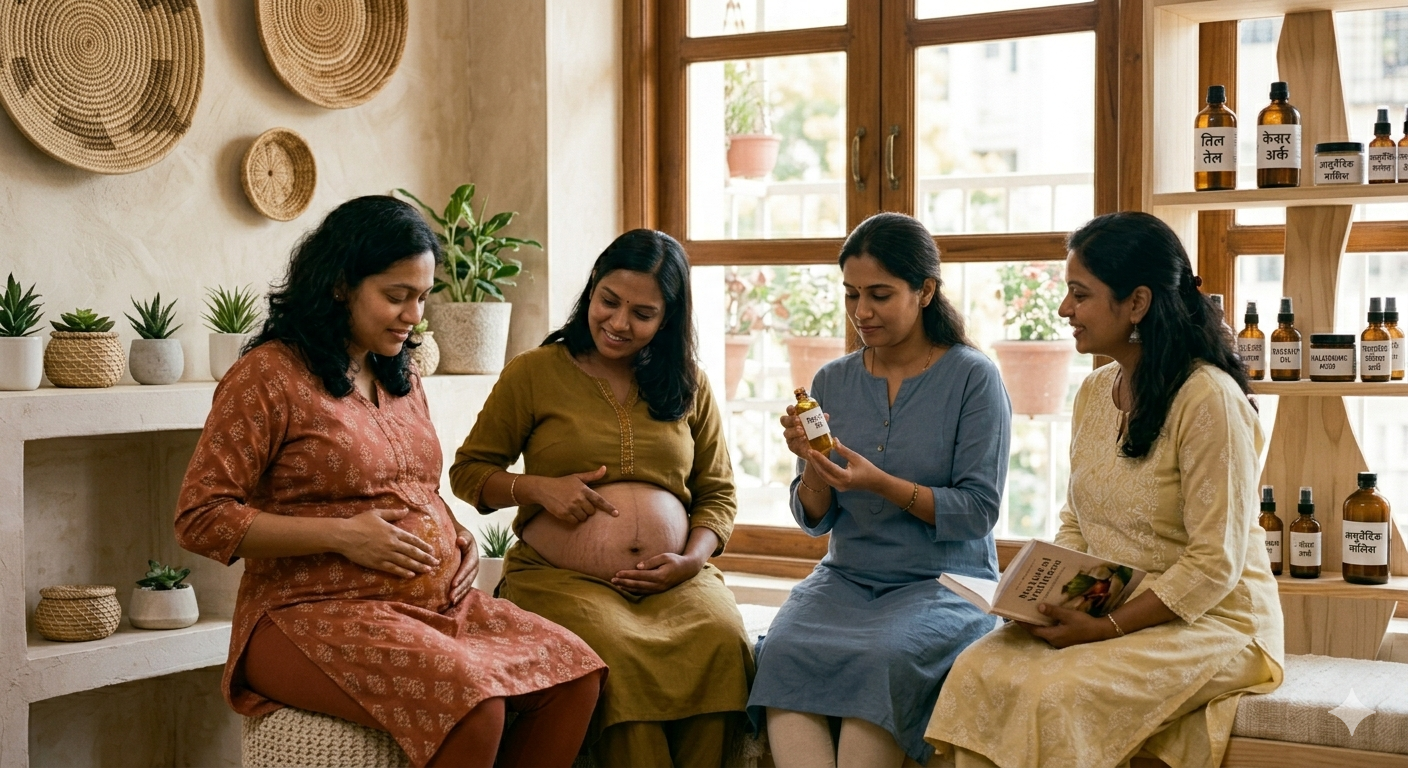
Around week 19, many women notice the first faint lines appearing on their belly, hips, thighs, or breasts. They might be pink, red, or purplish and they arrive quietly, without warning.
Stretch marks are one of the most Googled beauty concerns during pregnancy. This guide gives you honest, evidence-based information not false promises about what actually works, what does not, and what is safe during pregnancy.
What are stretch marks and why do they form?
Stretch marks called striae gravidarum in medical terms are tiny tears in the middle layer of the skin (the dermis). They form when skin stretches faster than it can adapt. The collagen and elastin fibres that give skin its elasticity break down in areas of rapid stretching.
In pregnancy, this typically happens on:
- The belly (most common)
- Breasts (which grow rapidly in both pregnancy and after birth)
- Hips and thighs
- Buttocks
Approximately 50-90% of pregnant women develop stretch marks. Genetics play a significant role if your mother had stretch marks during pregnancy, you are more likely to develop them too.
Source: American Academy of Dermatology – Stretch Marks in Pregnancy | Journal of Dermatological Treatment
Can stretch marks be prevented?
Honestly partially. Genetics determine most of your susceptibility. But keeping skin well-hydrated, maintaining steady weight gain, and supporting skin health from the inside can reduce their severity, even if prevention is not fully guaranteed.
What works — evidence-based approaches
1. Keep skin well-moisturised
Regularly moisturising the skin of your belly, breasts, hips, and thighs can improve skin elasticity and reduce the severity of stretch marks. The earlier you start, the better.
The best options for Indian mothers all safe during pregnancy:
- Coconut oil (nariyal tel): The most widely used and accessible option. Rich in fatty acids that improve skin barrier function. Safe to apply throughout pregnancy. Massage in circular motions twice daily.
- Almond oil (badam tel): Excellent for skin moisturisation. Contains Vitamin E, which supports collagen production.
- Castor oil (arandi ka tel): Has a long traditional use in India for skin conditions. Apply mixed with coconut oil for best results.
- Shea butter: Available in Indian pharmacies and online. Excellent skin moisturiser and studies suggest it may reduce stretch mark formation when used consistently.
- Vitamin E oil: Apply directly from capsules simply poke a capsule and massage the oil into the skin.
Source: Phytotherapy Research – Olive Oil and Stretch Marks in Pregnancy 2011 | Journal of Midwifery & Women's Health
2. Manage weight gain steadily
Rapid, large weight gain stretches skin faster than it can adapt. Following ICMR guidelines for steady, appropriate weight gain reduces stretch mark severity. A well-nourished skin with gradual stretching develops fewer marks than skin that stretches rapidly.
3. Stay hydrated
Well-hydrated skin is more elastic. Aim for 8–10 glasses of water daily. Include water-rich foods cucumber, watermelon, coconut water.
4. Eat for skin health
- Vitamin C (nimbu, amla, tomatoes): Essential for collagen production
- Protein (dal, eggs, paneer): The building block of new skin
- Zinc (pumpkin seeds, til, chana): Supports skin repair
Source: ICMR 2020 – Micronutrient Requirements During Pregnancy
What does NOT work (despite popular belief)
- Bio-Oil: Widely marketed for stretch marks. A 2012 study found no significant difference compared to mineral oil alone. It is safe in pregnancy, but evidence for stretch mark prevention is weak.
- Tretinoin or retinol creams: These can improve stretch marks after pregnancy but are NOT safe to use during pregnancy they are teratogenic (potentially harmful to the baby).
- Any product claiming to "completely prevent" stretch marks: No such product exists. Be sceptical of marketing claims.
After pregnancy: fading stretch marks
Once your baby is born, stretch marks typically fade from red/purple to a lighter silver or white over 6–12 months. They rarely disappear completely, but they do become significantly less visible.
Options to discuss with a dermatologist after delivery and after breastfeeding:
- Retinol or tretinoin cream: Effective for improving the texture of mature stretch marks
- Laser therapy: Available at dermatology clinics in Indian cities reduces redness and improves texture
- Microneedling: Another dermatologist-offered option for more significant stretch marks

Parent With Purpose
Parent with Purpose is your trusted parenting resource, offering expert advice, practical tips, and real experiences from fellow parents. Our content is organized by your child’s age, from pregnancy to the teen years, ensuring guidance that’s relevant to your current stage. Learn through articles, videos, podcasts, and courses that fit your lifestyle. We also provide carefully curated book lists, meal plans, product recommendations, and India-focused resources to make parenting easier and more informed.