 4 min read
 Baby Fitness: What It Really Means in the First 2 Years
In the early years, fitness is not about exercise but about growth, movement, and daily habits. Simple actions like crawling, walking, playing, and eating well support a baby’s strength and development. Understanding this helps parents focus on overall health rather than worrying about strict routines or milestones.

When we hear the word “fitness,” we usually think of exercise, workouts, or staying active. But when it comes to babies, especially in the first two years, fitness means something very different. It’s not about routines or structured activity, and it’s definitely not about comparing your child with others.
For babies, fitness simply means healthy growth, natural movement, and developing strength at their own pace. And yet, many parents quietly worry—
“Is my baby active enough?”
“Am I doing enough?”
“Should I be helping more?”
If you’ve had these thoughts, you’re not alone. The early years can feel confusing, especially when every baby around you seems to be doing something different. So let’s understand this simply—what baby fitness actually means, and what really matters in the first two years.
What Does “Fitness” Mean for a Baby?
Baby fitness is not about exercise. It is about how your baby’s body grows, moves, and becomes stronger over time. In these early months and years, your baby is constantly developing without being taught or pushed.
They slowly learn to:
- Lift their head
- Roll over
- Sit
- Crawl
- Stand
- Walk
Each of these steps shows that your baby is building strength, coordination, and balance. So when we talk about fitness, we are really talking about development through movement, not structured activity.
Growth Happens Naturally
One of the most important things to understand is that babies are naturally designed to grow and develop. You don’t need to “train” them or rush their progress. Your role is to support, not control. Babies learn through small, repeated movements every day.
These include:
- Kicking their legs
- Moving their arms
- Turning their head
- Trying to reach or grab objects
These small actions may look simple, but they are building strength continuously. Growth does not happen in one big moment—it happens slowly, through everyday movement.
Why Movement Matters So Much
Movement is the foundation of your baby’s physical development. When your baby moves freely, they are doing much more than just being active.
They are:
- Building muscle strength
- Improving coordination
- Learning balance
- Developing body awareness
Even something as simple as lying on their back and moving their hands and legs plays an important role. This is why restricting movement for long periods can limit their natural development.
The Importance of Floor Time
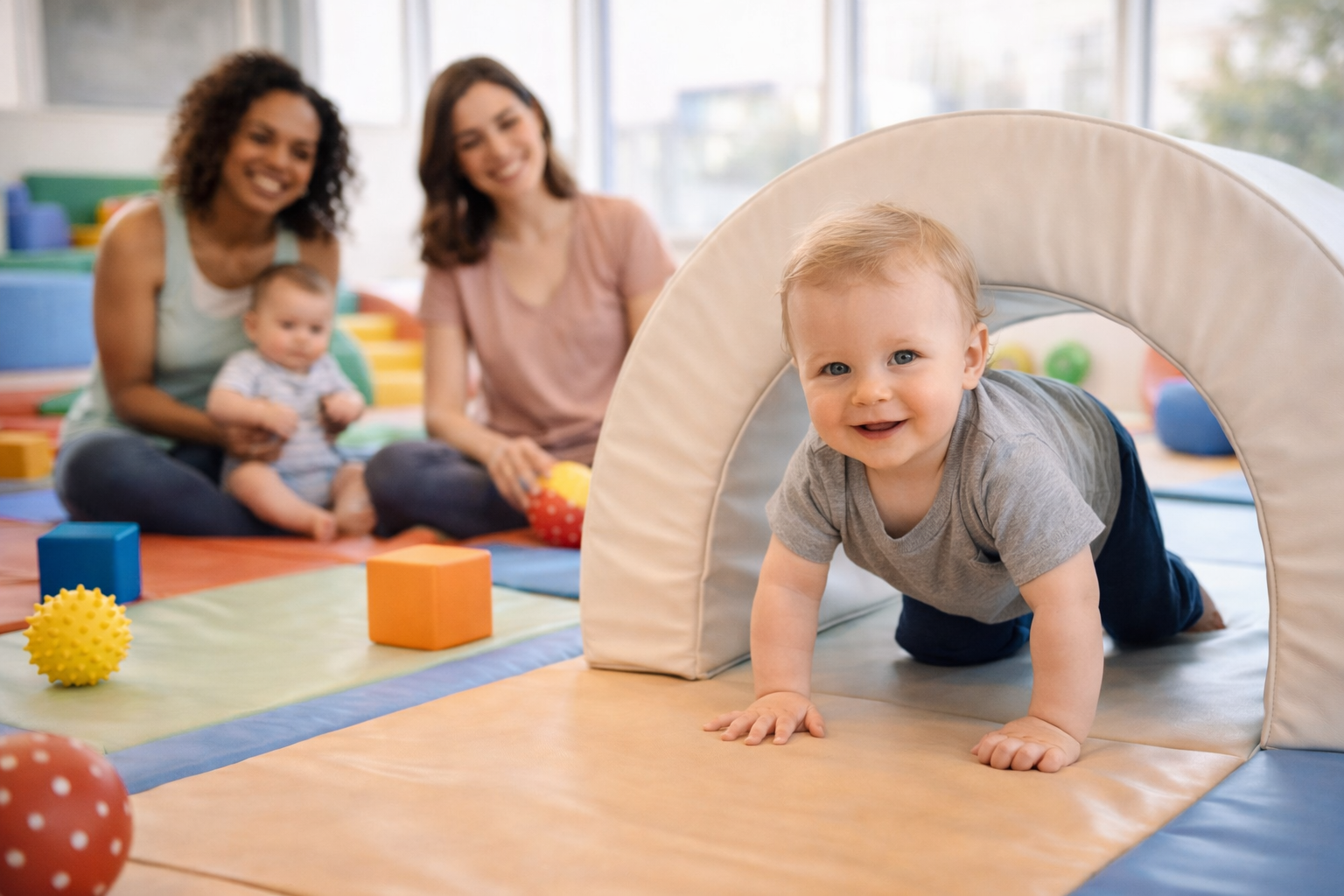
One of the easiest and most effective ways to support your baby’s fitness is giving them enough floor time. It may not look like much, but it plays a big role.
When babies spend time on a safe, flat surface:
- They try to turn and twist
- They push their body up
- They reach for nearby objects
- They move their legs freely
This helps them build the strength needed for rolling, crawling, and eventually walking. Compared to this, spending too much time in swings, seats, or carriers can reduce these natural movements.
Understanding Tummy Time
Tummy time is often the first thing parents hear about when it comes to development. It simply means placing your baby on their stomach while they are awake and supervised. At first, babies may not enjoy it. They may feel uncomfortable or fuss. That is completely normal.
With time, it helps them:
- Strengthen neck and shoulder muscles
- Improve head control
- Prepare for rolling and crawling
You don’t need to force long sessions. Start small and increase gradually. Even a few minutes, multiple times a day, is enough in the beginning.
Milestones: A Guide, Not a Race
Parents often feel pressure around milestones—when a baby should sit, crawl, or walk. It’s natural to look for these stages, but they are not strict deadlines. Every baby develops at their own pace.
For example:
- Some babies crawl early, others skip crawling
- Some walk early, others take more time
- Some are active from the start, others observe first
Instead of comparing, focus on progress. Ask yourself:
- Is my baby trying to move more over time?
- Is there gradual improvement?
- Is my baby exploring their surroundings?
These are better indicators than comparing with other children.
The Role of Play in Baby Fitness
For babies, play is the best form of physical development. You don’t need structured activities or special equipment.
Simple actions are enough:
- Let your baby reach for toys
- Encourage them to turn towards sounds
- Place objects slightly out of reach
- Interact and play on the floor
Through play, babies naturally build strength, coordination, and confidence. The key is not to overdo, but to stay involved in a simple way.
Nutrition and Physical Development
Movement alone is not enough. Nutrition also plays an important role in your baby’s fitness.
In the early months:
- Breast milk or formula provides complete nutrition
As your baby grows:
- Balanced, home-prepared food supports development
- Nutrients help build muscles and bones
- Proper feeding supports energy levels
You don’t need complicated diets. Consistency and simple food choices are enough.
Common Things That Can Affect Movement
Sometimes, without realizing it, certain habits can limit your baby’s natural movement.
These include:
- Keeping babies in walkers for long periods
- Excessive use of swings or seats
- Not giving enough floor time
- Too much screen exposure
These reduce opportunities for babies to explore movement on their own. Giving them space is often more helpful than trying to guide every movement.
What If My Baby Seems Less Active?
This is one of the most common worries among parents. You may feel your baby is less active compared to others. But activity levels can vary naturally.
Some babies:
- Move a lot and explore early
- Are calmer and observe more
- Take time before becoming active
Instead of comparing, look at your baby’s pattern:
- Are they slowly becoming more aware?
- Are they making small attempts to move?
- Are they responding to their environment?
If yes, they are developing in their own way.
A Gentle Reminder for Parents
It’s easy to feel like you need to do more, especially with so much information around. You may feel pressure to follow routines or structured plans. But babies don’t need complicated methods.
They need:
- Time to grow
- Space to move
- Simple interaction
- A calm and supportive environment
You don’t need to rush development. You don’t need to compare. You don’t need to be perfect.
Final Thoughts
Baby fitness in the first two years is not about exercise or routines. It is about natural growth, movement, and development. Your baby is learning something new every day, even if it is not always visible. Small movements, small attempts, and small changes all add up over time.
Instead of worrying about whether your baby is doing enough, focus on what really matters:
- Giving them space to move
- Allowing natural development
- Supporting them without pressure
Sometimes, the smallest movements are the biggest signs of growth. And most of the time, your baby is doing exactly what they need to do—just in their own time.

Parent With Purpose
Parent with Purpose is your trusted parenting resource, offering expert advice, practical tips, and real experiences from fellow parents. Our content is organized by your child’s age, from pregnancy to the teen years, ensuring guidance that’s relevant to your current stage. Learn through articles, videos, podcasts, and courses that fit your lifestyle. We also provide carefully curated book lists, meal plans, product recommendations, and India-focused resources to make parenting easier and more informed.