 3 min read
 10 Conversations to Have with Your Child at Every Age
It’s the small, daily talks with your child that build the best relationships. Here are 10 adaptations for talks to have with your child for every age.

Most parents talk to their children all day. 'Did you finish your homework?' 'Eat your lunch.' 'Why is your room like this?' These are conversations of management - and they're necessary. But they are not the conversations that build a relationship.
The conversations that matter - the ones children remember, the ones that make them feel known and loved - are different. They're the ones that happen in the car, at bedtime, or over a quiet meal. They're the ones that start with curiosity rather than concern.
Here are 10 conversations worth having, at every age, in your own words.
AGES 3–8: BUILDING THE EMOTIONAL VOCABULARY
1. 'What Made You Happy Today? What Made You Sad?'
This is the simplest and most important emotional conversation you can have with a young child. Not 'how was your day?' (which gets 'fine') but two specific questions that build the habit of identifying and sharing emotions.
Do this at dinner. Do it every day. Over time, children learn that emotions are nameable, shareable, and safe to talk about. This is the foundation of emotional intelligence.
2. 'You Can Always Tell Me Anything - Even If You Think It Will Upset Me'
Say this explicitly. Children need to hear it in words, not just infer it from your behaviour. If you want your child to come to you when something hard happens - and you do - they need to know in advance that the door is open.
Say it when nothing is wrong, so it's available when something is.
3. 'What Do You Think Is Fair?'
When there's a sibling conflict, a rule they disagree with, or a situation they're frustrated about - before you decide what happens, ask them what they think is fair. Listen. You don't have to agree. But asking develops moral reasoning and shows them their thinking matters.
AGES 9–13: GOING DEEPER
4. 'Is There Anything About School That's Hard Right Now - Not Just Studies, But Friendships Too?'
Children in this age group are navigating the complex social world of middle school - friendships shifting, social hierarchies forming, the pressure to fit in. The academic question is easy to ask. The social one takes deliberate effort.
Ask it regularly, casually, without making it feel like an interrogation. Best asked in the car or while doing something side-by-side.
5. 'What Do You Think You're Really Good At?'
Not 'what do you like?' but what do you think you're actually good at. This question reinforces identity beyond grades. It also tells you a lot - if your child struggles to answer, that's worth knowing.
6. 'Is There Anyone in Your Class Who Seems Left Out?'
This conversation builds empathy without directing it at your child's own behaviour. It gently activates their awareness of others and shows that you value kindness and noticing people.
AGES 14–18: CONVERSATIONS THAT BUILD REAL TRUST
7. 'I Know I've Made Mistakes as a Parent. Is There Anything You Wish I Did Differently?'
This takes courage. It also builds more trust than almost any other single conversation. When parents demonstrate vulnerability and accountability, teenagers learn that it's safe to do the same.
You don't have to agree with everything they say. You do have to listen without defending.
8. 'What Does Success Mean to You - Not to Me, to You?'
One of the most important conversations to have before they make major decisions about board exams, college, and careers. Their version of a good life may be different from yours. Knowing that in advance prevents years of silent resentment.
9. 'What Do You Know About Our Family History?'
Stories about grandparents, where the family came from, struggles survived, choices made - these root children in something larger than themselves. Research shows children who know their family story have stronger identity and greater resilience.
ALL AGES - THE ONE NON-NEGOTIABLE
10. 'I Love You - Not Because of What You Do, But Because of Who You Are'
Say it when they succeed. Say it when they fail. Say it on an ordinary Tuesday. Children who grow up hearing this form a secure self-concept that no exam result, relationship, or failure can completely undo.
|
💡 WHERE THESE CONVERSATIONS HAPPEN BEST
Research consistently shows that children and teenagers are more open to vulnerable conversations when they are NOT face-to-face.
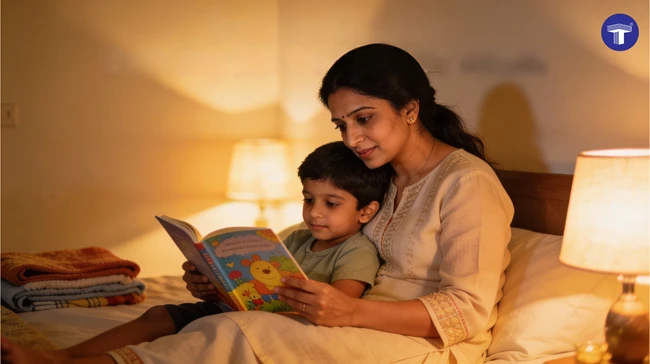
• In the car (side-by-side, no eye contact, no pressure) • On a walk together • At bedtime, lights low • While cooking or doing a task together
The kitchen, the car, and bedtime are your best relationship-building spaces. Use them. |
💡 Quick Tip: If your child isn't talking, don't push. Share something about yourself first. Vulnerability is contagious.
Which conversation are you having this week? Tag someone who needs this reminder.
#ParentChildConversations #EmotionalConnection #ConsciousParenting #ParentWithPurpose #TalkingToKids

Parent With Purpose
Parent with Purpose is your trusted parenting resource, offering expert advice, practical tips, and real experiences from fellow parents. Our content is organized by your child’s age, from pregnancy to the teen years, ensuring guidance that’s relevant to your current stage. Learn through articles, videos, podcasts, and courses that fit your lifestyle. We also provide carefully curated book lists, meal plans, product recommendations, and India-focused resources to make parenting easier and more informed.