 7 min read
 Why Emotional Regulation Is the Key to Better Parenting
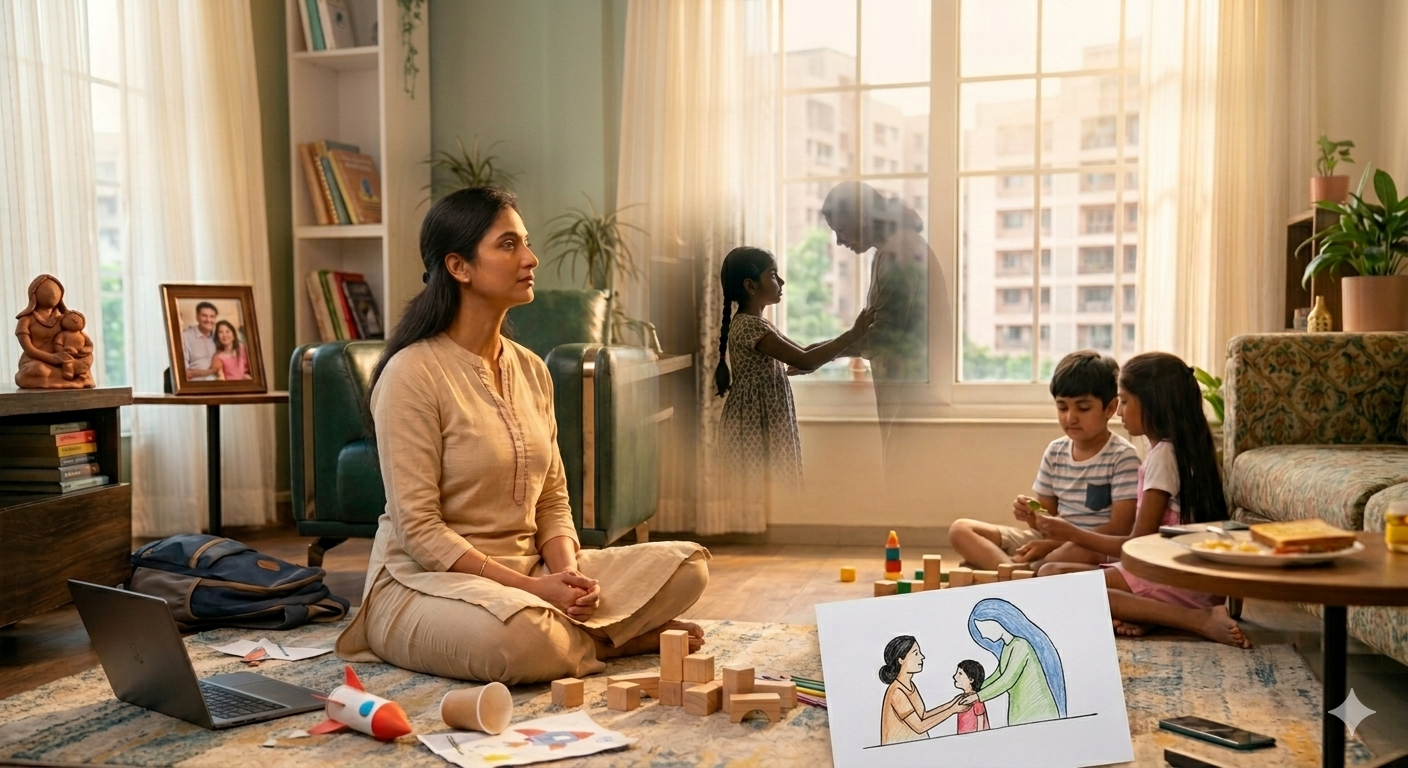
You promised yourself you wouldn't shout today. And then the school bag got left behind. Again. The homework wasn't done. Again. The sibling fight broke out at exactly the wrong moment. Again.




You promised yourself you wouldn't shout today.And then the school bag got left behind. Again. The homework wasn't done. Again. The sibling fight broke out at exactly the wrong moment. Again.And before you even registered what was happening - your voice was raised, your words were sharper than you intended, and your child was looking at you with that expression. The one that makes you feel terrible for the rest of the evening.Sound familiar? Good. Because that means you're honest.
Every parent who has ever loved a child deeply has lost their temper with that child. It is one of the most human, most humbling parts of raising another person.But here's what I want you to understand today: the way you manage your own emotions - not just your child's - is the single most powerful thing you can change to become a better parent.Not a new technique. Not a reward chart. Not a parenting book. Your emotional regulation.
|
A Story From My Coaching Room A mother came to me frustrated and exhausted. "I've read every parenting book," she said. "I know all the techniques. I know I shouldn't shout. I know I should get down to his level and speak calmly. But in the moment, I just lose it. And then I feel so guilty I overcompensate and give him whatever he wants. I'm either too harsh or too soft. There's no middle ground." What she was describing wasn't a knowledge problem. She knew exactly what to do. It was a regulation problem - her own nervous system was so overwhelmed by the end of the day that there was simply no space left for patience. We didn't work on parenting techniques at all for the first few sessions. We worked on her - her triggers, her unmet needs, her own childhood patterns. When she began to regulate herself better, her parenting transformed without her even trying new techniques. Three months later she said something I will never forget: "I realised I was parenting from survival mode. Now I'm parenting from choice." |
What Is Emotional Regulation - Really?
Emotional regulation is not about being calm all the time. It is not about suppressing your feelings or pretending you're fine when you're not.It is the ability to feel your emotions - fully - without being controlled by them.A regulated parent can feel frustrated and still respond thoughtfully. Can feel exhausted and still be present. Can feel angry and still choose how to express it.An unregulated parent reacts. A regulated parent responds. That one word - the difference between reacting and responding - is the entire game.
Why Your Emotional State Affects Your Child More Than You Think
Research is unambiguous on this: parental emotional regulation directly and significantly influences a child's emotional development, mental health, and behaviour.Children are not just listening to what you say. They are absorbing your emotional state. Your nervous system and theirs are in constant, invisible conversation.When you are calm, their nervous system co-regulates with yours and settles. When you are dysregulated - anxious, angry, overwhelmed - their nervous system picks it up and mirrors it. This is not metaphor. This is neuroscience.
This means:
-
A child raised in a home where a parent frequently explodes will develop a hair-trigger stress response themselves
-
A child whose parent models calm problem-solving learns to approach difficulty with curiosity rather than panic
-
A child whose parent repairs after losing their temper - by acknowledging it and apologising - learns that relationships survive conflict
-
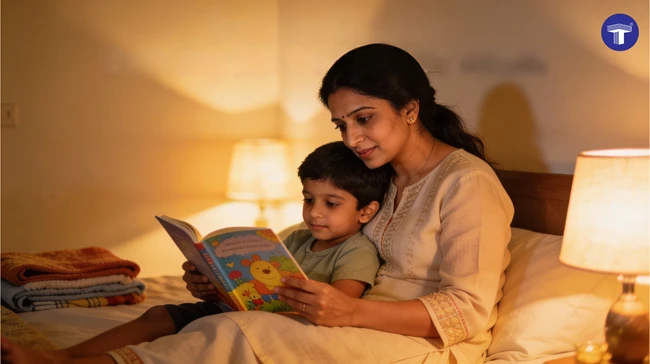
A child whose parent is emotionally present, not just physically present, develops secure attachment and emotional confidence
You are not just raising a child. You are building their emotional architecture - the internal structure that will hold them up for the rest of their life.
The Triggers You Don't Know You Have
Most parents who struggle with emotional regulation are not bad-tempered people. They are people with unexamined triggers.A trigger is any situation, behaviour, or tone that bypasses your rational brain and sends you straight into a reactive emotional state. Triggers are almost always rooted in your own past - in how you were parented, in old wounds, in patterns you absorbed as a child without realising it.
Common triggers for Indian parents include:
-
A child who "answers back" - especially if you were raised in a home where that was not allowed
-
Academic underperformance - especially in families where achievement was tied to love and approval
-
A child who is "lazy" - often triggering shame in parents who were taught that rest is irresponsible
-
A child who cries easily - triggering discomfort in parents who were told to suppress emotions growing up
-
Being ignored or not listened to - touching old feelings of not being seen or valued
When your child presses one of these buttons, you're not just reacting to them. You're reacting to an old version of yourself, or an old version of someone who once hurt you.
Recognising your triggers is not weakness. It is the beginning of real change.
|
✦ Ruchira's Take I believe that every time we lose our temper with our children, there is a message underneath the anger. A need that isn't being met. A fear that isn't being named. Anger at a child who won't study is often fear - fear that they won't succeed, that we will have failed them, that the world will be harsh to them. Anger at a messy room is often overwhelm - a parent who is carrying too much and has no margin left for one more thing. When I work with parents, I always ask: what is the feeling under the anger? That answer is where the real work - and the real healing - lives. Parenting from that level of self-awareness is not just better parenting. It is better living. |
7 Practical Ways to Build Your Emotional Regulation
These are not tricks. They are practices - things you do consistently until they become who you are.
1. Create a 'Pause' Practice
Before you respond to something that triggers you, pause for 5 seconds. Breathe. You don't have to respond immediately to anything that isn't a physical emergency. That 5-second pause is the difference between a reaction and a response. It sounds too simple to work. It works.
2. Name What You're Feeling - Out Loud
Not to your child. To yourself. "I am feeling frustrated right now." "I am feeling overwhelmed." Naming an emotion activates the prefrontal cortex - the thinking brain - and automatically reduces the intensity of the emotional response. This is called affect labelling and it is backed by significant neuroscience research.
3. Know Your Physical Warning Signs
Your body tells you before your mind does that you're losing regulation. Tight chest. Clenched jaw. Raised shoulders. Shallow breathing. Flushed face. Learn your personal warning signs and treat them as a stop signal. When you notice them, that is your cue to pause before you speak.
4. Address Your Own Basic Needs
A hungry, tired, lonely parent has almost no emotional bandwidth. This is not an excuse - it is biology. Before you can regulate your child's emotions, you need to be meeting your own basic needs: enough sleep, enough food, some time that is genuinely yours. In Indian families, especially for mothers, this is radically under-prioritised. Your self-care is not selfish. It is parenting infrastructure.
5. Repair When You Get It Wrong
You will lose your temper again. That is guaranteed. What matters is what you do afterwards. Repair - going back to your child, acknowledging what happened, and apologising - is not weakness. It is one of the most powerful things a parent can do. It teaches children that relationships survive rupture. That adults take accountability. That love is not conditional on perfect behaviour - theirs or yours.
A simple repair sounds like: "Beta, I lost my temper earlier and I shouted more than I should have. That wasn't fair to you. I'm sorry."
That's it. No long explanations. No "but you also..." Just accountability.
6. Separate Your Child's Behaviour From Your Child's Worth
When your child misbehaves, it is easy to catastrophise: "They're going to grow up irresponsible. They don't respect me. I've failed as a parent." This mental spiral is what turns a small incident into a major emotional event. Your child did something wrong. That is a behaviour. It is not a verdict on them or on you. Keeping this separation in your mind dramatically reduces the emotional charge of difficult parenting moments.
7. Seek Support - Without Shame
Parenting in isolation is one of the hardest things a human being can do. In previous generations, joint family systems provided built-in support - someone else to hold the baby, someone to talk to, someone to share the load. Many urban Indian families today are parenting alone. If you are struggling, please reach out - to a parenting coach, a counsellor, a trusted friend, a support group. Struggling is not failure. Suffering alone when help is available - that is the only mistake.
A Note for Fathers
This article is not just for mothers.In Indian families, fathers are often absent from parenting conversations - not because they don't care, but because the cultural script has historically placed the emotional labour of parenting primarily on women.But research is clear: a father's emotional regulation is just as important to a child's development as a mother's. Children need to see their fathers handle frustration, disappointment, and stress with dignity. They need to see their fathers apologise. They need to see their fathers be emotionally present - not just financially providing or occasionally fun.If you're a father reading this: your emotional life matters. Your child is watching.
Quick Practices to Start This Week
-
When you feel yourself getting reactive, pause 5 seconds before responding
-
Name your emotion silently to yourself: "I feel angry / overwhelmed / scared"
-
Notice your physical warning signs of dysregulation and use them as a stop signal
-
Repair with your child after you've lost your temper - a simple, honest apology
-
Identify one trigger that keeps showing up and ask: where does this really come from?
-
Protect one basic need this week - sleep, food, 20 minutes alone - without guilt
-
Tell one person in your life that you're working on this - accountability changes everything
The Truth About Regulated Parenting
Emotionally regulated parents don't raise perfect children. They raise resilient ones.Children who grow up watching a parent manage their emotions with honesty and grace learn, by example, that difficult feelings are survivable. That anger doesn't have to mean danger. That you can be upset and still be kind. That you can make a mistake and still be loved.These are not small lessons. These are life skills. And you are the only one who can teach them - not by telling, but by being.
The most important thing you can give your child is not a better school or a bigger house.
It is a parent who keeps working on themselves.

Ruchira Darda
Ruchira Darda is a certified parenting coach (ACC), NLP Practitioner, author, and the founder of parentwithpurpose.in. She works with families across India through her initiatives WOW, MahaMarathon, and The Yellow Door.