 7 min read
 Parenting Triggers: Why Your Child's Tantrum Makes You Lose Control
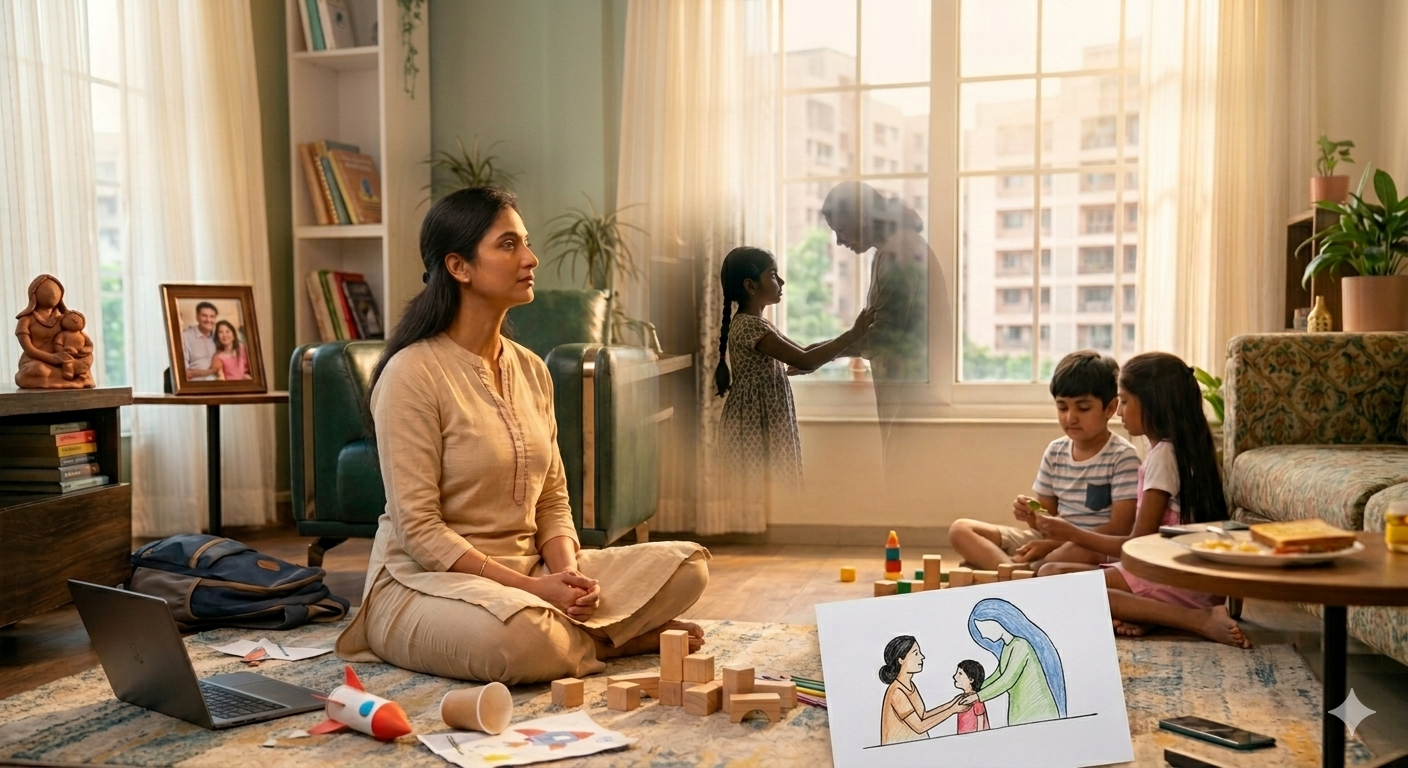
This is what parenting experts call being triggered. And understanding it is one of the most transformative things you can do for yourself and your children.

Your four-year-old falls apart in the supermarket because you said no to the cereal with the cartoon character on it.Within seconds, you feel it a heat rising up through your chest, your pulse quickening, your jaw going tight. This isn't regular frustration. This is something bigger, something older. And before you know it, you've snapped in a way that feels completely out of proportion to a disagreement about breakfast cereal.
Later, once everyone has calmed down, you sit with a familiar and uncomfortable question: Why does my child's tantrum affect me so intensely?The answer is not that you're a bad parent. The answer is that you're a human being with a nervous system one that was shaped long before you became a parent. And your child, without knowing it, has found the exact frequency that activates it.This is what parenting experts call being triggered. And understanding it is one of the most transformative things you can do for yourself and your children.
What Does It Mean to Be "Triggered" as a Parent?
In parenting psychology, a trigger is any behaviour, sound, tone, or situation that provokes a response in you that feels bigger, faster, or more intense than the situation seems to warrant.Many parents resist the idea that they are triggered by their children's behaviours. Often the thought is: "I'm not triggered my kid just isn't listening to me, and I need them to listen." But the signal that you are triggered is when you are overreacting to a child's behaviour or emotion that is developmentally to be expected.
If your seven-year-old's whining sends you from zero to furious in under ten seconds that's a trigger response. If your toddler's tears make you feel an almost physical urgency to make them stop at any cost that's a trigger response. If defiance from your teenager makes you feel a rage that surprises even you that's a trigger response.None of these reactions mean something is wrong with you. They mean something is communicating through you.
Where Do Parenting Triggers Actually Come From?
Here's the part most parenting advice skips: your triggers almost always have their roots in your own childhood.When a parent gets curious about their past, they often realize that their parents shut down, ignored, or punished them when they expressed themselves. It makes sense that their own child's tantrums are so distressing they're triggering all of those old feelings. Being aware of this empowers parents to make a change. They don't have to yell. They don't have to ignore the tantrums. They can do things differently.
When your child screams and cries, it doesn't just register as noise. Your nervous system cross-references it against a lifetime of stored emotional memory. If crying was met with punishment in your house growing up, your body may have learned that tears = danger. If conflict was never resolved, your system may read disagreement as a threat to safety.
This is not about blame. Your parents were doing their best with what they knew. But the emotional patterns of your childhood are now running in the background of your parenting and your children have an uncanny ability to press exactly those buttons.
Common parenting triggers and their hidden roots:
- Your child's crying or whining → often linked to childhood experiences where your own distress wasn't acknowledged
- Defiance or "not listening" → often linked to environments where your voice wasn't valued or respected
- Public meltdowns → often linked to shame, fear of judgment, or childhood experiences of embarrassment
- Aggression or hitting → often linked to environments where anger felt unsafe or unpredictable
- Clinginess or neediness → often linked to experiences of feeling overwhelmed or not having your own needs met
The Nervous System Science Behind Losing Control
When a trigger fires, your brain doesn't wait for rational thought to catch up. The amygdala your brain's alarm system sends an immediate distress signal. Cortisol and adrenaline flood your body. Your heart rate spikes. Your muscles tense.You are, neurologically speaking, in fight-or-flight mode responding to your child's tantrum the way your ancestors would have responded to a predator.
Your nervous system chooses what it thinks will protect you best. And while these reactions may feel "bad," they're actually messages. The invitation is to stop judging your reactions to your kids and start getting curious about the meaning behind them. This is why logic doesn't work in the middle of a trigger. You cannot reason your way out of a nervous system response. You have to address the body first every time.
5 Steps to Manage Your Parenting Triggers in the Moment
Step 1: Name what's happening to yourself
In the moment, simply notice: I'm triggered right now. That one act of self-awareness creates a tiny pause between the stimulus and your response. It won't feel like much. But it is the beginning of everything.
Step 2: Regulate your body before addressing your child
You cannot co-regulate a dysregulated child from your own dysregulated state. Children co-regulate with their caregivers meaning they borrow our calm when they can't find their own. Your first job is to get yourself steady enough to be that anchor. Greater Good
Breathe out longer than you breathe in. (A 4-second inhale, 6-second exhale activates the parasympathetic nervous system.) Plant your feet on the floor. Relax your shoulders. Unclench your jaw. These are not small things they are direct signals to your nervous system that you are safe.
Step 3: Lower your expectations of yourself in that moment
You don't need to handle this perfectly. You just need to not make it worse. That's a much more achievable goal when you're flooded."I'm going to stay quiet and breathe" is a victory. "I'm going to resolve this beautifully and connect deeply with my child" is too much to ask of a triggered nervous system.
Step 4: Get curious after you've calmed down
Once the storm has passed and everyone is calm ask yourself:
- What exactly set me off?
- What feeling was underneath my anger? (It's almost always fear, shame, helplessness, or grief.)
- Does this remind me of anything from my own childhood?
You don't need to have all the answers. Just getting curious starts to loosen the grip the trigger has on you.
Step 5: Repair with your child and with yourself
What matters is repair: acknowledge, apologize, and reconnect. Repairs strengthen relationships and actually predict better emotional regulation in children long-term. A simple repair sounds like: "I got very upset earlier and I raised my voice. That wasn't fair to you. Are you okay? I love you."
Then and this part is just as important repair with yourself. Speak to yourself the way you'd speak to a close friend who made the same mistake. Self-compassion is not indulgence. It's what keeps you from drowning in shame so deep you can't do better next time.
When Your Triggers Run Deeper
For some parents, triggers aren't just about childhood patterns they're connected to significant trauma, anxiety, or depression. Mental health struggles like depression, anxiety, anger, and emotional dysregulation can all affect parenting responses. If you notice that your triggers are frequent, severe, or feel completely outside your control please reach out to a mental health professional. There is no shame in this. In fact, getting support is one of the bravest and most loving things you can do for your children.
Expert Parenting Coach Insight
In my work with parents, the moment everything shifts is when they stop asking "Why won't my child just behave?" and start asking "What is happening inside me right now?" Your child's tantrum is not the problem. Your unprocessed reaction to it is the invitation. The parents who do this inner work don't just yell less they become the safe haven their children need. And most of the time, the children's behaviour transforms almost immediately in response.
Key Takeaways
- A parenting trigger is a reaction that feels bigger or faster than the situation warrants and it's almost always rooted in your own emotional history.
- Your child's tantrum activates your nervous system's threat response this is physiological, not a character flaw.
- You cannot think your way through a trigger. You must regulate your body first.
- Getting curious about what triggers you and why is the most sustainable path to lasting change.
- Repair with your child and with yourself is more powerful than perfection.
Frequently Asked Questions
Q1. What are common parenting triggers? The most common parenting triggers include a child's crying or whining, defiance and not listening, public meltdowns, aggression, and clinginess or excessive neediness. Most triggers share a hidden root in the parent's own childhood experiences particularly around how their emotions were responded to growing up.
Q2. Why does my child's tantrum make me so angry? Because your nervous system is reading the tantrum as a threat not just a behaviour to manage. If your own big emotions were met with punishment, dismissal, or shame when you were a child, your body learned to associate emotional outbursts with danger. Your child's tantrum is activating that stored response. Understanding this is the first step to breaking the cycle.
Q3. Is it normal to feel triggered by your child? Completely normal and almost universal. The key difference is awareness. Parents who recognise that they are triggered can start to work with the response rather than being controlled by it. The goal is not to eliminate the trigger but to widen the gap between it firing and your response.
Q4. How do I stop being triggered by my child's behaviour? Start with body-first regulation: slow your breath, plant your feet, relax your muscles. Then get curious not critical about what the trigger is telling you. Journal, talk to a trusted person, or work with a therapist or parenting coach to explore the patterns beneath the reaction. Sustained change takes time, but awareness is the beginning.
Q5. Can working on my own triggers actually improve my child's behaviour? Yes significantly. Children are highly attuned to their parent's emotional state. When you regulate your nervous system, you reduce the overall emotional temperature in the room, which directly affects your child's ability to regulate. Research consistently shows that a calm, regulated parent is the single most powerful predictor of a child's own emotional regulation over time.
Your Triggers Are Not Your Fault But They Are Your Responsibility
Your child didn't create your triggers. Life did. Childhood did. The experiences that shaped you did.But your children are living with the effects of those triggers right now. And that means the work as uncomfortable as it is belongs to you.Not because you are broken. Not because you are failing. But because you have the capacity to understand yourself in a way your own parents may never have had the tools to. And that understanding is what breaks cycles not just for your children, but for every generation that comes after them.You are not your worst parenting moment. You are what you choose to do next.

Parent With Purpose
Parent with Purpose is your trusted parenting resource, offering expert advice, practical tips, and real experiences from fellow parents. Our content is organized by your child’s age, from pregnancy to the teen years, ensuring guidance that’s relevant to your current stage. Learn through articles, videos, podcasts, and courses that fit your lifestyle. We also provide carefully curated book lists, meal plans, product recommendations, and India-focused resources to make parenting easier and more informed.