 5 min read
 Why Children Should Be Part of Business Retreats and Events
For years, business retreats and corporate events have been seen as strictly “adult spaces”—filled with strategy discussions, networking sessions, presentations, and high-level decision-making. Children, in this context, are often considered distractions, an added responsibility, or simply “out of place.”

But what if we’ve been looking at it all wrong?
What if including children in business retreats isn’t a compromise—but an opportunity?
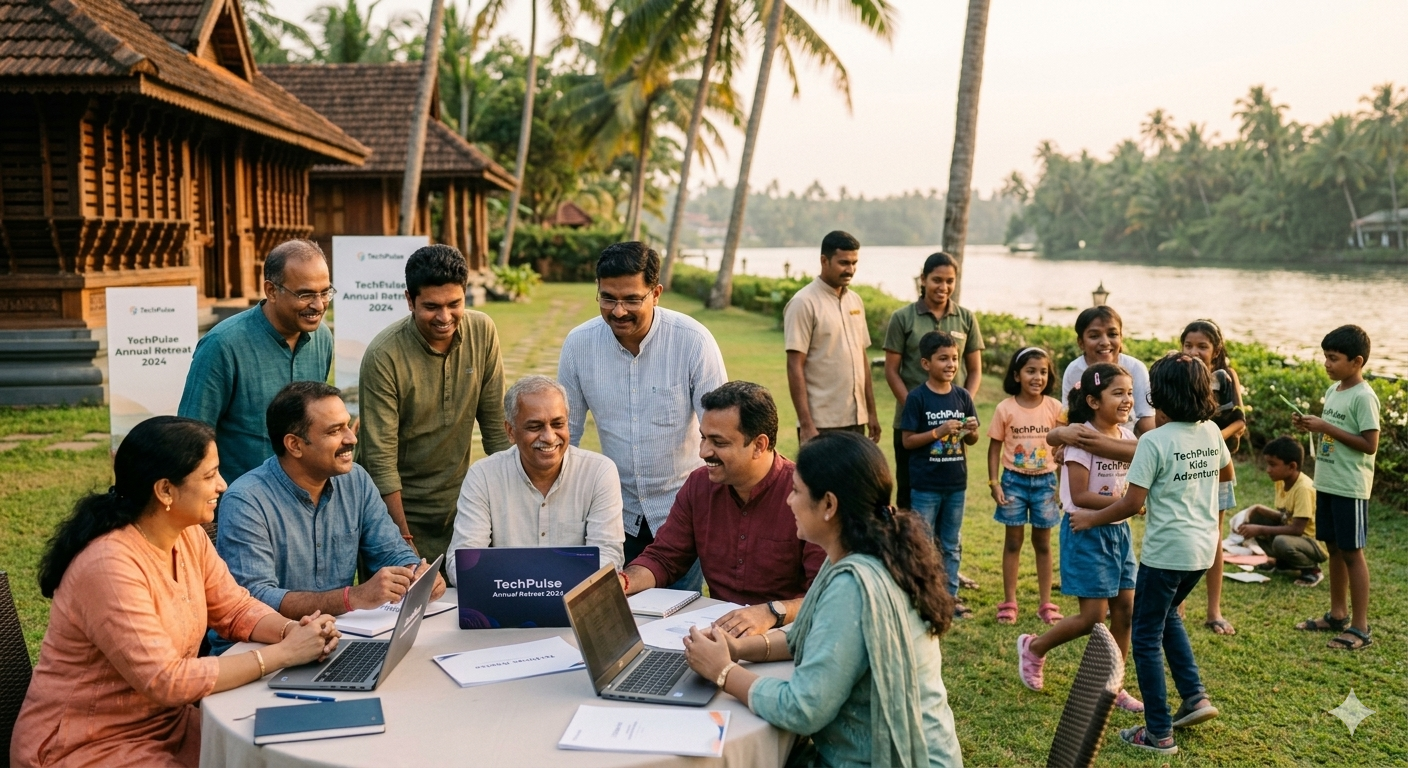
As work culture evolves and the boundaries between personal and professional life become more fluid, a new perspective is emerging: children don’t have to be excluded from professional environments. In fact, when thoughtfully included, they can add depth, meaning, and even unexpected value to these spaces.
This is not about turning business retreats into play zones. It’s about creating a more human, inclusive, and future-aware environment—one where children are not just accommodated, but welcomed.
Rethinking the Purpose of Business Retreats
Traditionally, business retreats are designed to:
- Strengthen team bonds
- Encourage creative thinking
- Step away from routine work environments
- Align vision and goals
But at their core, these retreats are about connection—between people, ideas, and purpose.
Now ask yourself: can connection truly be complete if we ask people to leave behind such a significant part of their lives—their children?
When parents attend retreats, a part of their mental energy often remains with their families. There’s a quiet distraction: Are my kids okay? Did they eat? Are they missing me?
Including children doesn’t dilute the experience—it often allows parents to be more present, more engaged, and more at ease.
Children Bring Authenticity Into Professional Spaces
Children have a way of dissolving formality. In a room full of professionals, conversations can sometimes feel structured, rehearsed, or even guarded. But the presence of children introduces spontaneity. It softens the atmosphere. It reminds everyone that beyond roles and titles, we are all human.
A simple moment—a child asking an innocent question, laughing freely, or observing something adults overlook—can shift the entire tone of a space. This authenticity can lead to more genuine conversations, deeper connections, and a more relaxed environment where creativity can flourish.
Early Exposure Builds Real-World Understanding
Children learn best not from lectures, but from experiences. When they are exposed to business environments early on, they begin to understand concepts that are otherwise abstract:
- Teamwork
- Leadership
- Communication
- Problem-solving
- Responsibility
They observe how adults interact, how decisions are made, and how ideas are shared. These observations quietly shape their understanding of the world. Instead of waiting until adulthood to introduce them to these realities, business retreats can offer a gentle, immersive introduction.
It Encourages Entrepreneurial Thinking
Children are naturally curious. They ask questions adults sometimes stop asking:
“Why do we do it this way?”
“What if we tried something different?”
“Why can’t this be simpler?”
These questions are at the heart of innovation. When children are included in business settings, they don’t just learn—they contribute. Their fresh perspectives can challenge conventional thinking and inspire new ideas.
In many cases, their observations can be surprisingly insightful. Encouraging children to engage with business environments can nurture an entrepreneurial mindset—one that values curiosity, creativity, and courage.
Strengthening Family-Work Integration
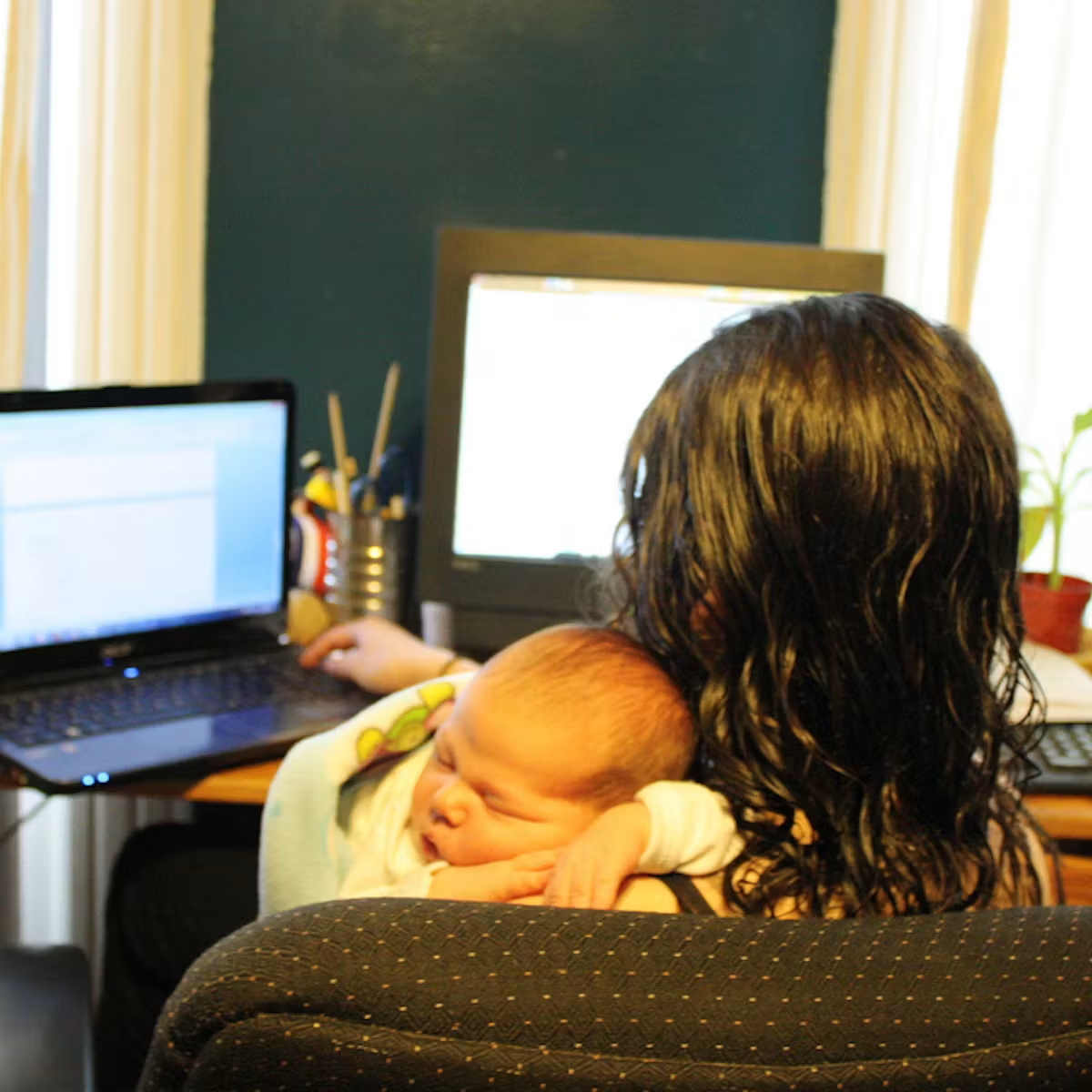
The idea that work and family must be completely separate is slowly fading. Today, many people are seeking integration rather than balance—a way to bring their full selves into both spaces.
Allowing children to be part of business retreats supports this integration. It sends a powerful message: you don’t have to choose between being a committed professional and a present parent.
This approach can:
- Reduce guilt for working parents
- Strengthen family bonds
- Create a more supportive work culture
When organizations acknowledge and respect the family lives of their team members, it builds trust and loyalty.
Teaching Children Emotional Intelligence
Business retreats are not just about strategies and goals—they are also about relationships.
Children who observe these interactions learn valuable emotional skills:
- How to listen actively
- How to express ideas respectfully
- How to handle disagreements
- How to collaborate with others
These are life skills that go far beyond academics. By being present in these environments, children learn not just what to think, but how to interact with the world.
Creating Future-Ready Individuals
The future of work is changing rapidly. Traditional career paths are evolving, and adaptability has become one of the most important skills. Exposing children to diverse environments early on helps them become more adaptable and confident.
They learn to navigate new spaces, interact with different kinds of people, and observe various ways of thinking. This kind of exposure prepares them not just for specific careers, but for a dynamic and ever-changing world.
Building Confidence Through Inclusion
When children are included in meaningful environments, it sends a powerful message:
“You belong here.”
This sense of belonging can have a lasting impact on their confidence. Instead of feeling like outsiders in the “adult world,” they begin to see themselves as capable participants.
Even small roles—like helping organize materials, participating in a creative activity, or simply observing discussions—can make them feel valued. Confidence built in such environments often carries forward into other areas of life.
Encouraging Responsible Behavior
Contrary to common concerns, children often rise to the expectations of the environment they are placed in. When they are part of business events, they naturally observe and adapt to the setting. They learn when to speak, when to listen, and how to behave in different contexts. This kind of situational awareness is an important life skill.
Instead of shielding children from professional environments, involving them teaches them how to navigate these spaces responsibly.
Practical Ways to Include Children
Including children doesn’t mean compromising the structure of a business retreat. It simply requires thoughtful planning.
Here are some ways to make it work:
- Designated child-friendly zones: Spaces where children can engage in activities while still being part of the overall environment
- Flexible schedules: Allowing parents to participate without feeling stretched
- Interactive sessions: Activities where children and adults can collaborate
- Supervised engagement: Ensuring children are guided while parents focus on key sessions
The goal is not to force participation, but to create opportunities for inclusion.
Addressing Common Concerns
“Won’t children be distracting?”
Distractions are part of any environment. The key is structure. With clear planning and designated spaces, children can be included without disrupting the flow.
“Is it appropriate for professional settings?”
Professionalism is not about exclusion—it’s about respect, behavior, and purpose. Children can learn and adapt to these expectations when given the chance.
“What about serious discussions?”
Not all sessions need to include children. A balanced approach allows for both focused professional time and inclusive moments.
A Cultural Shift in the Making
We are witnessing a shift in how we define workplaces and professional environments.
The rigid boundaries that once separated “work” and “life” are becoming more flexible. Organizations are beginning to recognize that people are not just employees—they are parents, caregivers, and individuals with rich personal lives.
Including children in business retreats is a small but meaningful step in this direction. It reflects a culture that values people as whole individuals.
The Long-Term Impact
The benefits of including children extend far beyond the duration of a retreat.
For children, it shapes their mindset, confidence, and understanding of the world.
For parents, it creates a sense of ease and alignment.
For organizations, it fosters a culture of empathy, inclusivity, and innovation.
And perhaps most importantly, it builds a bridge between generations. It allows children to see what their parents do, understand their efforts, and feel connected to their professional lives.
Final Thoughts
Children don’t need to be shielded from the real world—they need to be gently introduced to it. Business retreats and events offer a unique opportunity to do just that.
By including children, we are not just making events more inclusive—we are shaping future thinkers, leaders, and individuals who understand both the human and professional sides of life.
Because in the end, businesses are not just built on strategies and numbers. They are built on people. And the earlier we help children understand that, the stronger the future becomes.

Parent With Purpose
Parent with Purpose is your trusted parenting resource, offering expert advice, practical tips, and real experiences from fellow parents. Our content is organized by your child’s age, from pregnancy to the teen years, ensuring guidance that’s relevant to your current stage. Learn through articles, videos, podcasts, and courses that fit your lifestyle. We also provide carefully curated book lists, meal plans, product recommendations, and India-focused resources to make parenting easier and more informed.