 5 min read
 Self-Compassion for Parents: How to Forgive Your Parenting Mistakes
This blog is about learning to treat yourself with the same kindness you're trying to offer your child and why that shift is not selfish. It's essential.

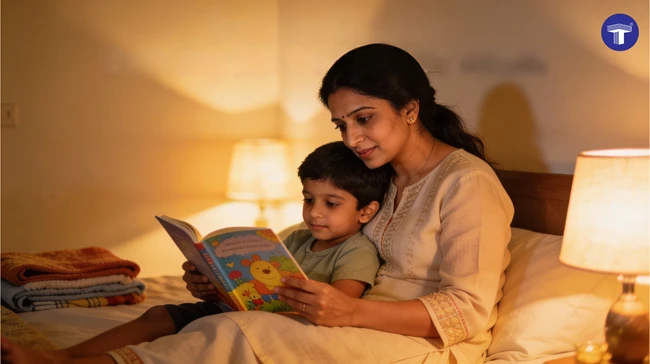
The Parent Who Lies Awake at Night
It's 11 PM. The house is finally quiet. And instead of sleeping, you're replaying the moment you snapped at your child. The look on their face. The words you wish you could take back.
Parenting guilt is one of the most universal and least talked about emotional experiences of parenthood. Every parent makes mistakes. Every parent has days that don't reflect the parent they want to be. And yet, the internal conversation most parents have about those moments is brutal in a way they'd never speak to another person.
"What kind of parent yells like that?" "I'm messing them up." "I'm failing them."
Here's the truth that research, child psychology, and every parenting expert who has done their own inner work will tell you: self-criticism does not make you a better parent. Self-compassion does.
This blog is about learning to treat yourself with the same kindness you're trying to offer your child and why that shift is not selfish. It's essential.
What Is Self-Compassion and What It Isn't
Self-compassion, as defined by pioneering researcher Dr. Kristin Neff, has three core components:
- Self-kindness treating yourself with warmth and understanding when you fail, rather than harsh self-judgment
- Common humanity recognizing that struggle and imperfection are part of the shared human experience, not evidence of personal failure
- Mindful awareness acknowledging painful feelings without suppressing them or over-identifying with them
Self-compassion is not:
- Making excuses for genuinely harmful behavior
- Bypassing accountability
- Lowering your standards as a parent
- Self-pity or wallowing
In fact, research consistently shows that self-compassionate people hold themselves more accountable not less because they can face their mistakes without the defensiveness and shame spiral that blocks genuine reflection.
Why Parenting Guilt Is So Intense and So Unhelpful
Parenting guilt is uniquely relentless because the stakes feel uniquely high. You're not just making a mistake at work you're making mistakes with a person you love completely, whose emotional development you feel responsible for.
Add to that:
- The impossible standards of modern parenting culture (social media "perfect parent" content)
- Generational patterns feeling guilt for repeating what you promised you'd never do
- Sleep deprivation and chronic stress that make regulation genuinely harder
- The invisible mental load that depletes emotional resources daily
The result is a parent who is trying their best, falling short in human, predictable ways, and then punishing themselves with a level of self-criticism that further depletes the very resources patience, presence, emotional warmth they need to parent well.
Parenting guilt, when it becomes chronic self-criticism, is not motivating. It's exhausting. And exhausted parents are more reactive, not less.
The Research Case for Self-Compassion in Parenting
Dr. Kristin Neff's research shows that self-compassion is directly linked to:
- Greater emotional resilience bouncing back faster from failures and setbacks
- Reduced anxiety and depression the two most common mental health challenges in parents
- More authentic accountability facing mistakes clearly and making genuine repairs
- Warmer, more connected relationships with partners and children
A 2012 study in the Journal of Child and Family Studies found that parental self-compassion was directly associated with more positive parenting behaviors and lower levels of parenting stress.
Translation: when you're kinder to yourself about your mistakes, you parent better. Not worse.
Common Parenting Mistakes and What They Actually Mean
Let's name some of the specific mistakes parents feel most guilty about and reframe what they actually indicate:
You yelled.
What it means: You were overwhelmed and dysregulated. You're human, with a nervous system that has limits. What it doesn't mean: You're a bad parent or your child is damaged.
You were distracted when your child needed you.
What it means: You're carrying an enormous amount work, worry, relationships, logistics. What it doesn't mean: Your child is unloved or unseen.
You repeated a pattern from your own childhood you swore you'd never repeat.
What it means: Generational patterns are deeply encoded. Changing them requires awareness, time, and support. What it doesn't mean: You're destined to fail or your child is destined to suffer.
You didn't handle a difficult moment well.
What it means: You were doing the best you could with the emotional resources available to you in that moment. What it doesn't mean: Your best isn't enough.
The question is never: "Did I make a mistake?" Every parent does. The question is: "What do I do after the mistake?"
6 Self-Compassion Practices for Parents
1. The Self-Compassion Pause
When you notice self-critical thoughts spinning after a difficult parenting moment, pause and consciously apply the three components of self-compassion:
- Self-kindness: "This was a hard moment. I was struggling. That's allowed."
- Common humanity: "Every parent loses their patience sometimes. I'm not alone in this."
- Mindful awareness: "I feel guilty and ashamed right now. I can hold that without becoming it."
This isn't toxic positivity. It's accurate, balanced self-assessment which is the foundation of growth.
2. Speak to Yourself Like You'd Speak to a Friend
This is Dr. Neff's most powerful and simple self-compassion exercise. Imagine a close friend called you and described the exact parenting moment you're criticizing yourself for.
What would you say to them?
You wouldn't say: "Wow, you really are messing your kids up." You'd say: "You're doing your best. That was a hard day. What matters is what you do next."
Now say that to yourself. Out loud if you can.
3. The 10-Minute Parenting Journal
Each evening, spend 10 minutes writing freely about your day as a parent without editing, without judgment. Include:
- One moment you're proud of (however small)
- One moment you struggled with (without analysis or criticism)
- One thing you'll try differently tomorrow
This practice builds metacognitive awareness the ability to observe your parenting patterns without being consumed by them which is the prerequisite for genuine change.
4. Normalize Repair Over Perfection
Shift your internal standard from "I shouldn't have made that mistake" to "I made a mistake. I repaired it. That's what good parenting looks like."
Research by Dr. Ed Tronick on the "still face" experiment shows that rupture and repair not constant attunement is what builds secure attachment. Children don't need perfect parents. They need parents who come back after getting it wrong.
Every time you repair, you're not compensating for a failure. You're demonstrating exactly the emotional skills you want your child to develop.
5. Address the Physical Self-Criticism Response
Self-critical thoughts trigger a physiological stress response the same stress hormones released by external threats. Counter this with a simple somatic practice:
Place one hand on your heart. Take three slow breaths. Say (silently or aloud): "This is a moment of suffering. Suffering is part of parenting. May I be kind to myself right now."
This activates the body's self-soothing system reducing cortisol and creating the physiological conditions for clear thinking and genuine reflection.
6. Audit Your Parenting Inputs
Chronic parenting guilt is often fueled by constant exposure to unrealistic parenting standards social media feeds full of curated patience, elaborate activities, and conflict-free family moments.
Conduct an honest audit: what are you consuming that makes you feel consistently inadequate? Unfollow, mute, or limit accordingly. Replace with content and communities that normalize the messy, imperfect, deeply loving reality of actual parenting.
How Self-Compassion Directly Improves Your Parenting
When you stop spending emotional energy on self-punishment, something frees up. Parents who practice self-compassion report:
- Less reactive parenting because shame and guilt aren't driving the moment
- More genuine repair because they can face mistakes without defensiveness
- Greater patience because their internal resources aren't depleted by self-criticism
- Warmer presence because they're not half-present, half-consumed by guilt
Your child does not need a perfect parent. Your child needs a parent who is growing who acknowledges mistakes, makes repairs, and models self-compassion in a world that rarely teaches it.
Final Thoughts: You Deserve the Kindness You Give Your Child
The most radical act in conscious parenting may be this: deciding that you deserve compassion too.
Not because you've earned it through perfect behavior. Not because your mistakes don't matter. But because self-compassion is the soil that good parenting grows from. You cannot sustain warmth, patience, and presence on a foundation of chronic self-criticism.
The parent lying awake at 11 PM replaying their mistakes? That parent cares deeply. That care is the beginning of everything.
Now give yourself what you'd give your child: "You're doing your best. Keep going."

Parent With Purpose
Parent with Purpose is your trusted parenting resource, offering expert advice, practical tips, and real experiences from fellow parents. Our content is organized by your child’s age, from pregnancy to the teen years, ensuring guidance that’s relevant to your current stage. Learn through articles, videos, podcasts, and courses that fit your lifestyle. We also provide carefully curated book lists, meal plans, product recommendations, and India-focused resources to make parenting easier and more informed.