 5 min read
 Screen Detox Plan for Babies & Toddlers (0–2 Years)
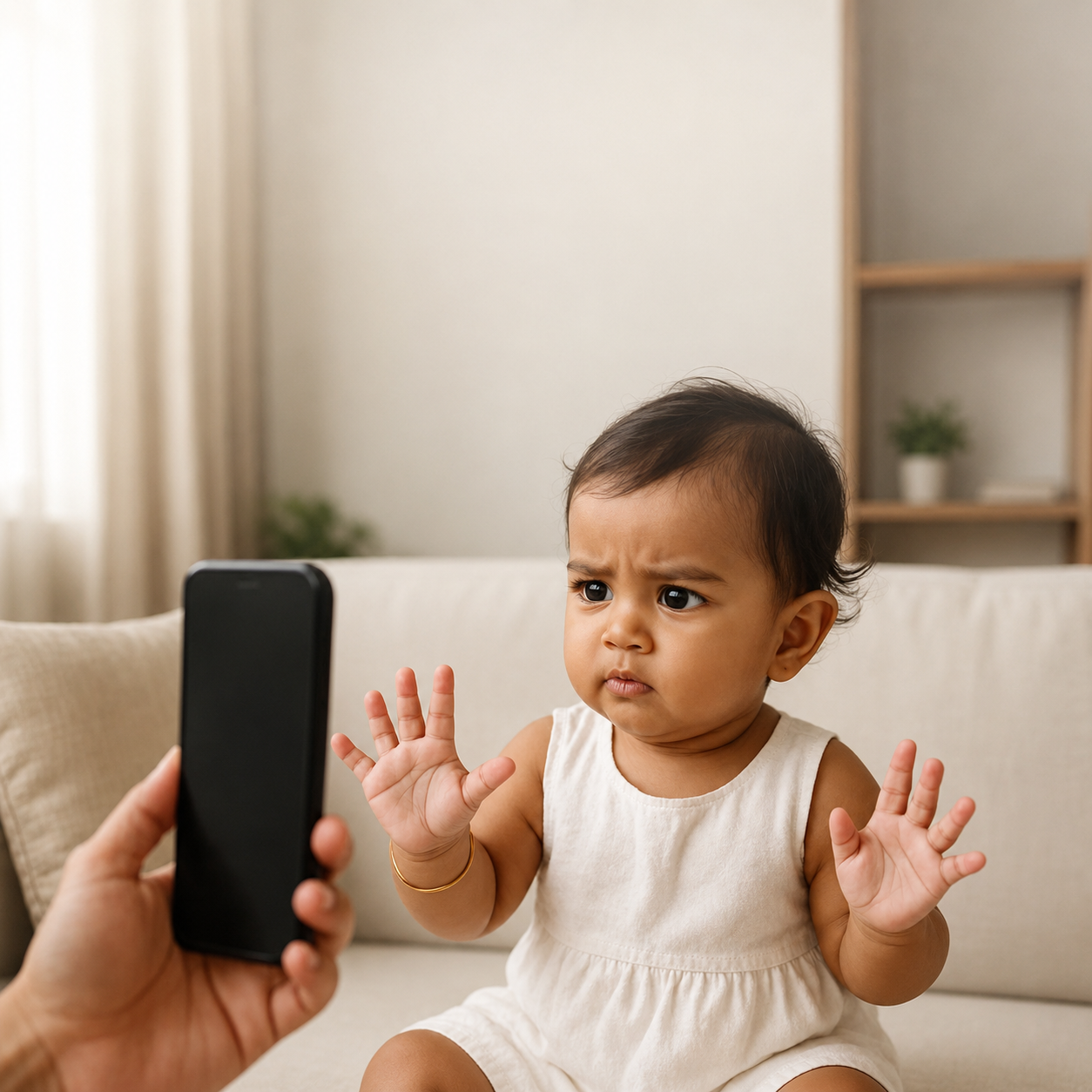
She was eight months old. And every time she cried during a feed, her mother handed her the phone.It worked instantly. She would go quiet, eyes fixed on the screen, mouth open. Five minutes of peace for an exhausted new mother.




She was eight months old. And every time she cried during a feed, her mother handed her the phone.It worked instantly. She would go quiet, eyes fixed on the screen, mouth open. Five minutes of peace for an exhausted new mother.By the time this baby was fourteen months, she would reach for the phone before she reached for her mother. This is not an extreme story. Across Indian cities -Mumbai, Pune, Hyderabad, Aurangabad -pediatricians and speech therapists are reporting the same pattern. Babies who have grown up with screens as pacifiers are showing delays in speech, reduced eye contact, poor attention spans, and lower tolerance for real-world stimulation.If your child is under 2 and already hooked on a screen, this article is for you. And if your baby hasn't started yet -this article is even more for you.
|
A Story From My Coaching Room A young mother came to me in tears. Her 18-month-old son had stopped babbling. He had said 'mama' and 'dada' clearly at 12 months, but somewhere in the months that followed, the words had faded. His paediatrician had mentioned speech delay and suggested a therapist. When we sat together and traced the timeline, it became clear: the babbling had reduced in the same months that screen time had increased. The family had moved cities, both parents were working from home, and the phone had quietly become his primary companion during the day. We worked on a complete reset -structured screen-free hours, more face-to-face talking, songs, stories, and sensory play. Within six weeks, the babbling returned. Within three months, he had a vocabulary explosion. His mother said: 'I didn't realise I had handed him a screen and taken away his reason to talk to me.' |
What the Guidelines Say -and Why They Matter
The World Health Organization, UNICEF, and the Indian Academy of Pediatrics are all aligned on this:
-
Zero screen time for children under 18 months -except video calls with family
-
Between 18-24 months: only high-quality educational content, watched together with a parent
-
Ages 2-5: maximum 1 hour per day, with parental co-viewing
Over 70% of Indian children aged 2-5 already exceed these limits. Many babies under 1 year are being exposed to screens daily.Why does it matter so much at this age? Because the first two years of life are when the brain builds its most fundamental architecture -language, attachment, emotional regulation, sensory processing, and social understanding. All of this development happens through one primary pathway: human interaction.A screen cannot talk back. It cannot read your baby's expression and adjust. It cannot hold your baby when they're overwhelmed. It is passive input in a phase that requires active, responsive connection.
The 4-Week Screen Detox Plan for 0-2 Years
This is not a cold-turkey plan. It's a gradual, sustainable reset designed for real Indian families -including working parents, joint families, and exhausted mothers navigating it alone.
Week 1 -Awareness Week
Before you change anything, observe. For 5-7 days, notice:
-
How many times does your baby see a screen? TV in the background counts.
-
When is screen time used most -meals, bedtime, when you're busy?
-
What does your baby do immediately after screen time?
No judgement this week. Just honest observation. You cannot change what you haven't clearly seen.
Week 2 -Remove Background Screens
The most underestimated form of screen exposure for babies is the TV running in the background. Even when your baby isn't 'watching', the flickering light, sudden sounds, and changing images are constantly pulling at their attention -interrupting play, conversation, and the quiet sensory exploration that builds their brain.This week's single goal: turn off the TV when your baby is in the room. Not forever. Just when they're awake and present.This one change alone makes a significant difference in how a baby plays, focuses, and connects with you.
Week 3 -Replace the Phone Pacifier
Identify the two or three situations where you most commonly hand your baby the phone -usually meals, travel, or when you need 10 minutes to yourself.
For each situation, prepare one offline alternative in advance:
-
Meals: a safe spoon to hold, a small bowl of soft finger foods, a fabric book, or simply talking and singing to them
-
Travel: a small pouch of sensory toys -a crinkle toy, a soft ball, a teether
-
Your 10 minutes: a safe play corner with familiar toys, or a short stretch of tummy time on a mat
The key word is 'prepare'. In the moment of desperation, you will reach for the phone. The preparation is what changes the outcome.
Week 4 -Build Screen-Free Rituals
By week 4, you are ready to anchor screen-free time into your baby's day as a natural routine -not a restriction.
-
Morning: 30 minutes of sensory floor play after the first feed -no phone, no TV, just you and your baby
-
Post-nap: a song, a story, or gentle outdoor time in natural light
-
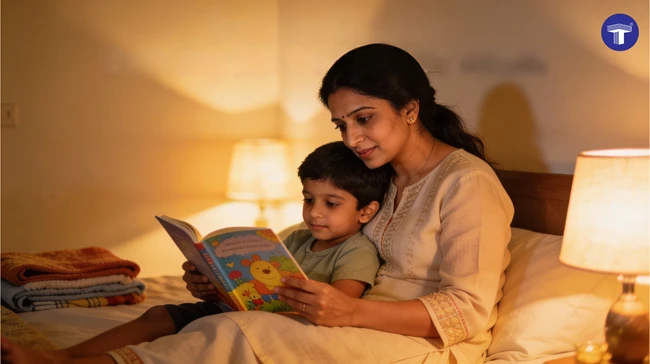
Bedtime: a consistent wind-down routine without any screens -bath, massage, song, feed, sleep
These rituals do more than reduce screen time. They build attachment, language, and the sense of security that is the single greatest gift you can give a child in their first two years.
|
✦ Ruchira's Take Many mothers tell me they feel guilty about using screens for their babies -but equally guilty when they consider taking them away. Both feelings are valid. Both come from love. Here is what I want you to hold: you are not a bad parent for having used screens. You were doing what you knew, with what you had, under the pressure you were carrying. And now you know more. That is enough to begin. A baby doesn't need a perfect screen-free home. They need a present parent -even an imperfect, tired, figuring-it-out parent -who keeps choosing connection over convenience, one small moment at a time. |
What to Do When the Joint Family Doesn't Cooperate
In most Indian homes, you are not the only adult around your baby. Dadiji puts on the TV. Nana hands them the phone to keep them quiet. The maid uses YouTube to get through the feeding.You cannot control everyone. But you can:
-
Have one calm, non-confrontational conversation: 'Doctor ne bola hai ki 2 saal se pehle screen nahi banana chahiye. Kya aap thoda dhyan rakh sakte hain?' (The doctor has said no screens before 2 years. Can you please keep this in mind?)
-
Make it easy for others to comply -keep a basket of engaging toys in every room where your baby spends time
-
Lead by example -when you put your own phone down around your baby, others take notice
-
Pick your battles -gentle, consistent reminders over time are more effective than conflict
Quick Detox Checklist for 0-2 Years
-
TV off when baby is awake and in the room
-
No phone as pacifier during meals or travel -prepare an alternative
-
Zero screens in the 1 hour before sleep
-
At least 30 minutes of face-to-face talking, singing, or reading daily
-
Sensory play basket ready in the main room at all times
-
Bedtime routine without any screen involvement
-
One calm conversation with family members about the guidelines
Your baby cannot ask you to put the phone down. They can only show you -through delayed speech, poor sleep, and reaching for the screen over you.
This is your chance to choose for them.

Ruchira Darda
Ruchira Darda is a certified parenting coach (ACC), NLP Practitioner, author, and the founder of parentwithpurpose.in. She works with families across India through her initiatives WOW, MahaMarathon, and The Yellow Door.