 5 min read
 Mindfulness Activities for Kids to Manage Anxiety and Stress
This blog covers exactly what childhood mindfulness is, why it works, and the best mindfulness activities for kids organized by age that you can start using immediately.

When Kids Carry More Than They Should
Children today are dealing with more stress than any previous generation academic pressure, social anxiety, overstimulating environments, and a world that moves faster than their nervous systems can keep up with.
The result? More children experiencing anxiety, emotional outbursts, sleep problems, and difficulty concentrating than ever before.
The good news: mindfulness for kids is one of the most researched, accessible, and effective tools for managing childhood anxiety and stress. And unlike therapy or medication, it's something you can introduce at home today with no special training, no equipment, and no budget required.
This blog covers exactly what childhood mindfulness is, why it works, and the best mindfulness activities for kids organized by age that you can start using immediately.
What Is Mindfulness for Kids and Does It Actually Work?
Mindfulness is the practice of paying deliberate, non-judgmental attention to the present moment what you're feeling, thinking, sensing, and experiencing right now.
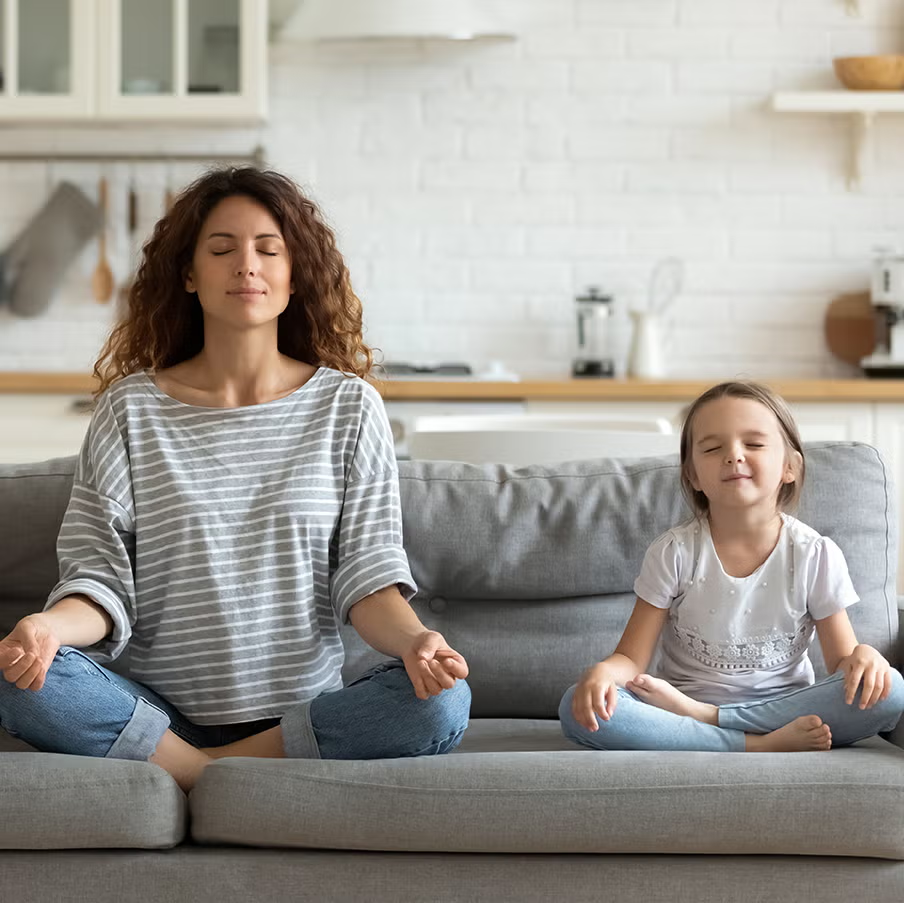
For children, mindfulness isn't about sitting still and meditating for 20 minutes. It's about short, engaging, age-appropriate practices that help kids:
- Notice their emotions before they're overwhelmed by them
- Calm their nervous system when stress spikes
- Build focus and attention span
- Develop self-awareness and emotional regulation
- Reduce anxiety by anchoring to the present instead of worrying about the future
What the Research Says
The evidence behind mindfulness for children is robust:
- A review published in Psychological Bulletin found mindfulness-based programs significantly reduce anxiety, depression, and stress in children and adolescents
- Research from Harvard shows mindfulness practice physically changes brain structure increasing gray matter in areas linked to self-awareness and emotional regulation
- Studies in school settings consistently show improved focus, reduced behavioral issues, and better emotional resilience in children who practice mindfulness regularly
This is not a trend. It's evidence-based child wellness.
Signs Your Child May Be Struggling With Anxiety or Stress
Before diving into activities, it helps to recognize what childhood stress and anxiety actually look like because children rarely say "I'm anxious." Instead, look for:
- Frequent stomachaches or headaches with no medical cause
- Sleep difficulties trouble falling asleep, nightmares, early waking
- Irritability, emotional explosiveness, or sudden mood shifts
- Avoidance of school, social situations, or new activities
- Excessive worry about unlikely events or "what ifs"
- Regression in younger children (bedwetting, clinginess, thumb-sucking)
- Difficulty concentrating or completing tasks
- Physical restlessness can't sit still, fidgeting, hyperactivity
If several of these are present consistently, mindfulness activities are a wonderful starting point alongside conversation and, if needed, professional support.
Mindfulness Activities for Toddlers and Preschoolers (Ages 2–5)
Young children can't engage with abstract mindfulness concepts but they are naturally present-moment beings. The goal here is sensory grounding and breathing awareness through playful, embodied activities.
1. Belly Breathing With a Stuffed Animal
Have your child lie down and place a stuffed animal on their belly. Ask them to breathe so that the animal "goes for a ride" rising on the inhale, falling on the exhale. This makes diaphragmatic breathing concrete, fun, and immediately calming.
2. The Smell and Touch Walk
On a walk outside, invite your child to notice and name: "What can you smell? What does the bark feel like? What do you hear right now?" This simple sensory awareness practice is pure mindfulness grounding attention in the present moment.
3. Shake It Out
When toddlers are overwhelmed, big body movement helps discharge stress hormones. Put on music and shake arms, legs, whole body then stop suddenly and "freeze." The contrast between movement and stillness teaches self-regulation in a way young bodies understand.
4. Blowing Bubbles for Calm
Blowing bubbles naturally slows the exhale which activates the parasympathetic nervous system (the body's calm-down system). This is one of the simplest and most effective breathing exercises for young children you'll find.
Mindfulness Activities for School-Age Children (Ages 6–11)
School-age children can engage with more intentional mindfulness practices. They can understand the why behind the activity, making them more invested.
1. The 5-4-3-2-1 Grounding Technique
This is one of the most effective anxiety relief techniques for kids because it immediately anchors the mind in the present through the senses:
- 5 things you can see
- 4 things you can touch (and actually touch them)
- 3 things you can hear
- 2 things you can smell
- 1 thing you can taste
Teach this as a tool for moments of overwhelm before a test, after a difficult social situation, or during a meltdown. With practice, children begin using it independently.
2. Mindful Breathing With Finger Tracing
Ask your child to hold one hand up like a star. With the other index finger, they slowly trace up each finger while inhaling and down while exhaling. Five fingers = five slow breaths. This tactile breathing anchor is particularly helpful for children with attention challenges.
3. The "Snow Globe" Visualization
Ask your child to imagine their mind is a snow globe that's been shaken swirling with thoughts and feelings. With each slow breath, the snow settles. Use this language when they're overwhelmed: "Let's let the snow globe settle." Over time, this becomes a shared, shorthand regulation tool.
4. Body Scan for Bedtime Anxiety
Nighttime is peak anxiety time for many children. Guide a simple body scan: starting at their feet and moving slowly upward, ask them to notice each body part and consciously relax it. By the time they reach their head, most children are deeply calm or asleep.
5. Feelings Weather Report
Ask your child: "What's the weather like inside you right now?" Stormy? Sunny? Foggy? This metaphor gives children a low-pressure, creative way to check in with their emotional state especially useful for children who resist direct emotional questions.
6. Mindful Coloring or Drawing
Slow, intentional art-making without a goal or product in mind is a natural mindfulness practice. It focuses the mind, calms the body, and gives difficult feelings a non-verbal outlet. Keep a dedicated "mindful art" journal for your child.
Mindfulness Activities for Tweens and Teens (Ages 12–18)
Older children often resist anything that feels childish or forced. The key is framing mindfulness as a performance and wellbeing tool something athletes, executives, and high-performers use not just a therapy technique.
1. Box Breathing (Used by Navy SEALs and Elite Athletes)
Inhale for 4 counts → hold for 4 → exhale for 4 → hold for 4. Repeat 4 times.
This technique is used by Navy SEALs, Olympic athletes, and ER doctors to regulate under pressure. Framing it this way makes it instantly appealing to teens who might otherwise roll their eyes.
2. Mindful Music Listening
Ask them to put on a song they love, close their eyes, and for the full duration of the song just listen. No phone. No multitasking. Just the music. This is full-presence practice disguised as something they already love.
3. The Thought Bus Technique
Teach teens to visualize their anxious thoughts as passengers getting on a bus. They are the driver. Passengers (thoughts) can make noise, but they don't control where the bus goes. This builds cognitive defusion the ability to observe thoughts without being controlled by them.
4. Journaling as Mindfulness
Five minutes of free-writing without editing, without rereading is one of the most powerful mindfulness practices for teens. It externalizes the internal noise, creates emotional clarity, and provides an outlet that doesn't require vulnerability with another person.
5. Mindful Movement Yoga, Walking, Stretching
Mindfulness doesn't have to be still. For physically active or restless teens, mindful movement slow yoga, a walk without headphones, deliberate stretching provides all the neurological benefits of meditation in a format that suits their energy.
How to Make Mindfulness a Daily Habit for Kids
The most common mistake parents make with kids' mindfulness is treating it as a crisis tool only bringing it out when a child is already overwhelmed. That's like only practicing fire drills during an actual fire.
Build mindfulness into the everyday routine:
- Morning: One minute of deep breathing before school
- After school: A feelings weather check-in before homework
- Dinner: A mindful minute of gratitude one thing each person noticed today
- Bedtime: A body scan or belly breathing before sleep
Consistency not duration is what builds the neural pathways that make mindfulness genuinely effective over time.
Final Thoughts: You Are the Most Powerful Mindfulness Tool Your Child Has
Every technique in this blog is valuable. But the single most powerful mindfulness intervention you can offer your child is this: your own regulated, present, calm presence.
When you model deep breathing during stress, when you name your own emotions, when you put down your phone and genuinely listen you are teaching mindfulness more effectively than any app or activity ever could.
Start with yourself. Then invite your child in.

Parent With Purpose
Parent with Purpose is your trusted parenting resource, offering expert advice, practical tips, and real experiences from fellow parents. Our content is organized by your child’s age, from pregnancy to the teen years, ensuring guidance that’s relevant to your current stage. Learn through articles, videos, podcasts, and courses that fit your lifestyle. We also provide carefully curated book lists, meal plans, product recommendations, and India-focused resources to make parenting easier and more informed.