 6 min read
 How Screen Time Is Affecting Your Child's Brain
You're sitting at the dinner table. Your child is physically present — but mentally? Somewhere...




You're sitting at the dinner table. Your child is physically present — but mentally? Somewhere inside a YouTube Shorts spiral or a gaming level that "just needs five more minutes."
Sound familiar?
You're not alone. A recent survey found that 95% of Indian parents are deeply worried about screen addiction in their children. That's nearly every parent reading this right now.
We handed our children phones during COVID so they could attend school. We used screens to keep them calm during a flight, a restaurant meal, a doctor's waiting room. It started innocently. But somewhere along the way, the screen stopped being a tool and started becoming a need — for them and, honestly, for us too.
This article isn't here to make you feel guilty. It's here to help you understand what is actually happening inside your child's brain — in simple, everyday language — and give you practical ways to take back balance, without turning your home into a battleground.
|
A Story From My Coaching Room A mother came to me for a coaching session — well-educated, thoughtful, genuinely devoted to her children. She wasn't struggling with parenting in any dramatic way. She just kept saying, "I feel like I've lost my son. He's right there, but he's not there." Her 11-year-old had gradually moved from 30 minutes of screen time to 4-5 hours a day. It happened slowly — extra time on weekends, then during holidays, then every evening. She didn't notice the shift until she realised they hadn't had a real conversation in weeks. What struck me most was this: she hadn't taken the phone away because she was afraid of his reaction. She was walking on eggshells in her own home. This is what unmanaged screen time does. It doesn't just affect the child — it changes the entire family dynamic. We worked on boundaries, on rebuilding rituals, on her own confidence as a parent. Within three weeks, she sent me a message: "We had dinner without phones last night. He actually told me about his day." |
What the Screen Is Actually Doing to Your Child's Brain
Your child's brain is not a small adult brain. It is still growing — rapidly, beautifully, and very vulnerably.
When a child watches a reel, a YouTube Short, or plays a fast-paced mobile game, their brain releases dopamine — the feel-good chemical. Every swipe, every new video, every "level up" gives a tiny hit of dopamine. It feels good. It feels exciting.
The problem? The brain starts to expect this level of stimulation all the time.
After 30 minutes of reels, sitting down to read a book — or even have a conversation — feels boring. Not because your child is lazy or ungrateful. But because their brain has been trained to expect faster, louder, more.
This is why your child:
-
Can't focus on homework for more than 10 minutes
-
Gets irritated when the phone is taken away
-
Says "I'm bored" within minutes of any offline activity
-
Has trouble sleeping at night
-
Is moody, restless, or emotionally sensitive
These are not character flaws. These are neurological responses to overstimulation.
What Indian Parents Are Seeing at Home
The Indian Academy of Pediatrics recommends zero screen time for children under 2 years, and no more than 1 hour per day for children between 2 and 5 years. For older children, it recommends structured, monitored usage.
But research across Indian cities shows that children under five are averaging over 2 hours of screen time daily — more than double the recommended limit. Teenagers in urban India are scrolling for 4–6 hours a day, often late into the night.
Here's what this is quietly doing:
1. Sleep is getting disrupted
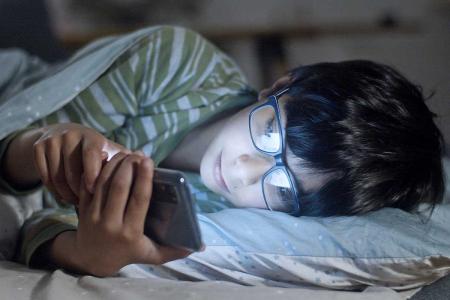
Screens emit blue light, which suppresses melatonin — the hormone that helps your child sleep. A child who watches reels at 10 PM will find it very hard to fall asleep, stay asleep, or wake up feeling fresh. Tired children are irritable children.
2. Attention spans are shrinking
Social media algorithms are designed to grab attention every 15–30 seconds. A child raised on this content starts to find anything that lasts longer than a minute — a class lecture, a storybook, a family conversation — unbearably slow.
3. Emotional regulation is weakening
Children learn to manage emotions through real interaction — through play fights with cousins, through disappointment on a cricket pitch, through boredom they have to solve themselves. Screens replace all of these with instant entertainment, leaving emotional muscles underdeveloped.
4. Family conversations are decreasing
When every family member is on their own screen, the dinner table becomes silent — not the comfortable, peaceful silence, but the disconnected kind. Children learn values, empathy, and language through family conversation. We are unknowingly reducing that.
The Guilt Trap — And Why You Need to Step Out of It
Here's something most parenting articles won't tell you:
The screen problem in most Indian homes is a parent problem too.
Not because you're a bad parent. But because you are exhausted. You are managing a career, a household, extended family expectations, WhatsApp groups, and your own anxieties. The phone is your escape too. And so when you hand your child the phone to buy yourself 20 minutes of peace — that is not failure. That is survival.
But now you know what it's doing. And knowing changes things.
The goal is not perfection. The goal is intentional use — yours and theirs.
|
✦ Ruchira's Take In my years of working with families, I have never met a parent who gave their child a phone out of laziness or indifference. Every single one did it out of love — to keep them occupied, to let them learn, to give themselves a moment to breathe. The shift happens when we move from reactive parenting ("Here, take the phone, please just be quiet for five minutes") to intentional parenting ("Let's decide together when and how we use screens in our home"). Parenting with purpose doesn't mean being a perfect parent. It means being a present one — even when presence is imperfect. |
Practical Ways to Reduce Screen Time — Without Fights
These are not rules from a parenting textbook. These are real, doable shifts that Indian families have made to bring back balance.
1. Create Screen-Free Zones at Home
Start with the dinner table and the bedroom. No phones during meals — for anyone. No screens in the child's bedroom after a certain time. Simple physical boundaries are more powerful than any digital parenting app.
2. Replace, Don't Just Remove
If you take away the phone and offer nothing in return, your child will simply want it more. Replace screen time with something that gives a similar feeling of engagement — building, drawing, outdoor play, cooking together, board games. The brain still wants stimulation. Give it something real.
3. Use the 'When-Then' Approach
Instead of "No phone until homework is done" (which sounds like punishment), try "When your homework is done, then you can have 30 minutes of screen time." Same boundary, no power struggle.
4. Be Honest With Your Child About Why
Children above 6 respond very well to honesty. You don't need to lecture. Just say: "Beta, I read something about how too much phone time makes it harder for the brain to feel happy over time. Let's both try to use it less." You become allies, not opponents.
5. Check Your Own Screen Habits First
Your child will do what you do, not what you say. If you want them to put the phone down, they need to see you put the phone down — especially during family time. This is the single most powerful thing you can do.
6. Designate a Family Offline Hour Every Day
Pick one hour — ideally in the evening — where everyone is offline. Walk together, talk, cook, do nothing. Just be together without a screen. Start with 30 minutes if an hour feels too ambitious.
7. Understand Good Screen Time vs. Bad Screen Time
A child doing a coding course, a creative writing app, or a video call with Nani is using the screen very differently from a child passively scrolling reels. Help your child understand the difference. Guide them towards content that gives something back.
What About Teenagers?
For teenagers, taking away the phone cold turkey is likely to backfire. Screens are where their social lives live. Taking that away can feel like social exile.
Instead of control, try connection.
Stay curious about what they're watching. Ask about their favourite creator without judging. Watch one reel with them. When children feel that you are genuinely interested in their world — and not just waiting to criticize it — they are far more likely to listen when you do set a boundary.
Also know this: teenagers whose parents have a warm, trusting relationship with them are significantly less likely to develop screen addiction. The relationship is the protection.
A Note From the Heart
We are the first generation of parents raising children in the smartphone age. There is no blueprint for this. No elder in the family went through exactly what you're going through. You are figuring this out in real time, with love and imperfect information.
Every small step counts. Turning off the phone for one dinner. Sitting next to your child on the floor instead of scrolling. Asking how their day was — and actually listening.
Parenting with purpose doesn't mean being a perfect parent. It means being a present one.
Quick Recap: What You Can Do Starting Today
-
No phones at the dinner table — family rule, not just for kids
-
No screens in the bedroom after 8 PM
-
One offline hour daily as a family
-
Replace screen time with hands-on activities, not just rules
-
Talk to your child about why — treat them as partners
-
Reduce your own screen time first
-
For teenagers: build the relationship before building the rule
You don't have to get this perfect. You just have to keep trying.

Ruchira Darda
Ruchira Darda is a certified parenting coach (ACC), NLP Practitioner, author, and the founder of parentwithpurpose.in. She works with families across India through her initiatives WOW, MahaMarathon, and The Yellow Door.