 3 min read
 Why 'Toughen Up' Is Disappearing From Indian Parenting Vocabulary
Resilience is not about hiding emotions or facing struggles alone. This article explores how Indian parents can build stronger children through emotional support, healthy communication, and balanced parenting approaches.

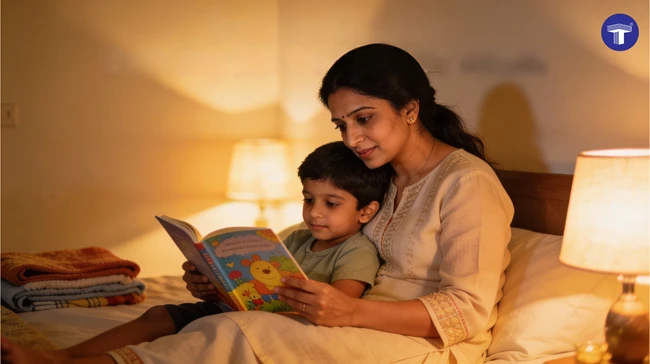
Something is shifting in Indian parenting conversations. The phrase 'toughen up' - once a standard parental response to a child's distress - is disappearing from the vocabulary of a significant segment of urban Indian parents. In its place: 'tell me how you're feeling', 'that sounds hard', 'I'm here'.
This is not, as critics sometimes frame it, the softening of a generation of parents producing fragile children. It is a evidence-informed course correction - the recognition that 'toughening up' produced not resilience but suppression, and that true resilience looks different from what an earlier generation imagined.
What Resilience Actually Is - and Isn't
The popular understanding of resilience - the ability to 'take it', to not feel affected, to bounce back without visible distress - is, according to modern resilience research, a misunderstanding of the concept.
The psychological definition of resilience, as established by Ann Masten's landmark work at the University of Minnesota, is not the absence of distress. It is the ability to function and recover in the presence of adversity. This recovery is supported - not undermined - by emotional support, secure attachment, and the ability to process difficulty rather than suppress it.
In plain terms: a child who is told to 'toughen up' learns to suppress the signals of distress. A child who is supported through distress learns to process and move through it. The second child is more resilient. The first is more defended - which is not the same thing.
What China Is Doing Differently - and What Indian Parents Can Learn
China's parenting evolution offers a useful comparative lens. The country often cited for 'tiger parenting' - high-pressure, performance-focused, emotionally austere - has in the last decade seen a significant government and public health push toward what Chinese researchers are calling 'gentle authoritative parenting'.
Chinese schools now include Social and Emotional Learning (SEL) curricula. Chinese child psychology associations have produced guidelines for parents on emotional acknowledgment, play-based development, and the role of parental warmth in academic performance. The recognition driving this shift: Chinese children consistently rank high in academic performance and low in wellbeing. The high-pressure parenting model was producing outcomes in one dimension while damaging outcomes in another.
India is at an earlier stage of the same conversation. The pressures are familiar - competitive entrance exams, family reputation, performance anxiety - and the costs are becoming harder to ignore.
The Authoritative Parenting Research
Decades of research by Diana Baumrind, and subsequently Eleanor Maccoby and John Martin, established that children raised with 'authoritative parenting' - high warmth combined with clear expectations and reasonable limits - consistently outperform children raised with 'authoritarian parenting' (high demands, low warmth) on measures of academic achievement, emotional regulation, social competence, and mental health.
This finding has been replicated across multiple cultures, including collectivist cultures more similar to India. The research does not say 'be permissive'. It says: combine the high expectations of traditional Indian parenting with the emotional warmth and validation that traditional Indian parenting often withheld.
What the Shift Actually Looks Like in Indian Homes
|
Old Response |
What It Was Trying to Do |
New Response |
What It Actually Does |
|
'Stop crying, be strong' |
Prepare child for hard world |
'I see you're upset. What happened?' |
Teaches distress is survivable with support |
|
'You're overreacting' |
Keep emotions manageable for parent |
'That sounds really hard' |
Validates child's internal experience |
|
'Others have it worse' |
Teach gratitude, perspective |
'It makes sense you feel that way' |
Builds emotional self-awareness |
|
'Just get on with it' |
Teach persistence |
'That was difficult - what do you need right now?' |
Teaches problem-solving from a supported base |
|
'Don't be sensitive' |
Protect child from being hurt |
'Being sensitive means you feel things deeply - that's not a flaw' |
Reframes emotional awareness as strength |
Resilience is built through connection, not through hardship alone. A child who knows you will be there when things are hard is a child who will try hard things. The safety is what makes the risk possible.
How has your parenting vocabulary changed from how you were raised?

Parent With Purpose
Parent with Purpose is your trusted parenting resource, offering expert advice, practical tips, and real experiences from fellow parents. Our content is organized by your child’s age, from pregnancy to the teen years, ensuring guidance that’s relevant to your current stage. Learn through articles, videos, podcasts, and courses that fit your lifestyle. We also provide carefully curated book lists, meal plans, product recommendations, and India-focused resources to make parenting easier and more informed.