 7 min read
 How to Raise a Child Who Eats - and Enjoys -Everything
If you have a child who eats only white foods, only dal chawal, only the...

If you have a child who eats only white foods, only dal chawal, only the same three things in rotation - I see you.The mealtime negotiations. The separate meal you cook because 'he won't eat this.' The quiet dread of eating at someone else's house because you don't know what they'll serve. The well-meaning relatives who comment on how thin your child is as if you haven't noticed.I am not going to give you a list of tricks to smuggle vegetables into food. That is a short-term solution to a long-term question.The real question is not 'how do I get my child to eat this vegetable today?' It is 'how do I raise a child who has a curious, open, confident relationship with food for the rest of their life?' That is a different project. And it begins much earlier - and much more simply - than most of us think.
"The Dubai Dinner
Baby A was 14 months old. We were in Dubai -a Lebanese restaurant, warm and noisy, the kind of place where the bread arrives hot and the table fills up before you've even sat down properly.We had ordered his usual: dal chawal, safe and familiar. But when our food came -the hummus, the labneh, the muttabal, the warm pita, the tabbouleh -he leaned forward in his high chair with a look I have never forgotten.Pure curiosity. No caution. No suspicion. Just: what is that, and can I have some?He dipped his finger into the hummus. Then the labneh. Tore off a piece of pita and considered it seriously. Tried the tabbouleh and made a face -then tried it again.We didn't redirect him. We didn't say 'no, that's too spicy' or 'have your dal.' We just watched. And in that Lebanese restaurant in Dubai, at 14 months, Baby A decided that the world of food was interesting.
That evening taught me something I have carried into every meal since: a child who is not stopped will explore."The First Thing We Did: We Never Made Food a BattleThe single most counterproductive thing you can do with a picky eater is turn the table into a negotiating room.'One more bite.' 'Eat your vegetables and then you can have dessert.' 'Do you know how many children don't have food?' These sentences -all said with love, all completely understandable -teach a child one thing: food is a source of conflict. And conflict makes the food less appealing, not more.In our home, we operated on one quiet principle: food is offered, not forced. We put things on the table. We ate them with genuine enjoyment. We didn't comment on what was eaten and what wasn't. We didn't offer alternatives if something was refused. And we didn't make anyone feel bad about their plate.A child who is not anxious about food will eventually try the food.It may take ten exposures. It may take twenty. Research on food neophobia -the very normal fear of new foods in young children -shows that repeated, pressure-free exposure is the only thing that reliably works. Not pressure. Not tricks. Exposure and time.
The Second Thing: We Cooked Together
This is the one I feel most strongly about. And the one that made the most difference.From very early on -as soon as they could stand at the counter -both my boys were in the kitchen with me. Not watching. Doing.They chopped. They stirred. They peeled garlic with fingers that were still figuring out how to hold a pencil. They boiled and sautéed and -this was the best part -they licked the sauces off the spoon and declared their own cooking delicious.And it was. Because it was theirs.
"The Dubai Dinner
There is something that happens when a child makes a dish. They become invested in it. The sabjzi they chopped becomes the sabzi they are proud of. The dal they stirred is not just dal -it is their dal.I watched this happen again and again. A child who would previously push something to the side of the plate would eat the same thing with genuine satisfaction when their hands had been part of making it.We praised the cooking lavishly. 'This is the best aloo we have ever had.' 'Did you put something extra in? It tastes incredible.' And they glowed. And they ate. And they asked to make it again next time.That is not manipulation. That is the truth. Food made with someone you love always tastes better.
"What cooking together actually builds:
- Familiarity with ingredients -a child who has handled a brinjal, smelled it raw, watched it cook is far less likely to refuse it on the plate
- Confidence with flavours -they learn early that they can adjust, taste, correct, create.Ownership -'I made this' is the most powerful sentence at a dinner table
- Curiosity -when you cook together, children ask questions. What does this spice do? Why does onion make you cry? Why does bread rise? Food becomes interesting, not just necessary
- Life skills -both my boys are, today, excellent cooks. They experiment with flavours. They curate dishes. They are the kind of guests who offer to cook rather than waiting to be fed
What Picky Eating Usually Is -and Isn't
- Before strategies, a little understanding. Because much of what we call picky eating is actually completely normal child development.
- Food neophobia -fear of new foods
Between ages 2 and 6, most children go through a phase of resisting new foods. This is evolutionary -in early human history, a toddler wandering off and eating something unfamiliar was a genuine danger. The caution is hardwired. It is not defiance. It is not a reflection of your cooking. It is biology.
Sensory sensitivity
Some children are genuinely more sensitive to textures, temperatures, smells, and tastes. The child who gags on a lump in their dal or refuses anything slimy is not being dramatic. Their sensory experience of food is simply more intense than yours. Forced eating in these children creates lasting food anxiety. Gentle, repeated exposure without pressure is the only thing that helps.
Control
For toddlers and young children, the dinner table is often the one arena where they feel they have some power. Refusing food is, sometimes, simply the most effective way available to them to assert that they have a say in their own life. The answer is not to take that power away -it is to offer it elsewhere. Let them choose between two vegetables. Let them decide how much goes on their plate. Give them agency within the meal.
When to take it more seriously
If your child is losing weight, has significant nutritional deficiencies, is distressed at every meal, or is limiting their diet to fewer than 20 foods, please speak to your paediatrician. Extreme picky eating can sometimes indicate a sensory processing issue or ARFID (Avoidant/Restrictive Food Intake Disorder) that benefits from professional support.
Practical Things That Actually Work
- Start them young and start them curious
- The Lebanese restaurant lesson: when babies and toddlers are curious about your food, let them explore. A 12-month-old dipping a finger into your curry is not a problem. It is the beginning of a food education. Don't redirect. Don't worry about spice unless it's genuinely very hot. Let them smell, touch, lick. Curiosity at this age is a gift -don't close it.
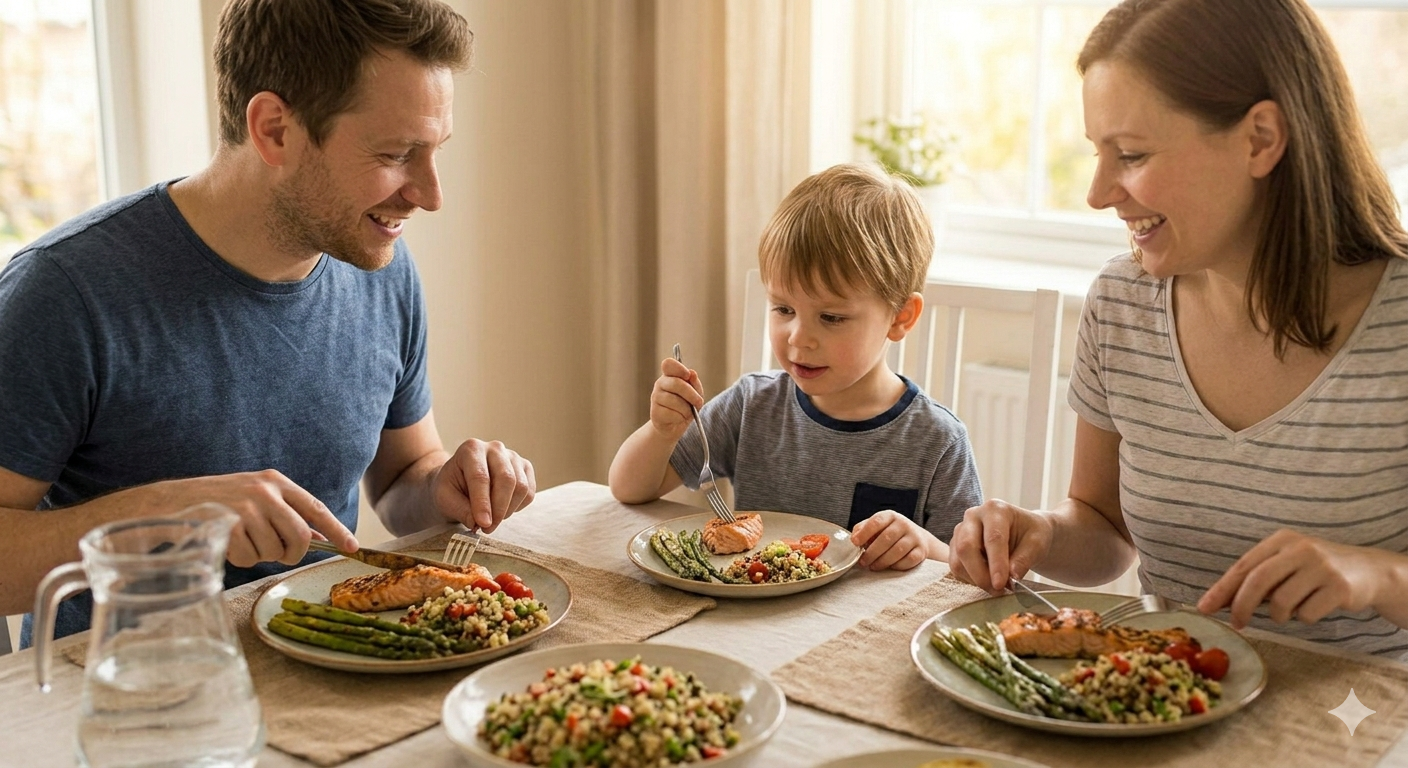
- Eat the same food yourself -visibly and with pleasure This is perhaps the most unsexy parenting advice, but it is the most true. Children eat what they see the people they love eating. With enjoyment. Regularly. If you want your child to eat dal palak, eat dal palak at the table with genuine satisfaction. The modelling is more powerful than any strategy.
Involve them in shopping
Let your child pick one vegetable or ingredient at the sabzi mandi or supermarket. Something they have chosen. Something they had a hand in selecting. It arrives home with a different status -it is theirs. Ask them: what should we make with this? Let them guess.
- Make new foods appear alongside safe ones
- The research calls this 'bridging' -placing a new, unfamiliar food next to a well-loved familiar one. Not replacing. Adding. A small spoonful of something new beside the dal chawal they love. No pressure. No comment. Just presence. Over time, the unfamiliar becomes familiar.
- Let them have opinions - and honour them
- 'I don't like this' is allowed. It is honest. What we don't accept is 'I won't even try it.' One bite -just one - is a reasonable, consistent expectation. But after that one bite, the opinion is respected. 'You tried it and you didn't like it today. That's okay. We'll have it again another time.'
- Make the kitchen a place of joy, not pressure
- Sing while you cook. Let things spill without drama. Let them eat the raw atta. Let them taste the batter. Let the kitchen be a place where the process is as pleasurable as the outcome. A child who associates cooking with warmth and laughter and freedom will be a child who wants to be in the kitchen.
What We Don't Do
- We don't make separate meals. One meal for the family. They eat what is made, or they wait for the next meal. This sounds strict. It is, in fact, the kindest thing -it removes the anxiety of endless negotiation and gives the child one clear, consistent message.
- We don't use food as reward or punishment. Dessert is not conditional on vegetables. Vegetables are not punished with the absence of dessert. When food is used as leverage, food stops being about nourishment and becomes about power.
- We don't comment on how much or how little has been eaten. 'You've barely had anything' creates anxiety. 'You've eaten so much!' creates overconsumption. Children have an extraordinary ability to self-regulate their appetite when we don't interfere with it.
- We don't label our children as picky. 'He's a fussy eater' becomes a story the child lives inside. 'He's still getting to know some foods' is the same truth, told differently.
Ruchira's Take
Both my boys are now excellent cooks. They know their way around a kitchen in a way that genuinely impresses me sometimes. But more than the skill -they have a relationship with food that I am proud of. They are curious about it. They travel and eat whatever is in front of them. They experiment. They cook for people they love.None of that happened because of a strategy or a parenting book. It happened because we let a 14-month-old dip his finger into hummus in Dubai and we did not stop him.It happened because we shared our kitchen with them before they were tall enough to reach the counter properly. It happened because food in our home was always about pleasure and connection -never about control. That is the whole secret. Feed your children the way you want them to feel about food: with curiosity, generosity, and joy.
"Starting This Week
- Next meal: put one small new thing on the plate alongside the familiar -no comment, no pressure
- This weekend: cook one thing together. Let them chop, stir, taste, and take credit for it
- Stop making a separate meal - one family meal, served with love
- Remove one food-as-leverage phrase from your vocabulary this week
- At the table: eat your own food with visible pleasure. Let them watch.
- When they try something new - even a lick - celebrate it. Not with prizes. With genuine delight.
- A child who cooks is a child who eats.
- Let them into your kitchen. The rest follows.

Parent With Purpose
Parent with Purpose is your trusted parenting resource, offering expert advice, practical tips, and real experiences from fellow parents. Our content is organized by your child’s age, from pregnancy to the teen years, ensuring guidance that’s relevant to your current stage. Learn through articles, videos, podcasts, and courses that fit your lifestyle. We also provide carefully curated book lists, meal plans, product recommendations, and India-focused resources to make parenting easier and more informed.