 4 min read
 Leave them to be bored!
Is boredom in childhood really a problem, or are we afraid that it is unhealthy or unproductive? Before we get to that, here is something to think about.

Is boredom in childhood really a problem, or are we afraid that it is unhealthy or unproductive? Before we get to that, here is something to think about.
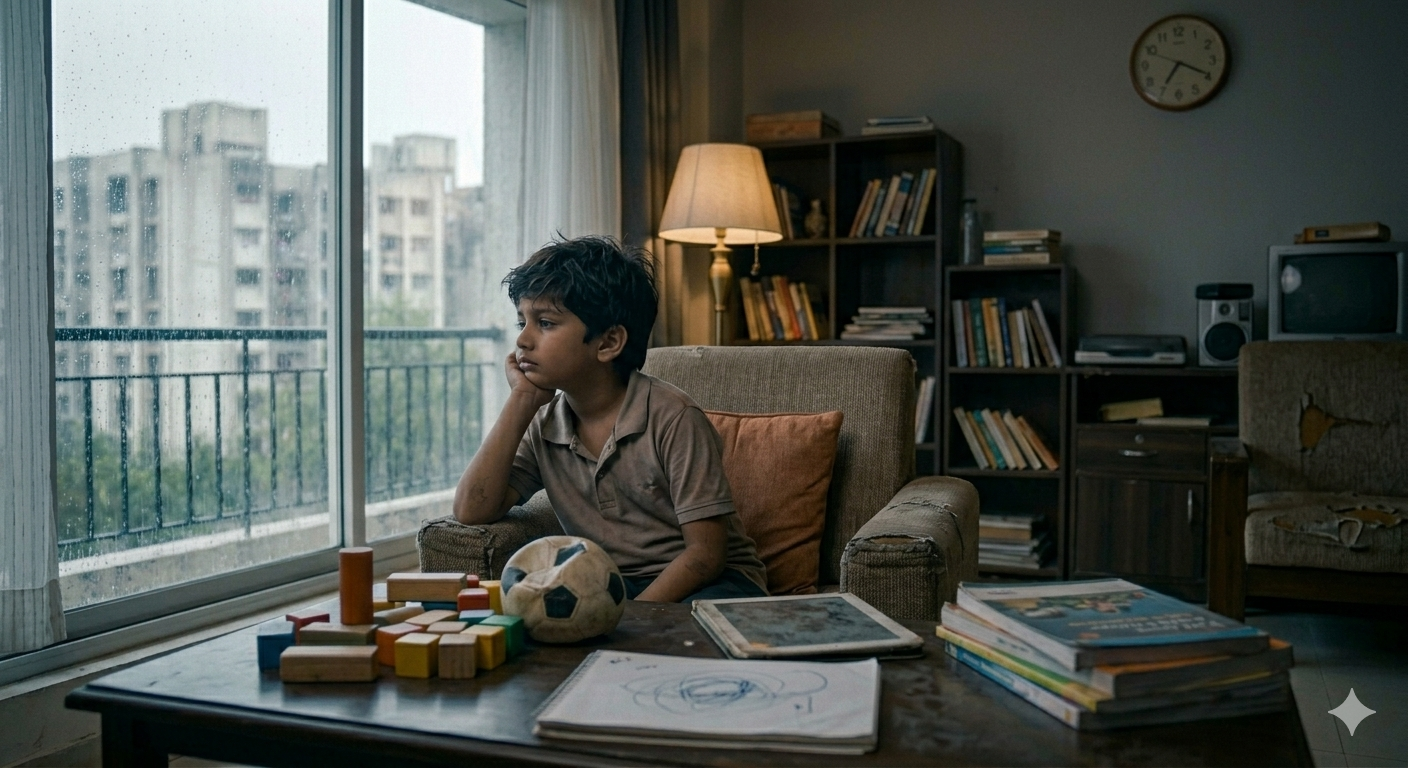
What does your child really mean when they say, “I’m bored”?
• They’re craving mental stimulation.
Especially when they’re used to a packed routine of school, tuition, screens, and structured activities.
• They want your attention.
Boredom can often be a call for connection. They know if they nag long enough, you’ll give in and offer something to do.
• They’re trying to fill the silence.
We live in a culture where free time is almost seen as unproductive, so boredom feels unfamiliar and uncomfortable.
But what happens when you stop entertaining their boredom?
When you stop jumping in to solve your child’s boredom, something magical starts to happen - slowly, sometimes with resistance, but always with growth.
• They learn to entertain themselves.
Left to themselves (without actual devices), kids begin to look inward or around them for inspiration. They may pick up old toys, try something new, or even invent a game out of thin air. It’s the beginning of self-reliance.
• They begin to explore their own interests.
Without a ready-made activity, they’re forced to ask, “What do I feel like doing?” When this question comes to them, they are also forced to identify what truly excites and engages them - whether it’s building, drawing, dancing, baking, or just daydreaming of a career.
• They start assigning meaning to things.
According to research by the American Psychological Association, boredom creates mental space for reflection. It encourages people to look back and find value in their past experiences and approach future moments with more meaning and intentionality. You’d be surprised to know how children also actively do this.
• Their brains start working for them.
A bored brain is not a lazy brain; it’s a searching brain.When kids aren’t handed constant stimulation on a platter, their minds naturally begin connecting dots, imagining possibilities, and creating stories. This is the kind of thinking that leads to innovation and passion.
• They build confidence and self-trust.
When a child solves their own boredom, they feel capable and confident. That sense of achievement may be small, but over time, it becomes the foundation of resilience, self-assurance, self-trust, and creativity.
So, what can you do as a parent?
Now comes the tough part. I understand it’s not easy to leave them alone and resist the urge to fix it all for them. But this is where your parenting can truly empower them. Here’s what you can do:
• Change the narrative around boredom.
Boredom is not a failure of planning or productivity. It’s actually a gift - an opportunity for creativity, reflection, and even emotional regulation. Let them hear that from you. “It’s okay to be bored.” “It’s okay to do nothing for a while.”
• Encourage downtime without tech.
Screens offer instant gratification, but they also numb a child’s natural curiosity. Create space in their day that’s just blank - where there’s no structured activity or device. Yes, you’ll see pushback. There may be frustration, complaints, and even meltdowns. But trust me, these short-term discomforts lead to long-term gains. Offer them compassion and show them that you’re in this with them. This is not a punishment, but simply an effort to do something truly kind for their mind.
• Resist the urge to fill the gap.
You don’t need to be their entertainer 24/7. Be like our parents were - they let us figure it out. Sit beside them, if needed. Offer support, maybe. But don’t rush in with solutions. Let their discomfort be the nudge they need to think, imagine, and create. Give them space and maybe show them the importance of boredom with action instead of words. Just be and fill up your time with something spontaneous. Let that be their inspiration.
• Make offline options easy and accessible.
Keep things visible and within reach, not tucked away in high cupboards. Board games on shelves, art and craft supplies on tables, books face-out, musical instruments or puzzles in plain sight. The more visible the choices, the easier it is for kids to explore without asking or telling.I saw a great example of this in my house with my children recently. On regular days, when my boys’ time is scheduled, they go through the motions. But on slow days, they inevitably come to me: “Mumma, I’m bored.” Earlier, I would feel responsible to “solve” it. Now, I don’t. I simply don’t have an answer. At first, they sulked. But over time, they discovered the kitchen. They began baking together, and so well, might I add! Today, they try new recipes on their own. That spark? It came from letting them be bored.
In fact, just this week, I was at Lokmat’s National School Summit. The hall was filled with educators from across Maharashtra. One of the attendees came up to me and said, “Your idea of boredom really hit me.” His daughter had been struggling with the same thing. One day, he simply gave up and told her, “Do whatever you feel like.” She ended up painting for hours, and now he’s amazed by how creative she is! He thought she’d waste time. Instead, they discovered her talent.So yes, boredom is uncomfortable. But it’s also a gateway to discovery, creativity, and confidence. Let your child get bored. Trust them to find their way through it. You might be surprised by what they find.

Parent With Purpose
Parent with Purpose is your trusted parenting resource, offering expert advice, practical tips, and real experiences from fellow parents. Our content is organized by your child’s age, from pregnancy to the teen years, ensuring guidance that’s relevant to your current stage. Learn through articles, videos, podcasts, and courses that fit your lifestyle. We also provide carefully curated book lists, meal plans, product recommendations, and India-focused resources to make parenting easier and more informed.