 5 min read
 Everything You Wanted to Know About Cervical Cancer and the Preventive Vaccinations
Cervical cancer is one of the few cancers that is largely preventable. Yet, it continues to affect thousands of women every year—often due to lack of awareness, delayed screening, or missed vaccination opportunities.

The good news? With the right knowledge and timely action, cervical cancer can not only be detected early but, in many cases, prevented altogether.
This blog will walk you through everything you need to know—what cervical cancer is, what causes it, how it develops, and most importantly, how preventive vaccinations can play a life-saving role.
What Is Cervical Cancer?
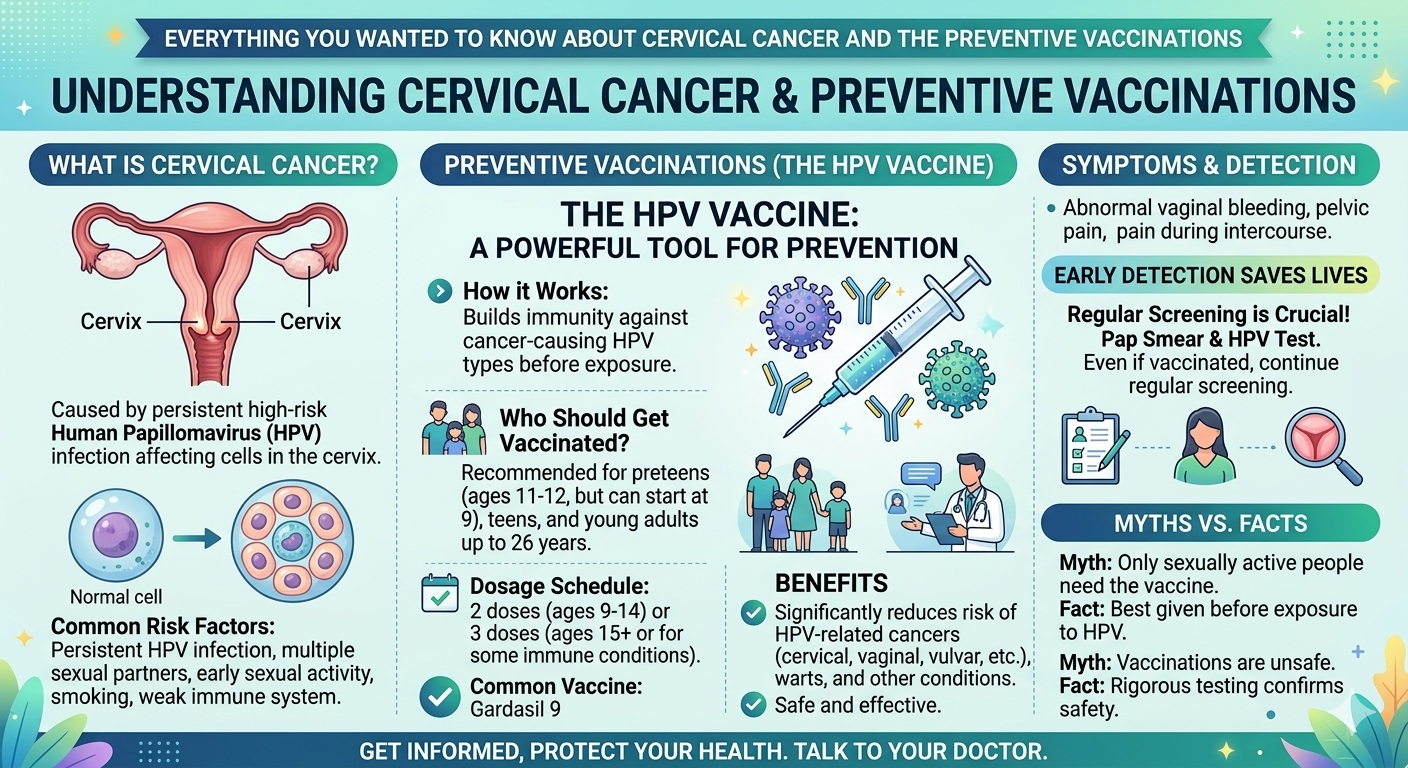
Cervical cancer occurs in the cervix—the lower part of the uterus that connects to the vagina. It usually develops slowly over time, starting with abnormal changes in cervical cells.
These early changes are known as precancerous lesions. If detected early, they can be treated before they turn into cancer. What makes cervical cancer unique is that it often has a clear cause and a predictable progression. This makes prevention and early detection highly effective.
The Main Cause: Human Papillomavirus (HPV)
Almost all cases of cervical cancer are caused by a virus called Human Papillomavirus (HPV). HPV is extremely common and spreads through skin-to-skin contact, including sexual contact. Most people who are sexually active will be exposed to HPV at some point in their lives.
There are many types of HPV, but not all are harmful. Some types cause warts, while others—known as high-risk types—can lead to cancer. The most dangerous strains are HPV 16 and HPV 18, which are responsible for the majority of cervical cancer cases.
In many cases, the body’s immune system clears the virus naturally. However, when the infection persists, it can cause changes in cervical cells over time.
How Does Cervical Cancer Develop?
Cervical cancer does not develop overnight. It usually takes several years, progressing through stages:
- HPV infection
- Persistent infection
- Precancerous cell changes
- Cancer development
This slow progression is actually an advantage—it provides a window of opportunity for early detection and intervention.
Common Symptoms to Watch For
In its early stages, cervical cancer may not cause noticeable symptoms. This is why regular screening is so important.
As the disease progresses, symptoms may include:
- Unusual vaginal bleeding (between periods, after intercourse, or after menopause)
- Persistent pelvic pain
- Pain during intercourse
- Unusual vaginal discharge
These symptoms are not exclusive to cervical cancer, but they should never be ignored.
Who Is at Risk?
While HPV is the primary cause, certain factors can increase the risk:
- Early onset of sexual activity
- Multiple sexual partners
- Weakened immune system
- Smoking
- Long-term use of oral contraceptives
- Lack of regular screening
However, it’s important to remember that cervical cancer can affect anyone with a cervix, regardless of lifestyle.
The Role of Screening
Before we talk about vaccination, it’s crucial to understand the importance of screening.
Pap Smear Test
A Pap smear detects abnormal cervical cells before they turn cancerous. It is a simple, quick procedure that can save lives.
HPV Testing
HPV testing identifies the presence of high-risk HPV strains in the body. Regular screening allows for early detection and timely treatment, significantly reducing the risk of cancer.
The Game Changer: HPV Vaccination
One of the most powerful tools in preventing cervical cancer is the HPV vaccine. Unlike many vaccines that prevent infections, this vaccine prevents a virus that can lead to cancer.
How Does the Vaccine Work?
The HPV vaccine protects against the most harmful strains of HPV, particularly types 16 and 18. Some vaccines also protect against additional strains that cause genital warts.
By preventing HPV infection, the vaccine reduces the risk of developing cervical cancer later in life.
Types of HPV Vaccines
There are different types of HPV vaccines available:
- Bivalent vaccine – protects against HPV 16 and 18
- Quadrivalent vaccine – protects against HPV 6, 11, 16, and 18
- Nonavalent vaccine – protects against nine HPV types
The availability may vary depending on the country and healthcare system.
Who Should Get Vaccinated?
The HPV vaccine is most effective when given before exposure to the virus.
Ideal Age Group
- Girls and boys aged 9 to 14 years
- Vaccination at this age provides the strongest immune response
Catch-Up Vaccination
- Individuals up to 26 years can still benefit
- In some cases, adults beyond this age may also be advised to get vaccinated after consulting a doctor
Why Vaccinate Boys Too?
HPV does not only affect females. It can also cause cancers in males, including throat and genital cancers. Vaccinating boys helps reduce the overall spread of the virus and protects both individuals and communities.
Dosage and Schedule
The vaccination schedule depends on age:
- Ages 9–14: 2 doses (6–12 months apart)
- Ages 15 and above: 3 doses over 6 months
It’s important to complete the full course for maximum protection.
Is the HPV Vaccine Safe?
Yes, the HPV vaccine is considered very safe. It has been extensively studied and monitored worldwide. Millions of doses have been administered globally with strong safety records.
Common side effects are mild and may include:
- Pain at the injection site
- Mild fever
- Headache or fatigue
Serious side effects are extremely rare.
Common Myths and Misconceptions
“The vaccine encourages early sexual activity”
There is no evidence to support this. The vaccine is about health protection, not behavior.
“I don’t need it if I’m already sexually active”
Even if you’ve been exposed to one type of HPV, the vaccine can still protect against other types.
“Screening is enough, I don’t need vaccination”
Screening detects problems early, but vaccination prevents them from occurring in the first place. Both are important.
Vaccination in India: What You Should Know
In India, awareness around HPV vaccination is growing, but uptake is still relatively low compared to global standards. Recent efforts by health authorities aim to make the vaccine more accessible and affordable.
Some schools and healthcare programs are beginning to include HPV vaccination as part of routine immunization. Consulting a healthcare provider is the best way to understand availability and suitability.
The Importance of Combining Vaccination and Screening
Vaccination alone does not eliminate the need for screening. Even vaccinated individuals should continue regular Pap smears and HPV testing as recommended. The combination of vaccination and screening offers the highest level of protection.
Emotional and Social Aspects
Cervical cancer is not just a medical issue—it also carries emotional and social implications.
In many communities, discussions around reproductive health are still considered sensitive or taboo. This can lead to delayed diagnosis and treatment. Creating open conversations is essential.
Parents, educators, and healthcare providers all play a role in spreading awareness and encouraging preventive care.
What Parents Need to Know
If you are a parent, the HPV vaccine is one of the most important preventive health decisions you can make for your child. It is not just about protecting them today—it’s about safeguarding their future.
Having open, age-appropriate conversations about health, hygiene, and prevention can make a lasting impact.
Taking Action: What You Can Do Today
- Learn about cervical cancer and HPV
- Talk to your doctor about vaccination
- Schedule regular screenings
- Encourage awareness within your family and community
Small steps can lead to significant change.
Final Thoughts
Cervical cancer is largely preventable, yet it continues to affect lives due to gaps in awareness and access. The combination of HPV vaccination and regular screening has the power to dramatically reduce—and potentially eliminate—this disease. This is not just about medicine. It’s about empowerment.
When individuals are informed, they can make choices that protect their health and the health of future generations. Because sometimes, the most powerful protection isn’t treatment—it’s prevention. And in the case of cervical cancer, prevention is not just possible—it’s within reach.

Parent With Purpose
Parent with Purpose is your trusted parenting resource, offering expert advice, practical tips, and real experiences from fellow parents. Our content is organized by your child’s age, from pregnancy to the teen years, ensuring guidance that’s relevant to your current stage. Learn through articles, videos, podcasts, and courses that fit your lifestyle. We also provide carefully curated book lists, meal plans, product recommendations, and India-focused resources to make parenting easier and more informed.