 4 min read
 10 Intentional Parenting Habits to Start This Week
Intentional parenting is not about being a perfect parent. It's not about a particular philosophy, a specific book, or getting everything right.

Intentional parenting is not about being a perfect parent. It's not about a particular philosophy, a specific book, or getting everything right.
It's about being deliberate. Making small, consistent choices that reflect the parent you want to be - not just the parent you default to when you're tired, stressed, distracted, or running late.
These 10 habits are simple enough to start immediately. You don't need to do all 10. Pick two. Do them for a week. Then come back for more.
✨ 10 HABITS - START WHERE YOU ARE
Habit 1: Phone Face-Down for the First 30 Minutes After Your Child Gets Home
This is the most consistently reported powerful habit among parents who've tried it. The 30 minutes after a child returns from school is their processing time - when they're most likely to spontaneously share what happened, what's bothering them, or something they're excited about.
A parent who is on the phone during this window misses it entirely. A parent who is present - even if just making chai - catches the moments that don't repeat themselves.
Habit 2: One Specific Appreciation Every Day
Not 'you're great.' Not 'you did so well today.' Something specific. 'I noticed how carefully you explained that to your younger cousin.' 'That drawing you did - the way you chose those colours - it's really something.'
Specific appreciation does two things: it tells the child you actually see them (not just their performance) and it reinforces the specific behaviour or quality you named.
Habit 3: One Real Question at Dinner
Not 'how was school?' - which gets 'fine' from every child over age 7. But something with a real answer:
- 'What was the weirdest thing anyone said today?'
- 'What made you laugh today?'
- 'Was there a moment today you'd do differently?'
- 'Did anything surprise you?'
Habit 4: Respond to Bids for Attention Before They Escalate
A bid for attention is any behaviour where a child is seeking connection - tugging your sleeve, saying 'Mamma, look', asking a question while you're in the middle of something, bringing you something to show you.
When bids are consistently met - even with a brief response - children feel connected and don't need to escalate. When bids are consistently ignored, children escalate to the behaviour that gets attention. Usually negative behaviour.
The intentional habit: when your child bids for your attention, respond before they need to repeat or escalate. Even: 'Give me one minute to finish this sentence and then I want to hear' is a bid met.
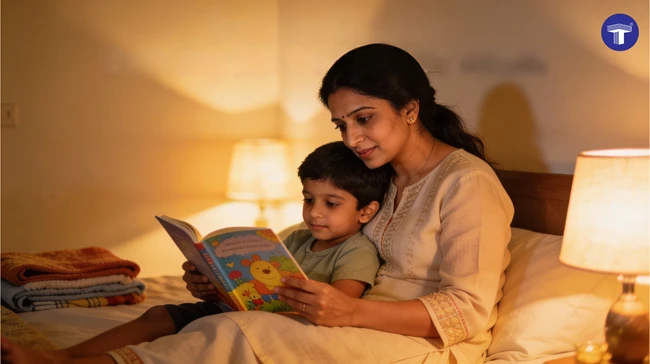
Habit 5: End Each Day with Physical Connection
A hug. A goodnight kiss. A hand squeeze. 'Goodnight, I love you.' Non-negotiable, regardless of how the day went. Even after a difficult day, even when you're tired, even when there was conflict.
Children who end each day with physical connection and words of love from a parent have a neurological advantage: they fall asleep with their stress hormones lower and their sense of security higher.
Habit 6: Take One Parenting Action That Feels Scary
Have the conversation you've been putting off. Set the boundary you've been avoiding. Apologise for something you know you should have addressed. Say no to something you've been saying yes to out of guilt.
Intentional parenting requires occasional courage. Growth is on the other side of the uncomfortable action.
Habit 7: Observe Your Child for 10 Minutes Without Intervening
Watch them play, solve a problem, interact with someone. Just watch. Without coaching, correcting, or joining.
What you learn from watching your child when they don't know they're being watched tells you more about who they actually are - not who you're hoping or worrying they are - than most conversations.
Habit 8: Check Your Tone, Not Just Your Words
Research on parent-child communication consistently shows that it's rarely what we say but how we say it that lands. The same sentence - 'come here' - can feel warm or threatening depending entirely on tone.
Once a day: catch yourself and check. Am I saying this the way I'd want to be spoken to?
Habit 9: Follow Through on One Thing You Promised
Trust is built in the small things. 'I'll watch your match on Saturday.' 'I'll read with you tonight.' 'We'll talk about this later.' When these are kept, they are deposits in the trust account. When they're forgotten, they're withdrawals.
Choose one small promise this week and keep it consciously.
Habit 10: Weekly Self-Check
At the end of each week, ask yourself one question: 'Did my children feel loved, seen, and safe this week?'
Not: did they eat well, did they do their homework, did they behave, did we have a good week. Just: loved, seen, safe. If yes - you've done enough. If not - what one thing would move the needle next week?
|
FOR PARENTS WHO ARE EXHAUSTED
You do not need to implement all 10 this week. You don't need to be perfect.
Intentional parenting is not about doing more - it's about doing less, better. One deliberate choice, made consistently, is worth more than ten things attempted poorly.
Pick the one that feels most doable today. Just one. |
Quick Tip: Consistency beats intensity. A parent who does one intentional thing every day outperforms a parent who does ten things perfectly once a week.
Which habit are you starting today? Tag someone who needs this reminder.
#IntentionalParenting #ConsciousParenting #PurposefulParenting #ParentWithPurpose #ParentingHabits #DailyParenting

Parent With Purpose
Parent with Purpose is your trusted parenting resource, offering expert advice, practical tips, and real experiences from fellow parents. Our content is organized by your child’s age, from pregnancy to the teen years, ensuring guidance that’s relevant to your current stage. Learn through articles, videos, podcasts, and courses that fit your lifestyle. We also provide carefully curated book lists, meal plans, product recommendations, and India-focused resources to make parenting easier and more informed.