 2 min read
 The Tiny Giants of Coral Bay – Inspiring Environmental Responsibility and Team Spirit in Children
The Tiny Giants of Coral Bay is a colorful animated ocean adventure that teaches children about teamwork and protecting marine life. Created for ages 5–10, the movie highlights how small actions can make a big difference. This parent-focused blog explores how the film supports environmental awareness, cooperation, and emotional growth.




The Tiny Giants of Coral Bay
Children often feel small in a big world, but learning that their actions matter can be incredibly empowering. The Tiny Giants of Coral Bay delivers this message in a joyful and age-appropriate way, showing young viewers how teamwork and care for nature can create meaningful change.
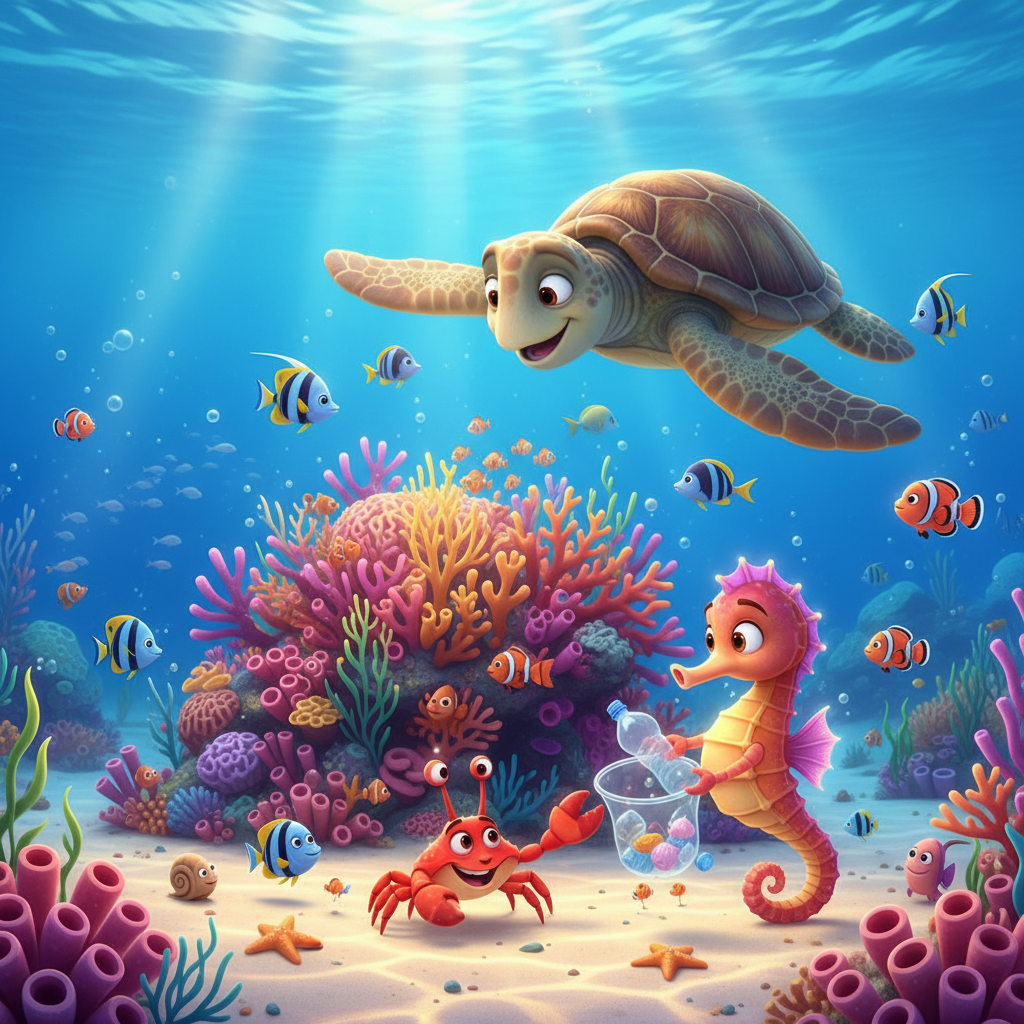
The story follows a group of tiny sea creatures living in Coral Bay — including a brave seahorse, a curious crab, and a gentle turtle. When pollution and careless fishing begin to threaten their underwater home, the friends come together to protect their reef. Despite their size, they discover that unity and persistence can overcome even the largest challenges.
One of the most valuable lessons in this film is environmental responsibility. Children learn about ocean ecosystems and why coral reefs matter, all through simple storytelling rather than heavy explanations. The movie gently introduces topics like pollution, recycling, and respecting wildlife, helping children understand their role in caring for the planet.
The characters demonstrate teamwork and cooperation throughout the story. Each sea creature brings unique abilities, and success only comes when they listen to one another and work together. This reinforces social skills that children use daily — sharing ideas, taking turns, and supporting friends.
Emotionally, the movie supports empathy and compassion. When parts of the reef are damaged, the characters express sadness and concern for their home. These moments help children recognize feelings related to loss and responsibility, encouraging them to care for both people and nature.
The film also encourages confidence and perseverance. The Tiny Giants face setbacks, but they never give up. Instead, they adapt their plans and try again. This models resilience and teaches children that challenges can be overcome with effort and patience.
From a learning perspective, the ocean setting sparks curiosity about marine life. Parents can build on this by discussing sea animals, habitats, and simple conservation habits. Even small actions like avoiding litter or saving water become meaningful when children understand their impact.
Visually, the movie is bright and engaging, filled with colorful coral landscapes and expressive characters. The gentle pacing and positive tone make it suitable for sensitive viewers, while the adventure elements keep older children interested.
For parents, The Tiny Giants of Coral Bay offers excellent opportunities for discussion. After watching, you might ask your child which sea creature they liked most, how the friends helped each other, or what they would do to protect the ocean. These conversations strengthen understanding and emotional connection.
Ultimately, this film reminds children that everyone — no matter how small — can make a difference. It nurtures respect for nature while reinforcing kindness, teamwork, and determination.
For families looking to combine entertainment with meaningful lessons about the environment, The Tiny Giants of Coral Bay is a beautiful choice.

Ruchira Darda
I am Ruchira Darda, a relationship coach, parenting expert, author, and entrepreneur with over 16 years of experience. Based in Mumbai, I work extensively in the areas of mindful living and emotional wellness. I am a TEDx speaker and focus on personality identification to help individuals and families build stronger, healthier relationships. I also lead and actively support initiatives such as the Lokmat MahaMarathon.