 2 min read
 The Little Inventors’ Workshop – Sparking Creativity, Innovation, and Growth Mindset in Children
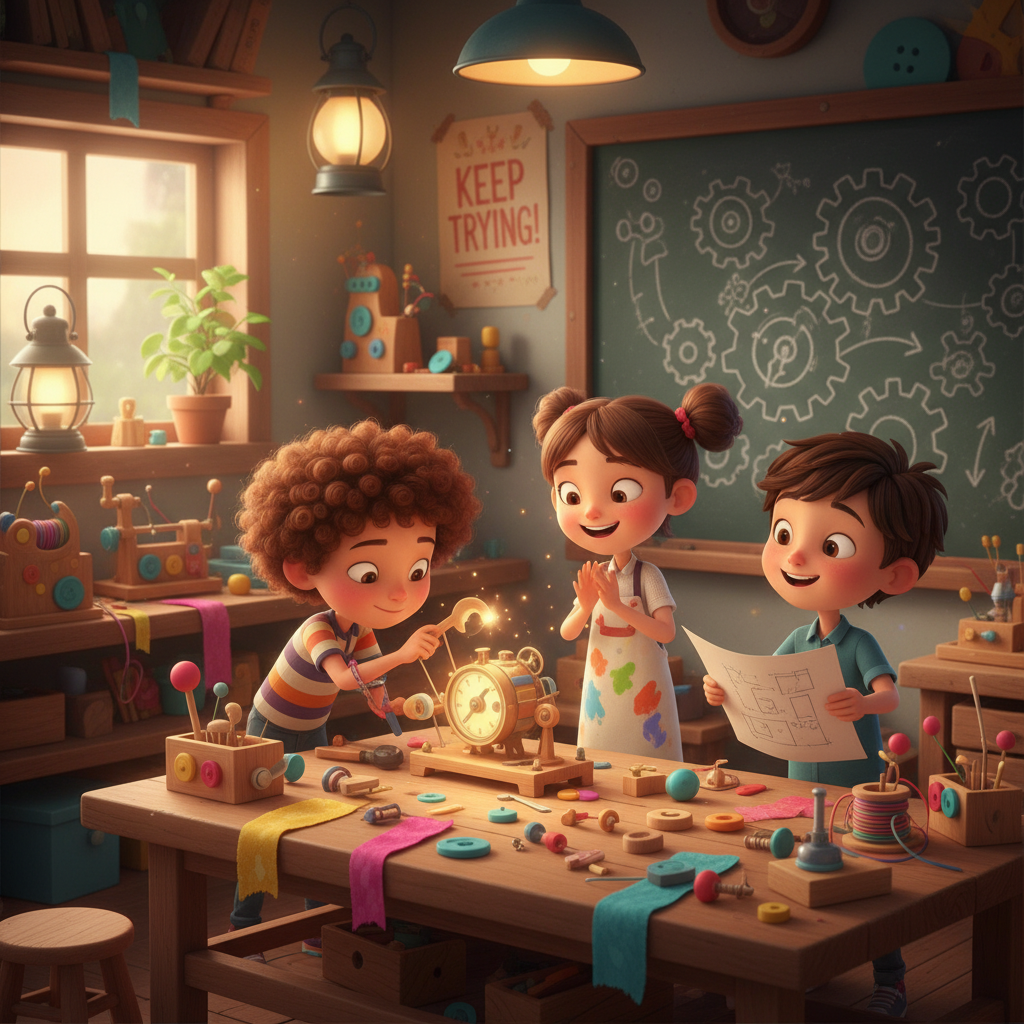
The Little Inventors’ Workshop is an inspiring animated film that encourages children to explore creativity, experiment with ideas, and embrace learning through trial and error. Designed for ages 5–10, the movie celebrates imagination and persistence. This parent-focused blog explains how the film supports creative thinking and a healthy growth mindset.




The Little Inventors’ Workshop
Creativity is not just about art — it’s about thinking differently, trying new ideas, and learning from mistakes. Between the ages of five and ten, children begin forming beliefs about their abilities. The Little Inventors’ Workshop beautifully nurtures this stage by showing kids that innovation comes from curiosity, effort, and resilience.
The story follows a group of young friends who discover an old workshop filled with tools, spare parts, and half-finished inventions. Excited by the possibilities, they begin creating gadgets to help their community — from watering systems for gardens to playful machines for neighborhood games. Along the way, their inventions don’t always work as planned, teaching them valuable lessons about perseverance.
One of the strongest themes in this movie is the development of a growth mindset. Instead of giving up when projects fail, the children reflect, adjust, and try again. Young viewers learn that mistakes are part of learning, not something to fear. This message supports confidence and resilience, especially important for school-age children facing academic challenges.
The film also promotes creative problem-solving. Each child brings different ideas to the table, encouraging brainstorming and experimentation. Kids watching are inspired to imagine solutions and think outside the box, reinforcing that creativity exists in everyday life.
Teamwork plays a central role. The friends listen to each other, combine ideas, and celebrate shared success. This teaches children that collaboration leads to stronger outcomes than working alone and builds important social skills such as cooperation and respect.
Emotionally, the movie supports self-belief and encouragement. Characters cheer each other on and offer support during setbacks. These moments help children understand the importance of kindness, motivation, and helping peers succeed.
Parents will appreciate how the film models positive learning behaviors. Children see curiosity rewarded and effort valued over perfection. After watching, families can extend learning by building simple projects together or discussing what invention their child would like to create.
The animation is bright and engaging, with playful machines and warm community scenes that keep children interested while maintaining a gentle pace. The story feels realistic and relatable, helping kids imagine themselves as creators and problem-solvers.
Ultimately, The Little Inventors’ Workshop teaches children that imagination fuels innovation, teamwork strengthens ideas, and persistence leads to progress.
For families looking to inspire creativity while reinforcing emotional and social growth, this film offers a wonderful blend of fun and meaningful learning.

Ruchira Darda
I am Ruchira Darda, a relationship coach, parenting expert, author, and entrepreneur with over 16 years of experience. Based in Mumbai, I work extensively in the areas of mindful living and emotional wellness. I am a TEDx speaker and focus on personality identification to help individuals and families build stronger, healthier relationships. I also lead and actively support initiatives such as the Lokmat MahaMarathon.