 2 min read
 Ideal Bedtime and Wake-Up Times for Children
Many parents wonder what the “perfect” bedtime is for their child. This blog breaks down ideal bedtime and wake-up schedules for children aged 5–10, based on biology and daily routines.




One of the most common questions parents ask is, “What time should my child go to bed?” The answer depends not only on age, but also on wake-up time, daily activity levels, and consistency.
For children aged 5–10, most experts recommend 9–11 hours of sleep per night. This means bedtime should be calculated backward from wake-up time, not chosen arbitrarily.
For example:
- If a child wakes at 6:30 AM, bedtime should be around 8:00–8:30 PM
- If wake-up time is 7:00 AM, bedtime can be 8:30–9:00 PM
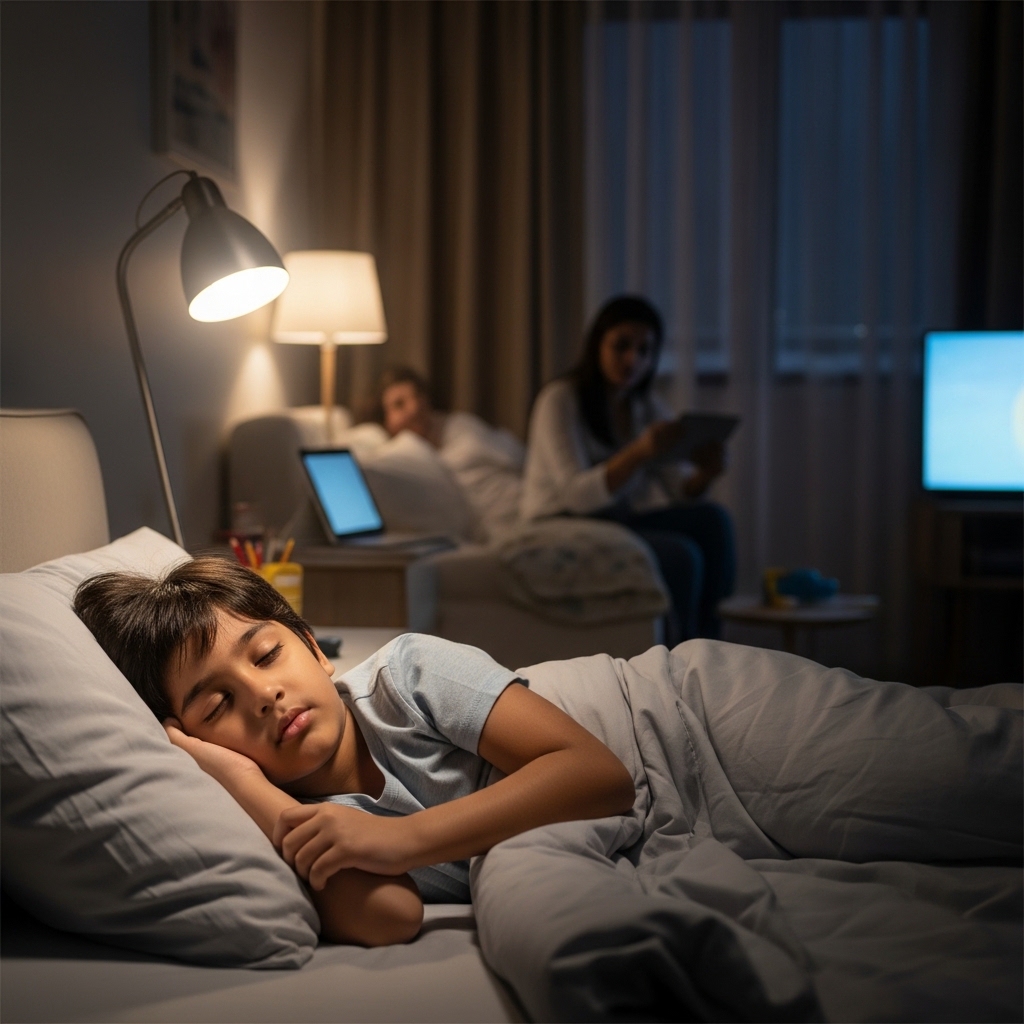
Many children stay up later than their bodies can handle, especially due to homework, screen exposure, or family schedules. While children may appear energetic at night, this is often a sign of overtiredness, not readiness to stay awake.
The body produces melatonin in response to darkness and routine. When bedtime is pushed too late, children miss their natural sleep window, making it harder to fall asleep and harder to wake up the next morning.
An ideal sleep schedule includes:
- A fixed wake-up time (even on weekends, with a maximum one-hour difference)
- A consistent bedtime window
- Predictable pre-sleep activities
Parents should watch for sleep cues such as yawning, eye rubbing, slower movements, or emotional sensitivity. Starting bedtime routines before exhaustion sets in makes the transition smoother.
Another important factor is school-day consistency. Children who sleep late on weekends often struggle on weekdays. This inconsistency affects mood, focus, and energy levels throughout the week.
Good sleep timing supports:
- Better attention and memory
- Improved emotional regulation
- Stronger immunity
- More stable behavior
Instead of asking whether a bedtime feels early or late compared to peers, parents should ask: Is my child waking up easily and feeling rested? That answer usually reveals whether the schedule is right.
Healthy bedtime and wake-up times are not about comparison—they’re about alignment with a child’s biological needs.

Ruchira Darda
I am Ruchira Darda, a relationship coach, parenting expert, author, and entrepreneur with over 16 years of experience. Based in Mumbai, I work extensively in the areas of mindful living and emotional wellness. I am a TEDx speaker and focus on personality identification to help individuals and families build stronger, healthier relationships. I also lead and actively support initiatives such as the Lokmat MahaMarathon.